
How to Program LPC1768 for Embedded Systems Applications | Complete Beginner Guide
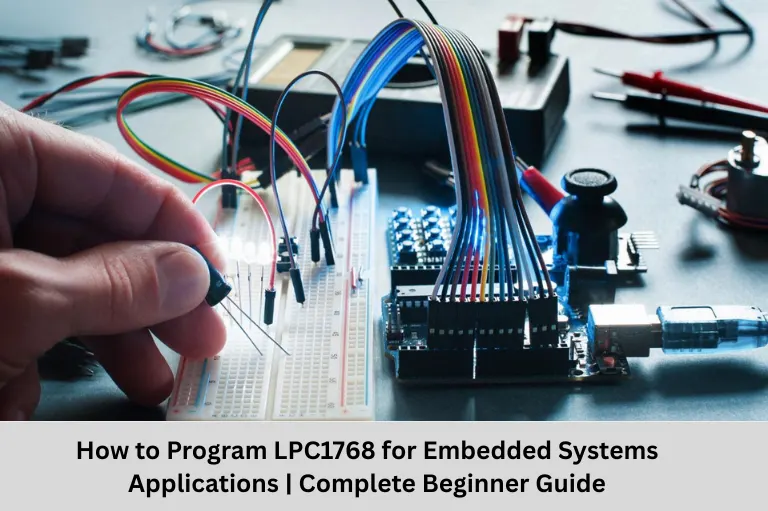
Learn how to program LPC1768 for embedded systems applications. Explore setup, Embedded C programming, peripherals, projects, career opportunities, and ETDA training with placement support.
- How to Program LPC1768 for Embedded Systems Applications | Complete Beginner Guide
-
How to Program LPC1768 for Embedded Systems Applications
- What is LPC1768?
- Why Learn LPC1768 Programming?
- Understanding LPC1768 Architecture
- Tools Required for LPC1768 Programming
- Steps to Program LPC1768
- Programming LPC1768 Peripherals
- Interrupt Programming in LPC1768
- Real-Time Applications Using LPC1768
- Common Challenges Faced by Beginners
- How ETDA Helps Students Learn LPC1768 Programming
- Career Opportunities After Learning LPC1768
- Frequently Asked Questions (FAQs)
- Conclusion
How to Program LPC1768 for Embedded Systems Applications
The demand for embedded systems engineers continues to grow as industries increasingly adopt smart devices, automation systems, IoT solutions, and connected technologies. At the heart of many embedded applications lies the microcontroller, and one of the most popular choices among engineering students and embedded developers is the ARM Cortex-M3 LPC1768 Microcontroller.
The LPC1768, developed by NXP Semiconductors, is widely used in embedded systems because of its powerful ARM Cortex-M3 core, rich peripheral support, high processing speed, and networking capabilities. Whether you’re developing industrial automation systems, robotics projects, IoT devices, or automotive applications, learning to program the LPC1768 is a valuable skill.
Programming a microcontroller involves much more than writing code. Engineers must understand hardware architecture, peripheral interfaces, communication protocols, interrupts, timers, and memory management. This is why hands-on training is essential for mastering embedded systems development.
Embedded Tech Development Academy (ETDA) provides practical training in Embedded C, LPC1768, ARM Cortex-M, STM32, RTOS, Internet of Things(IoT), and Automotive Embedded Systems with assured placement support. Students gain real-world experience through projects and industry-focused learning.
In this guide, you’ll learn how to program LPC1768 for embedded systems applications, understand the development process, and explore real-world applications and career opportunities.
What is LPC1768?
The LPC1768 is a 32-bit ARM Cortex-M3-based microcontroller designed for high-performance embedded applications.
It combines:
- High Processing Speed
- Low Power Consumption
- Rich Peripheral Support
- Networking Capabilities
- Industrial Reliability
Because of these features, LPC1768 is widely used in embedded product development and engineering education.
Why Learn LPC1768 Programming?
Learning LPC1768 helps engineering students develop industry-relevant embedded skills.
ARM Cortex-M3 Industry Standard
Many modern microcontrollers are based on ARM architecture.
Understanding LPC1768 provides a strong foundation for learning other ARM-based controllers.
Real-Time Embedded Development
Students learn practical concepts such as:
- Peripheral Interfacing
- Interrupt Programming
- Communication Protocols
- RTOS Integration
These skills are highly demanded in the industry.
Career Growth
Companies hiring embedded engineers often require knowledge of:
- Embedded C
- ARM Microcontrollers
- Firmware Development
- Hardware Interfacing
LPC1768 programming helps build these competencies.
Understanding LPC1768 Architecture
Before writing code, engineers must understand the microcontroller architecture.
ARM Cortex-M3 Core
The LPC1768 uses a 32-bit ARM Cortex-M3 processor.
Benefits
- Fast Instruction Execution
- Efficient Memory Usage
- Low Power Operation
- Real-Time Performance
This makes it suitable for both simple and complex embedded applications.
Memory Architecture
The LPC1768 includes:
Flash Memory
Stores program code.
- 512 KB Flash
SRAM
Stores runtime data.
- 64 KB SRAM
Adequate memory resources allow developers to build sophisticated applications.
GPIO Ports
General Purpose Input Output (GPIO) pins allow communication with external devices.
Applications include:
- LEDs
- Switches
- Sensors
- Relays
- Displays
GPIO programming is usually the first step in learning embedded systems.
Tools Required for LPC1768 Programming
To start programming LPC1768, you’ll need appropriate hardware and software tools.
LPC1768 Development Board
A development board simplifies hardware setup and experimentation.
Popular boards include:
- LPC1768 Evaluation Board
- ARM Development Boards
- Embedded Learning Kits
Keil uVision IDE
Keil is one of the most widely used development environments for ARM microcontrollers.
Features
- Code Editor
- Compiler
- Debugger
- Simulator
Keil simplifies firmware development significantly.
Embedded C Compiler
Most LPC1768 applications are programmed using Embedded C.
Embedded C provides:
- Hardware Access
- Efficient Execution
- Low Memory Usage
It remains the industry standard for microcontroller programming.
Steps to Program LPC1768
Programming LPC1768 follows a structured development process.
Step 1: Create a Project
Start by creating a new project in Keil uVision.
During project setup:
- Select LPC1768 Device
- Configure Target Settings
- Add Startup Files
This prepares the development environment.
Step 2: Write Embedded C Code
Next, write the application code.
Example Applications
- LED Blinking
- Switch Interfacing
- LCD Display Control
- Sensor Monitoring
At this stage, developers configure GPIO registers and peripheral settings.
Step 3: Compile the Program
The compiler converts source code into machine-readable instructions.
During compilation:
- Syntax Errors are Identified
- Warnings are Displayed
- Executable Files are Generated
Resolving compilation errors is an important part of development.
Step 4: Upload Program to LPC1768
After successful compilation:
- Connect Development Board
- Flash Program Memory
- Verify Programming
The firmware is now stored inside the microcontroller.
Step 5: Test and Debug
Debugging helps identify issues and verify system behavior.
Common debugging tools include:
- Breakpoints
- Serial Debugging
- Variable Monitoring
- Hardware Debuggers
Professional embedded development relies heavily on debugging skills.
Programming LPC1768 Peripherals
Peripheral programming is a key part of embedded systems development.
GPIO Programming
GPIO allows control of external devices.
Applications
- LED Control
- Button Detection
- Relay Switching
GPIO programming is often the first embedded project for beginners.
Timer Programming
Timers perform:
- Delays
- Event Counting
- PWM Generation
- Scheduling
Timers are essential in automation and control systems.
ADC Programming
Analog-to-Digital Converter (ADC) modules read sensor signals.
Applications
- Temperature Monitoring
- Light Measurement
- Pressure Sensors
- Industrial Monitoring
ADC programming enables interaction with real-world signals.
UART Communication
UART is one of the most commonly used communication protocols.
Applications include:
- PC Communication
- Debugging
- Data Transfer
UART is widely used during development and testing.
SPI Communication
SPI provides high-speed communication with peripherals.
Examples include:
- LCD Displays
- Memory Devices
- Sensors
I2C Communication
I2C enables communication with multiple devices using only two wires.
Applications include:
- EEPROMs
- RTC Modules
- Environmental Sensors
Interrupt Programming in LPC1768
Interrupts allow the microcontroller to respond immediately to events.
Benefits
- Faster Response
- Better Resource Utilization
- Improved Efficiency
Examples
- Button Press Detection
- Sensor Events
- Communication Reception
Interrupt programming is an important skill for embedded engineers.
Real-Time Applications Using LPC1768
The LPC1768 is used in various real-world projects.
Industrial Automation
Applications include:
- Machine Control
- Process Monitoring
- Data Acquisition
Robotics
LPC1768 supports:
- Motor Control
- Sensor Integration
- Navigation Systems
IoT Applications
By integrating communication modules, LPC1768 can be used for:
- Smart Home Automation
- Remote Monitoring
- Connected Devices
Automotive Systems
Applications include:
- CAN Communication
- Vehicle Monitoring
- Embedded Controllers
The automotive industry extensively uses ARM-based microcontrollers.
Common Challenges Faced by Beginners
Understanding Registers
Register-level programming initially appears complex. Practice helps students gain confidence.
Debugging Errors
Debugging is often the most time-consuming part of development. Learning systematic debugging techniques is crucial.
Peripheral Configuration
Different peripherals require careful setup. Hands-on practice is the best way to master peripheral programming.
How ETDA Helps Students Learn LPC1768 Programming
Learning LPC1768 effectively requires practical exposure and project-based learning.
Embedded Tech Development Academy (ETDA) provides industry-oriented training designed to bridge the gap between academics and industry requirements.
Comprehensive Training Modules
Students learn:
C Programming
Strong programming fundamentals with a focus on logic, problem-solving, and code efficiency. Essential for developing reliable software and embedded system applications.
Embedded C
Microcontroller-oriented programming focused on hardware interaction and peripheral control. Essential for developing efficient embedded systems and real-time applications.
LPC1768 Development
Hands-on ARM Cortex-M3 programming with practical embedded system development.
Learn to interface peripherals and build real-time applications efficiently.
STM32 Programming
Industry-standard ARM platform widely used in embedded and IoT applications. Provides the foundation for developing efficient, high-performance systems.
RTOS
Real-time application development with hands-on implementation of time-critical systems.
Learn to design responsive, reliable, and efficient embedded applications.
IoT Technologies
Building connected smart systems using sensors, microcontrollers, and communication technologies. Develop intelligent applications for IoT, automation, and real-world embedded solutions.
Real-Time Projects
Students develop projects such as:
- Smart Home Automation
- Industrial Monitoring Systems
- Sensor-Based Applications
- IoT Solutions
These projects provide valuable practical experience.
Assured Placement Support
ETDA assists students through:
- Resume Building
- Technical Interview Training
- Mock Interviews
- Career Guidance
- Placement Assistance
This prepares students for successful embedded systems careers and ETDA provides with 100% assured placement support.
Career Opportunities After Learning LPC1768
LPC1768 programming opens doors to multiple career paths.
Embedded Software Engineer
Develops firmware for embedded products with a focus on performance and reliability. Enables seamless interaction between hardware components and software applications.
Firmware Engineer
Creates low-level hardware control software for efficient device operation. Manages peripherals, memory, and system resources in embedded applications.
IoT Developer
Builds connected smart devices by integrating hardware, software, and communication technologies. Enables intelligent, data-driven solutions for IoT and automation applications.
Automotive Embedded Engineer
Works on vehicle control systems for automotive and electric vehicle applications. Develops reliable software for monitoring, control, and real-time decision-making.
Embedded Test Engineer
Performs validation and testing of embedded products. The demand for ARM-based embedded developers continues to grow worldwide.
Frequently Asked Questions (FAQs)
What is LPC1768?
LPC1768 is a 32-bit ARM Cortex-M3 microcontroller developed by NXP Semiconductors for embedded applications.
Which programming language is used for LPC1768?
Embedded C is the most commonly used programming language for LPC1768 development.
Is LPC1768 suitable for beginners?
Yes. LPC1768 is widely used for learning embedded systems and ARM programming.
What software is used for LPC1768 programming?
Keil uVision IDE is one of the most popular tools for LPC1768 development.
Can LPC1768 be used for IoT projects?
Yes. LPC1768 can interface with networking modules for IoT applications.
What industries use LPC1768?
Industrial automation, healthcare, automotive, robotics, consumer electronics, and IoT industries use ARM-based microcontrollers extensively.
Does ETDA provide LPC1768 training?
Yes. ETDA offers practical training in LPC1768, ARM Cortex-M, Embedded C, RTOS, IoT, and Automotive Embedded Systems with assured placement support.
Conclusion
Programming the ARM Cortex-M3 LPC1768 Microcontroller is an essential skill for aspiring embedded systems engineers. From GPIO and timer programming to communication protocols, interrupts, and real-time applications, LPC1768 provides an excellent platform for learning modern embedded development.
As industries continue adopting smart devices, automation systems, IoT solutions, and connected technologies, professionals skilled in ARM-based microcontrollers will remain in high demand. Mastering LPC1768 not only strengthens your understanding of embedded systems but also opens doors to rewarding career opportunities in multiple industries.
Embedded Tech Development Academy (ETDA) helps students gain practical expertise through hands-on training in Embedded C, LPC1768, ARM Cortex-M, STM32, RTOS, IoT, and Automotive Embedded Systems. With real-time projects, industry-focused learning, expert mentorship, and assured placement support, ETDA provides the ideal pathway to building a successful career in embedded systems and modern electronics.
Author: ETDA Trainers
Experience: 10+ Years of Industry Experience in Embedded Systems, IoT, and Embedded C Programming