
Why Embedded Systems and IoT Are Shaping the Future of Technology | ETDA Bangalore
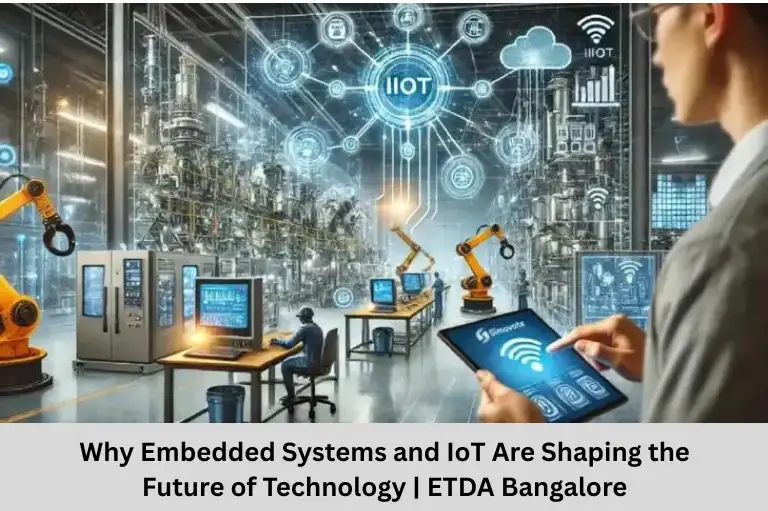
Discover why Embedded Systems and IoT are shaping the future of technology. Learn career opportunities, industry applications, required skills, and why ETDA is the Top Embedded Training Institute in Bangalore.
- Why Embedded Systems and IoT Are Shaping the Future of Technology | ETDA Bangalore
-
Why Embedded Systems and IoT Are Shaping the Future of Technology
- What Are Embedded Systems?
- What Is the Internet of Things (IoT)?
- How Embedded Systems and IoT Work Together
- Why Embedded Systems and IoT Are the Future of Technology
- Essential Skills for Future Embedded and IoT Engineers
- Why Practical Learning Matters
- Why Choose Embedded Tech Development Academy (ETDA)?
- Career Opportunities in Embedded Systems and IoT
- Frequently Asked Questions (FAQs)
- Conclusion
Why Embedded Systems and IoT Are Shaping the Future of Technology
Technology is evolving faster than ever before, and at the heart of this transformation are Embedded Systems and the Internet of Things (IoT). From smart homes and wearable devices to autonomous vehicles, industrial automation, healthcare equipment, and smart cities, these technologies are redefining how people interact with machines and the world around them.
Today, almost every modern electronic product is becoming smarter, more connected, and capable of making intelligent decisions. This shift is creating enormous demand for engineers who understand embedded software, hardware design, microcontrollers, sensors, communication protocols, and cloud connectivity.
For engineering students and fresh graduates, this presents an excellent opportunity to build a rewarding career in one of the fastest-growing technology domains. However, success requires more than classroom knowledge. Companies look for professionals with practical skills, hands-on project experience, and expertise in technologies such as Embedded C, ARM Cortex-M, STM32, LPC1768, RTOS, IoT, CAN Protocol, and Automotive Embedded Systems.
Choosing the Top Embedded Training Institute in Bangalore is one of the best ways to gain these industry-ready skills. Embedded Tech Development Academy (ETDA) has become a preferred destination for aspiring embedded engineers by offering comprehensive training, real-time projects, expert mentorship, and assured placement support.
In this blog, we’ll explore why Embedded Systems and IoT are driving the future of technology, the skills required to succeed, and how ETDA helps students become industry-ready professionals.
What Are Embedded Systems?
Embedded Systems are specialized computing systems designed to perform dedicated functions within electronic devices. Unlike general-purpose computers, embedded systems are optimized for specific tasks such as controlling sensors, processing data, or managing hardware components.
These systems consist of:
- Microcontrollers or Microprocessors
- Embedded Software
- Sensors
- Memory
- Input and Output Devices
- Communication Interfaces
Embedded systems are built to operate efficiently, reliably, and often in real time.
What Is the Internet of Things (IoT)?
The Internet of Things (IoT) refers to a network of physical devices connected through the internet that can collect, exchange, and process data.
IoT combines embedded systems with networking technologies, allowing devices to communicate with each other and cloud platforms without human intervention.
Examples include:
- Smart Home Devices
- Fitness Trackers
- Smart Watches
- Connected Cars
- Smart Agriculture Systems
- Industrial Monitoring Solutions
IoT transforms ordinary devices into intelligent systems capable of automation and remote monitoring.
How Embedded Systems and IoT Work Together
Embedded Systems act as the “brain” of connected devices, while IoT enables these devices to communicate and share information over the internet.
The Working Process
Data Collection
Sensors collect environmental data such as temperature, humidity, motion, and pressure, enabling embedded systems and IoT devices to monitor, analyze, and respond to real-world conditions efficiently.
Data Processing
Communication
The processed data is transmitted through communication protocols such as Wi-Fi, Bluetooth, Zigbee, LoRa, or MQTT, enabling reliable connectivity and seamless data exchange between devices and networks.
Cloud Integration
Cloud platforms analyze the collected information and provide useful insights or trigger automated actions.
This collaboration enables smart devices to function efficiently and intelligently.
Why Embedded Systems and IoT Are the Future of Technology
The demand for intelligent, connected products continues to increase across industries.
Growth of Smart Devices
Consumers expect electronic products to be connected, automated, and intelligent.
Examples include:
- Smart Refrigerators
- Smart TVs
- Voice Assistants
- Smart Lighting
- Home Security Systems
Embedded Systems and IoT make these innovations possible.
Industrial Automation
Manufacturing companies use Embedded Systems and IoT to improve productivity and reduce downtime.
Applications include:
- Predictive Maintenance
- Machine Monitoring
- Industrial Robotics
- Smart Factories
- Process Automation
Industry 4.0 relies heavily on embedded technologies.
Electric and Connected Vehicles
Modern vehicles contain dozens of Electronic Control Units (ECUs) powered by embedded software.
IoT enables features such as:
- Remote Diagnostics
- Vehicle Tracking
- Predictive Maintenance
- Connected Infotainment
- Autonomous Driving Support
The rapid growth of electric vehicles has significantly increased demand for embedded engineers.
Healthcare Innovation
Healthcare has embraced IoT-enabled embedded devices to improve patient care.
Examples include:
- Wearable Health Monitors
- Smart ECG Machines
- Remote Patient Monitoring
- Smart Insulin Pumps
- Connected Medical Devices
These technologies improve healthcare accessibility and efficiency.
Smart Cities
Governments are investing in smart city infrastructure using Embedded Systems and IoT.
Applications include:
- Intelligent Traffic Management
- Smart Parking
- Waste Management
- Smart Street Lighting
- Environmental Monitoring
These systems improve urban living while optimizing resource utilization.
Essential Skills for Future Embedded and IoT Engineers
Students aspiring to build careers in this domain should master several technical skills.
C Programming
C Programming is the foundation of Embedded Systems development, enabling efficient hardware control, memory management, real-time performance, and firmware development for microcontrollers and embedded devices
Topics Include
- Variables
- Functions
- Arrays
- Structures
- Pointers
- Memory Management
- Bitwise Operations
Strong C Programming skills make advanced embedded concepts easier to learn.
Embedded C
Embedded C enables direct interaction with hardware.
Students should understand:
- Register Programming
- GPIO
- Timers
- Interrupts
- ADC
- DAC
- PWM
These skills are essential for firmware development.
ARM Cortex-M Architecture
ARM processors dominate the embedded industry.
Learning ARM helps students work with modern embedded platforms.
STM32 and LPC1768
Hands-on experience with industry-standard microcontrollers builds practical confidence.
Students learn:
- Peripheral Programming
- Sensor Interfacing
- Embedded Application Development
Communication Protocols
Embedded devices communicate using protocols such as:
- UART
- SPI
- I2C
- CAN
- USB
Understanding these protocols is critical for developing reliable embedded applications.
Real-Time Operating Systems (RTOS)
Many commercial embedded products use RTOS to manage multiple tasks efficiently.
Topics include:
- Task Scheduling
- Queues
- Semaphores
- Resource Management
RTOS knowledge is highly valued by employers.
IoT Technologies
- MQTT
- Cloud Platforms
- Sensor Networks
- Wireless Communication
- Edge Computing
These technologies enable intelligent connected systems.
Why Practical Learning Matters
Companies rarely hire candidates based only on theoretical knowledge.
Recruiters expect applicants to demonstrate practical skills through projects.
Real-time projects help students:
- Apply technical concepts
- Improve debugging abilities
- Build confidence
- Strengthen resumes
- Perform better in interviews
Hands-on experience often distinguishes successful candidates from the rest.
Why Choose Embedded Tech Development Academy (ETDA)?
If you’re searching for the Top Embedded Training Institute in Bangalore, Embedded Tech Development Academy (ETDA) provides comprehensive, industry-focused training designed to prepare students for successful careers.
Industry-Oriented Curriculum
ETDA offers training in:
- C Programming
- Embedded C
- ARM Cortex-M
- LPC1768
- STM32
- RTOS
- IoT
- UART
- SPI
- I2C
- CAN Protocol
- ECU Concepts
- Automotive Embedded Systems
The curriculum is regularly updated to align with current industry trends.
Real-Time Projects
Students work on practical projects such as:
- Smart Home Automation
- IoT Weather Station
- Smart Agriculture
- Vehicle Tracking System
- Industrial Monitoring
- Healthcare Monitoring
- CAN-Based Automotive Communication
These projects provide valuable real-world experience.
Experienced Mentors
Assured Placement Support
ETDA offers dedicated placement assistance, including:
- Resume Building
- Aptitude Training
- Technical Interview Preparation
- Mock Interviews
- HR Interview Guidance
- Job Assistance
- Assured Placement Support
This career-focused approach helps students confidently enter the embedded industry.
Career Opportunities in Embedded Systems and IoT
Professionals with embedded and IoT skills are in demand across multiple industries.
Popular Job Roles
- Embedded Software Engineer
- Firmware Engineer
- IoT Developer
- Automotive Embedded Engineer
- Embedded Test Engineer
- Robotics Engineer
- Industrial Automation Engineer
- Product Development Engineer
- Systems Integration Engineer
- IoT Solutions Architect
With the continued expansion of IoT, AI, and automation, these career opportunities are expected to grow significantly.
Frequently Asked Questions (FAQs)
Why are Embedded Systems and IoT important?
They power intelligent devices, enable automation, improve efficiency, and support innovations across industries such as healthcare, automotive, manufacturing, and consumer electronics.
Can beginners learn Embedded Systems and IoT?
Yes. A structured learning path starting with C Programming and Embedded C makes it easier for beginners to understand advanced concepts.
Which programming language is most important for Embedded Systems?
C Programming remains the primary language for firmware and embedded software development.
Why should I learn ARM, STM32, and LPC1768?
These platforms are widely used in commercial embedded applications and provide practical experience with industry-standard hardware.
Why choose ETDA for Embedded Systems training?
ETDA combines an industry-focused curriculum, practical hardware training, real-time projects, experienced mentors, and assured placement support, making it one of the Top Embedded Training Institutes in Bangalore.
Does ETDA provide placement support?
Yes. ETDA provides resume preparation, mock interviews, technical interview coaching, career guidance, and assured placement support.
Conclusion
Embedded Systems and Internet of Things(IoT) are no longer emerging technologies—they are the driving force behind the next generation of innovation. From smart homes and industrial automation to connected healthcare, autonomous vehicles, and smart cities, these technologies are transforming every aspect of modern life. As organizations continue investing in intelligent products, the demand for skilled embedded engineers will only continue to rise.
Building a successful career in this field requires more than academic knowledge. Engineers need hands-on expertise in C Programming, Embedded C, ARM Cortex-M, STM32, LPC1768, RTOS, IoT, communication protocols, and Automotive Embedded Systems.
If you’re looking for the Top Embedded Training Institute in Bangalore, Embedded Tech Development Academy (ETDA) offers a comprehensive learning experience that combines industry-relevant technologies, real-time project development, expert mentorship, and assured placement support. With a strong focus on practical implementation and career readiness, ETDA equips students with the skills needed to thrive in the rapidly evolving world of Embedded Systems and IoT.
Whether you’re an engineering student, a fresher, or a working professional looking to upskill, ETDA provides the knowledge, practical exposure, and placement guidance to help you build a successful career in one of the fastest-growing technology domains.
Author: ETDA Trainers
Experience: 10+ Years of Industry Experience in Embedded Systems, IoT, and Embedded C Programming