
Embedded Systems Training with Projects: Why Practical Learning Matters | ETDA Bangalore
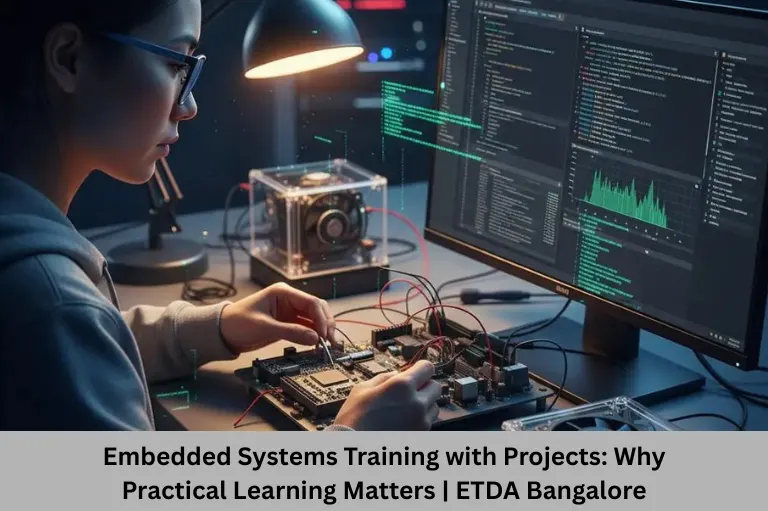
Discover why embedded systems training with projects is essential for a successful engineering career. Learn how ETDA Bangalore provides hands-on training, real-time projects, and assured placement support.
- Embedded Systems Training with Projects: Why Practical Learning Matters | ETDA Bangalore
-
Embedded Systems Training with Projects: Why Practical Learning Matters
- Why Practical Learning Is Essential in Embedded Systems
- Challenges Students Face Without Practical Training
- Benefits of Embedded Systems Training with Projects
- Industry-Oriented Technologies Covered During Training
- Modern Laboratory Facilities at ETDA
- Skills You Develop Through Project-Based Embedded Systems Training
- Why ETDA Is the Right Choice for Embedded Systems Training
- Assured Placement Support at ETDA
- Career Opportunities After Embedded Systems Training
-
Frequently Asked Questions (FAQs)
- Why is project-based learning important in Embedded Systems?
- What types of projects are included in ETDA's Embedded Systems training?
- Does ETDA provide practical laboratory training?
- What technologies are covered during the course?
- Does ETDA provide assured placement support?
- Is this course suitable for beginners?
- Who can enroll in the Embedded Systems training program?
- What career opportunities are available after completing the course?
- Why is ETDA considered a preferred Embedded Systems training institute?
- How do embedded systems projects improve interview performance?
- What skills do employers look for in embedded systems engineers?
- How do I choose the best Embedded Systems training institute?
- Conclusion
Embedded Systems Training with Projects: Why Practical Learning Matters
The embedded systems industry is evolving rapidly, creating exciting career opportunities for engineering graduates and professionals. From electric vehicles and smart home devices to industrial automation and healthcare equipment, embedded systems are at the core of modern technology. As industries continue adopting intelligent electronics, employers are looking for engineers who possess not only theoretical knowledge but also practical experience in designing, programming, and debugging embedded applications.
Unfortunately, many students complete their engineering degrees without working on real hardware or industry-level projects. While classroom education builds a strong theoretical foundation, companies prefer candidates who can confidently apply their knowledge to solve practical engineering challenges.
This is why embedded systems training with projects has become one of the most effective ways to prepare for a successful career. Project-based learning helps students understand how embedded software interacts with hardware, improves problem-solving abilities, and builds the confidence needed for technical interviews.
If you’re looking for practical, industry-focused training, Embedded Tech Development Academy (ETDA) offers a comprehensive learning experience that combines expert instruction, live projects, and assured placement support. Recognized by many aspiring engineers as a Top Embedded Training Institute in Bangalore, ETDA focuses on making students industry-ready through hands-on learning and real-world applications.
Why Practical Learning Is Essential in Embedded Systems
Embedded systems is a field where practical implementation is just as important as theoretical knowledge. Engineers are expected to work with microcontrollers, sensors, communication protocols, and embedded software in real-world environments.
Simply reading about embedded concepts is not enough. Students must learn how to write code, interface hardware, troubleshoot errors, and optimize system performance.
Practical training helps bridge the gap between classroom learning and industry expectations by allowing students to work on actual embedded hardware and development tools.
Challenges Students Face Without Practical Training
Many engineering graduates face difficulties during job interviews because they lack hands-on experience.
Common challenges include:
- Difficulty writing Embedded C programs independently
- Limited knowledge of hardware interfacing
- Lack of debugging experience
- Poor understanding of communication protocols
- Inability to explain project implementation during interviews
- Limited exposure to development boards and embedded tools
Project-based learning addresses these challenges by encouraging students to apply theoretical concepts in real engineering scenarios.
Benefits of Embedded Systems Training with Projects
Practical projects help students develop both technical and professional skills that employers value.
Better Understanding of Core Concepts
Working on projects allows students to understand how programming, electronics, and hardware work together within an embedded system.
Embedded C Programming
Students gain practical experience in:
- Variables
- Functions
- Arrays
- Pointers
- Structures
- Bitwise Operations
- Memory Management
Writing code for real applications strengthens programming skills far more effectively than solving textbook exercises.
Microcontroller Programming
Students learn to configure and program:
- GPIO
- Timers
- ADC
- PWM
- Interrupts
- Peripheral Interfaces
Understanding how software interacts directly with hardware is a critical skill for embedded engineers.
Industry-Oriented Technologies Covered During Training
Modern embedded products rely on multiple technologies working together. ETDA ensures students gain practical exposure to all major embedded domains.
ARM Microcontrollers
ARM processors power a large percentage of today’s embedded devices.
Students receive hands-on training in:
ARM Cortex Architecture
Register-Level Programming
Peripheral Configuration
Interrupt Handling
Firmware Development
Working with ARM development boards prepares students for industry-level projects.
Communication Protocols
Embedded devices must communicate efficiently with sensors and other controllers.
Students gain practical experience with:
UART
SPI
I2C
CAN Protocol
USB Fundamentals
These protocols are widely used in automotive systems, industrial automation, IoT devices, and consumer electronics.
Embedded Linux
Embedded Linux has become an essential skill for many embedded software roles.
Students learn:
Linux Commands
Shell Scripting
Linux File System
Device Driver Basics
Embedded Linux Development
Practical Linux training improves career opportunities in advanced embedded product development.
Real-Time Operating Systems (RTOS)
Many embedded applications require multitasking and real-time performance.
Students gain practical knowledge of:
Task Scheduling
Queues
Semaphores
Memory Management
Context Switching
Learning RTOS enables students to work confidently on automotive, robotics, and industrial automation projects.
Real-Time Projects That Build Industry Skills
One of the biggest advantages of joining ETDA is its emphasis on project-based learning.
Instead of focusing only on classroom lectures, students develop multiple real-world applications.
Practical Embedded Systems Projects
Smart Home Automation
Develop embedded systems that automate lighting, appliances, and security using wireless communication for smart, efficient, reliable, and connected home automation solutions.
Smart Energy Meter
Build systems that monitor electrical energy consumption using embedded controllers and sensors for accurate measurement, analysis, efficient energy management, and optimization.
Industrial Automation
Design embedded solutions for industrial monitoring and process control, enabling reliable automation, data acquisition, efficient operation, and real-time system performance.
IoT Weather Monitoring System
Create cloud-connected embedded devices capable of collecting, processing, and transmitting environmental data for smart monitoring and real-time IoT applications.
GPS Vehicle Tracking System
Develop location-tracking applications using GPS modules, communication interfaces, and embedded controllers.
Each project helps students improve firmware development, debugging, hardware interfacing, and system integration skills while building a strong technical portfolio.
Modern Laboratory Facilities at ETDA
Learning embedded systems requires access to professional tools and development boards.
ETDA provides students with hands-on experience using:
- ARM Cortex Boards
- STM32 Development Kits
- AVR Controllers
- PIC Microcontrollers
- LCD Displays
- Bluetooth Modules
- Wi-Fi Modules
- GPS Modules
- GSM Modules
- Various Sensors and Embedded Peripherals
This practical exposure enables students to gain confidence in working with industry-standard hardware and software.
Skills You Develop Through Project-Based Embedded Systems Training
Working on real-world projects helps students build the technical and analytical skills that employers expect. Instead of simply understanding concepts, students learn how to apply them in practical scenarios.
At ETDA, every project is designed to simulate real industry challenges, allowing students to experience the complete embedded system development process—from planning and programming to testing and debugging.
Technical Skills You Gain
Firmware Development
Students learn to write efficient, optimized firmware using Embedded C for microcontroller-based applications, improving performance, reliability, and hardware control skills.
Hardware Interfacing
Gain practical experience connecting sensors, displays, communication modules, and actuators with embedded controllers to build reliable, real-world embedded system applications.
Debugging and Troubleshooting
Identify and resolve software and hardware issues using debugging tools, serial communication, testing techniques, and systematic troubleshooting for reliable embedded system performance.
System Integration
Understand how hardware and software components integrate seamlessly to design, develop, and deliver reliable, efficient, and high-performance embedded products and systems.
Problem-Solving Ability
Project-based learning encourages students to think analytically, troubleshoot issues independently, and develop innovative solutions—skills that are highly valued by employers.
Why ETDA Is the Right Choice for Embedded Systems Training
Selecting the right training institute can significantly impact your career. Embedded Tech Development Academy (ETDA) focuses on practical education that prepares students for real-world engineering environments rather than limiting learning to theoretical concepts.
Students searching for the Top Embedded Training Institute in Bangalore often choose ETDA because of its practical approach, experienced faculty, and placement-focused training.
Industry-Experienced Trainers
ETDA’s faculty members bring years of industry experience in embedded systems, firmware development, and electronics. Their real-world expertise helps students understand how embedded technologies are applied in commercial products.
Updated Industry Curriculum
The curriculum is regularly updated to include emerging technologies such as:
- Embedded C
- ARM Cortex Microcontrollers
- Embedded Linux
- RTOS
- IoT Fundamentals
- CAN, UART, SPI, and I2C Communication Protocols
- Device Driver Basics
This ensures students are learning technologies that employers actively seek.
Personalized Mentoring
Small batch sizes allow trainers to provide individual attention, helping students strengthen technical concepts and successfully complete projects.
Hands-On Learning Environment
Students spend significant time in laboratories working with development boards, sensors, communication modules, and embedded debugging tools.
Real Industry Exposure
By working on multiple projects throughout the course, students gain confidence in handling real engineering challenges and presenting their work during interviews.
Assured Placement Support at ETDA
Learning technical skills is only part of the journey. ETDA also prepares students for successful careers through structured assured placement support.
Placement Assistance Includes
Professional Resume Building
Students receive guidance to create professional resumes highlighting technical skills, certifications, projects, and achievements, improving their chances of securing core engineering jobs.
Mock Technical Interviews
Mock interviews simulate real recruitment processes and cover topics including:
- Embedded C
- ARM Programming
- Embedded Linux
- RTOS
- Communication Protocols
- Microcontrollers
- Project Discussions
- Debugging Techniques
These sessions help students improve technical communication and confidence.
Aptitude and Soft Skills Training
ETDA also offers training in:
- Quantitative Aptitude
- Logical Reasoning
- Communication Skills
- HR Interview Preparation
- Group Discussions
These skills are essential for succeeding in campus and off-campus recruitment drives.
Interview Opportunities
Eligible students receive interview opportunities through ETDA’s industry network, helping them connect with companies seeking skilled embedded systems professionals.
Career Opportunities After Embedded Systems Training
Embedded systems professionals are in demand across a wide range of industries. Completing practical training with projects prepares students for diverse technical roles.
Popular Career Paths
Embedded Software Engineer
Develop firmware for automotive systems, industrial equipment, consumer electronics, and medical devices, ensuring reliable performance, safety, and efficient hardware control.
Firmware Developer
Design and optimize software for microcontroller-based embedded products, ensuring efficient performance, reliability, scalability, and seamless hardware-software integration in applications.
Embedded Linux Developer
Develop Linux-based embedded applications and device drivers for real-world systems, hardware interfaces, and advanced embedded product development projects.
IoT Engineer
Build connected smart devices for industrial automation, smart homes, agriculture, and healthcare using modern IoT technologies and embedded systems solutions.
Embedded Testing Engineer
Test, validate, and troubleshoot embedded software to ensure product quality, reliability, optimal performance, and compliance with industry standards and requirements.
Industries Hiring Embedded Engineers
After completing the course, students can explore opportunities in:
- Automotive
- Semiconductor
- Consumer Electronics
- Aerospace
- Industrial Automation
- Robotics
- Medical Electronics
- IoT Product Development
- Telecommunications
- Smart Manufacturing
Frequently Asked Questions (FAQs)
Why is project-based learning important in Embedded Systems?
Project-based learning helps students apply theoretical concepts to real-world applications, improve debugging skills, understand hardware interfacing, and develop the practical experience employers expect.
What types of projects are included in ETDA's Embedded Systems training?
Students work on projects such as Smart Home Automation, Smart Energy Meter, Industrial Automation, IoT Weather Monitoring, GPS Vehicle Tracking, and sensor interfacing applications.
Does ETDA provide practical laboratory training?
Yes. ETDA offers hands-on laboratory sessions using ARM Cortex boards, STM32 kits, AVR and PIC microcontrollers, communication modules, sensors, and embedded development tools.
What technologies are covered during the course?
The course includes Embedded C, ARM Programming, Embedded Linux, RTOS, UART, SPI, I2C, CAN Protocol, firmware development, hardware interfacing, debugging, and IoT fundamentals.
Does ETDA provide assured placement support?
Yes. ETDA offers assured placement support that includes resume building, mock technical interviews, aptitude training, soft skills development, and interview opportunities with hiring companies.
Is this course suitable for beginners?
Yes. The course starts with programming fundamentals and gradually progresses to advanced embedded systems concepts, making it suitable for beginners as well as experienced learners.
Who can enroll in the Embedded Systems training program?
The course is ideal for engineering students (ECE, EEE, E&I, CSE, ISE), diploma holders, fresh graduates, and working professionals who want to build or advance a career in embedded systems.
What career opportunities are available after completing the course?
Graduates can pursue roles such as Embedded Software Engineer, Firmware Developer, Embedded Linux Developer, IoT Engineer, Embedded Testing Engineer, and Device Driver Engineer.
Why is ETDA considered a preferred Embedded Systems training institute?
ETDA stands out for its industry-aligned curriculum, experienced trainers, hands-on project-based learning, modern laboratories, personalized mentoring, and comprehensive placement support.
How do embedded systems projects improve interview performance?
Projects demonstrate your practical skills, problem-solving abilities, and understanding of real-world embedded development. They also provide strong examples to discuss during technical interviews.
What skills do employers look for in embedded systems engineers?
Employers value proficiency in Embedded C, microcontroller programming, hardware interfacing, communication protocols, Embedded Linux, RTOS, debugging, and the ability to complete real-world projects.
How do I choose the best Embedded Systems training institute?
Look for an institute that offers an updated curriculum, practical lab sessions, experienced faculty, real-time projects, placement assistance, and positive student outcomes. ETDA combines all these features to help students become industry-ready embedded engineers.
Conclusion
Embedded systems is a practical engineering discipline where success depends on your ability to apply knowledge, solve problems, and work confidently with hardware and software. While theoretical concepts provide a strong foundation, real-world projects are what truly prepare students for industry challenges.
Choosing Embedded Systems Training with Projects allows you to gain valuable hands-on experience, build an impressive project portfolio, and improve your confidence for technical interviews.
At Embedded Tech Development Academy (ETDA), students receive industry-oriented training through live projects, modern laboratories, experienced mentors, and assured placement support. Widely recognized by aspiring engineers as a Top Embedded Training Institute in Bangalore, ETDA helps bridge the gap between academic learning and industry expectations.
If your goal is to become a skilled embedded systems engineer, investing in practical, project-based training is one of the best decisions you can make for your future.
Author: ETDA Trainers
Experience: 10+ Years of Industry Experience in Embedded Systems, IoT, and Embedded C Programming