
Advanced Embedded C Projects for Engineering Students
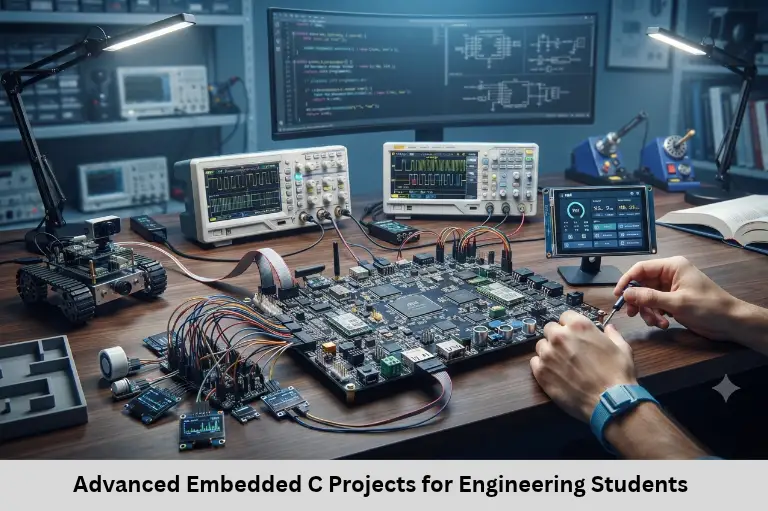
Explore advanced Embedded C projects for engineering students, including Internet of Things (IoT), robotics, RTOS and sensor-based applications. Build practical skills with Embedded Tech Development Academy (ETDA).
- Advanced Embedded C Projects for Engineering Students
-
Advanced Embedded C Projects for Engineering Students
- Introduction
- Why Should Engineering Students Build Advanced Embedded C Projects?
- Advanced Embedded C Projects for Engineering Students
- Technical Skills Students Develop Through These Projects
- How to Choose the Right Final-Year Embedded Project
- Learn Advanced Embedded C at Embedded Tech Development Academy
-
Frequently Asked Questions
- Which Embedded C projects are best for engineering students?
- Which microcontroller is suitable for advanced Embedded C projects?
- Is Embedded C important for IoT development?
- Do students need hardware knowledge to learn Embedded C?
- What skills are required for an embedded software developer role?
- Does ETDA provide placement support for embedded training?
- Conclusion
Advanced Embedded C Projects for Engineering Students
Introduction
Embedded C is one of the most important programming languages used in modern embedded systems. It helps engineers develop firmware that controls microcontrollers, sensors, communication modules, motors and other electronic devices. For engineering students, working on advanced Embedded C projects is an effective way to understand how programming concepts are applied to real-world hardware.
Projects involving STM32, ARM Cortex-M, LPC1768 and ESP32 boards help students gain practical experience in hardware interfacing, debugging and peripheral programming. Students searching for advanced project ideas can also explore Internet of Things (IoT), robotics and automation applications. Choosing the Top Embedded Training Institute in Bangalore can help learners strengthen their technical foundation through structured practical training. Embedded Tech Development Academy (ETDA) supports students with industry-oriented learning and assured placement support.
Why Should Engineering Students Build Advanced Embedded C Projects?
Advanced projects help students move beyond basic programs such as LED blinking and switch interfacing. They provide opportunities to understand how processors interact with external devices and execute tasks under hardware and timing constraints.
By developing complete applications, students can improve their knowledge of GPIO, timers, interrupts, ADC, PWM, UART, SPI and I2C. These concepts are widely used in automotive electronics, industrial automation, medical equipment and Internet of Things (IoT) products.
Project development also teaches students to read datasheets, select suitable components, write reusable firmware and troubleshoot hardware-related problems. These practical skills are valuable when applying for embedded software developer and firmware engineer positions.
Advanced Embedded C Projects for Engineering Students
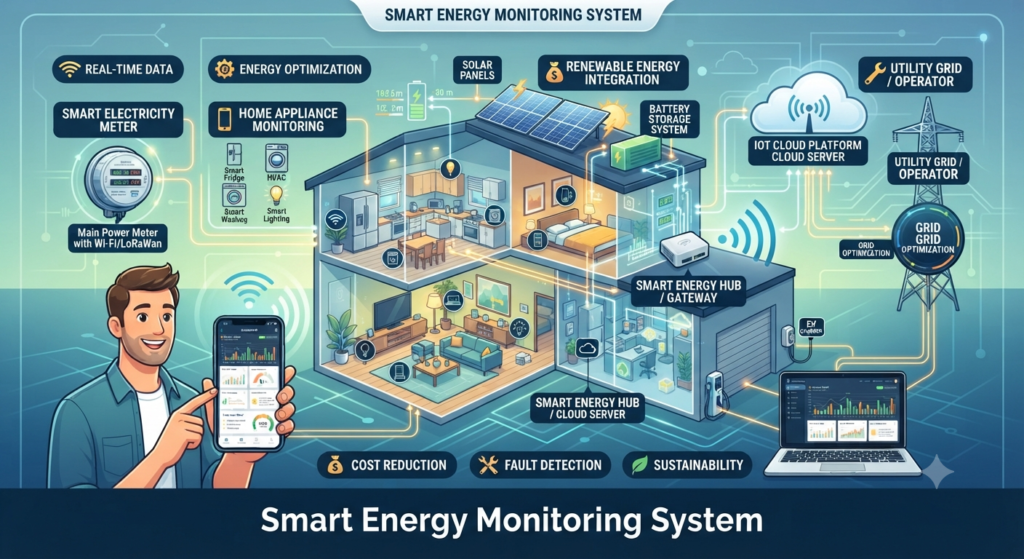
IoT-Based Smart Home Automation System
A smart home automation system allows users to monitor and control electrical appliances using a microcontroller and wireless communication. Students can develop this project using an ESP32 or STM32 board with suitable Wi-Fi or Bluetooth connectivity.
The firmware reads sensor values, processes user commands and controls relay modules connected to appliances. MQTT or HTTP communication can be used to exchange information with an Internet of Things (IoT) dashboard. Students learn GPIO programming, communication protocols, sensor interfacing and basic Internet of Things (IoT) architecture.
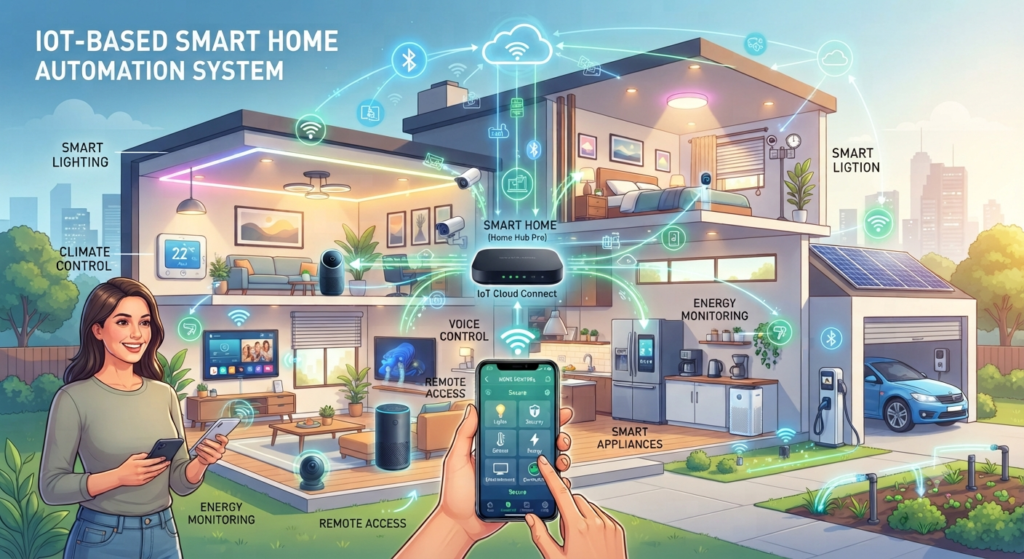
Real-Time Vehicle Monitoring System Using CAN
The Controller Area Network (CAN) protocol is commonly used in automotive embedded systems for communication between electronic control units. Students can build a vehicle monitoring prototype using a microcontroller with CAN controller and transceiver hardware.
The application can collect simulated engine temperature, battery voltage and speed information before transmitting messages over the CAN bus. Students can implement message filtering, periodic transmission and error monitoring.
This project introduces automotive communication, interrupt handling and structured firmware development. It is particularly useful for learners interested in automotive embedded software careers.
RTOS-Based Multi-Tasking Application
A Real-Time Operating System (RTOS) helps embedded applications manage multiple tasks with predictable scheduling. Students can develop an RTOS-based monitoring system using FreeRTOS on an STM32 or ARM Cortex-M development board.
Separate tasks can handle sensor acquisition, UART communication, display updates and alarm generation. Semaphores, queues and mutexes can be used for task synchronization and safe data sharing.
This project helps students understand task priorities, scheduling, context switching and inter-task communication. It also introduces practical concepts used in industrial and automotive embedded applications.
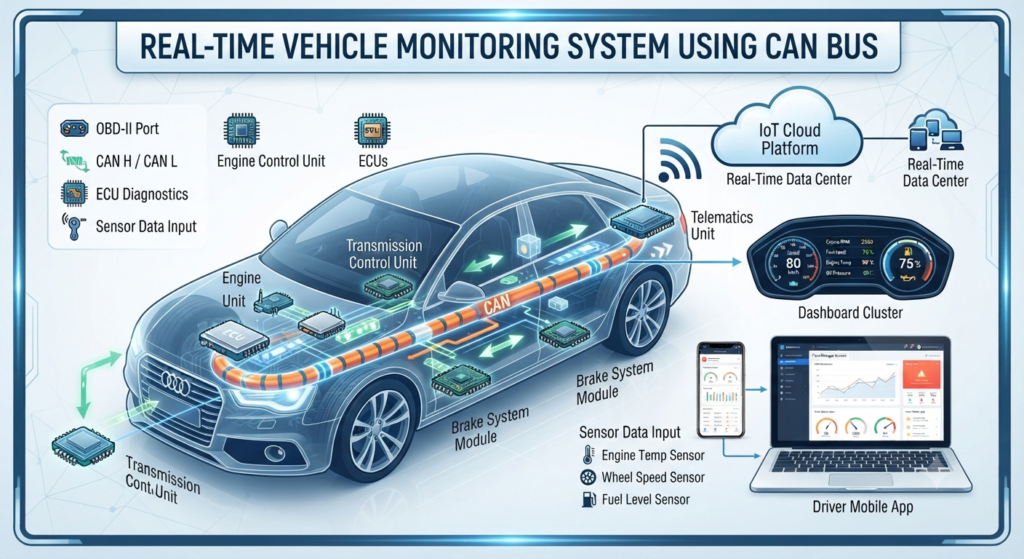
Smart Energy Monitoring System
An energy monitoring system measures electrical parameters such as voltage, current and power consumption. Students can use suitable voltage and current sensors with a microcontroller that supports ADC functionality.
Embedded C firmware processes the sensor readings, calculates power values and displays the results on an LCD or sends them to an Internet of Things (IoT) dashboard. Proper signal conditioning and electrical isolation are important when designing hardware connected to mains-powered circuits.
The project develops knowledge of ADC programming, sensor calibration, data processing and communication interfaces. It also demonstrates how embedded systems contribute to energy management and smart infrastructure.
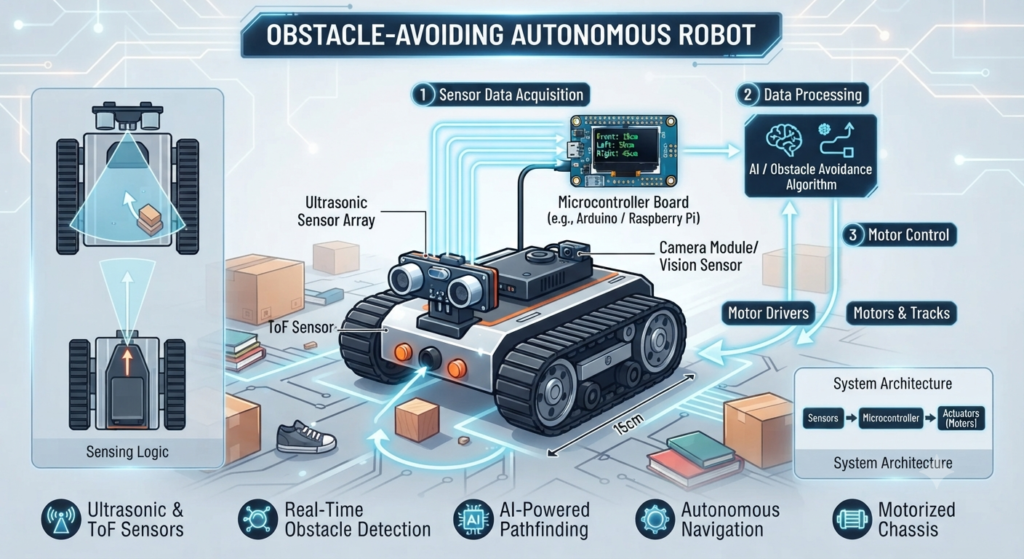
Obstacle-Avoiding Autonomous Robot
An obstacle-avoiding robot combines sensors, motor drivers and embedded firmware to move through an environment without colliding with objects. Students can develop it using an STM32, LPC1768 or Arduino-compatible microcontroller.
Ultrasonic sensors measure the distance to nearby objects, while the firmware processes the readings and controls motor direction through a motor driver. PWM signals can regulate motor speed, and timer peripherals can support accurate measurement.
This project provides practical experience in GPIO, timers, PWM, sensor interfacing and decision-making logic. Students can further improve it by adding wireless control or Internet of Things (IoT)-based monitoring.
Technical Skills Students Develop Through These Projects
Microcontroller Peripheral Programming
Students should learn to configure GPIO pins, timers, interrupts, ADC channels and PWM outputs using register-level programming or vendor-supported libraries. Understanding peripheral registers helps developers know how the microcontroller hardware operates.
Communication Protocols
UART, SPI, I2C and CAN are essential communication technologies in embedded development. Implementing these protocols in projects helps students understand data transmission, device addressing, message formats and communication troubleshooting.
Firmware Debugging and Testing
A working prototype is not enough; the firmware must also be reliable. Students should practise debugging with breakpoints, serial logs, logic analysers and oscilloscopes wherever available.
How to Choose the Right Final-Year Embedded Project
The best project should match the student’s technical knowledge, available hardware and career interests. A beginner can start with sensor monitoring, while students with stronger programming experience can select RTOS, CAN or Internet of Things (IoT)-based applications.
Focus on Practical Implementation
Students should develop both hardware and firmware instead of relying entirely on ready-made code. Reading datasheets, preparing circuit connections and testing individual modules help build independent problem-solving skills.
Include Documentation and Demonstration
A complete project should include a block diagram, circuit diagram, firmware explanation, testing results and a working demonstration. Good documentation helps students explain design decisions during academic evaluations and technical interviews.
Advanced Project Improvement
Students can make a project more industry-oriented by adding fault detection, power optimisation, communication error handling and modular firmware design. These improvements demonstrate an understanding of practical embedded development challenges.
Learn Advanced Embedded C at Embedded Tech Development Academy
Engineering students need more than theoretical knowledge to enter the embedded industry. They must understand microcontroller architecture, Embedded C programming, peripheral configuration, communication protocols and real-time application development.
Embedded Tech Development Academy (ETDA) in Bangalore focuses on practical, industry-oriented embedded training. Students can strengthen their knowledge through hands-on learning involving microcontrollers, Embedded C, RTOS, communication protocols and project implementation. Embedded Tech Development Academy (ETDA) also provides assured placement support to help learners prepare for employment opportunities.
Students looking for the Top Embedded Training Institute in Bangalore should evaluate practical lab exposure, technical mentoring, project guidance and career support before choosing a course. A structured learning environment can help fresh graduates build confidence in developing and debugging embedded applications.
Frequently Asked Questions
Which Embedded C projects are best for engineering students?
IoT home automation, CAN-based vehicle monitoring, RTOS applications, energy monitoring and obstacle-avoiding robots are useful advanced project choices.
Which microcontroller is suitable for advanced Embedded C projects?
STM32, LPC1768, ARM Cortex-M and ESP32 are popular choices. Selection depends on the required peripherals, processing capability and communication features.
Is Embedded C important for IoT development?
Yes. Embedded C is widely used to program microcontrollers that collect sensor data, control devices and communicate with Internet of Things (IoT) platforms.
Do students need hardware knowledge to learn Embedded C?
Basic electronics knowledge is helpful because embedded developers work with microcontrollers, sensors, power supplies and communication interfaces. Practical hardware experience makes debugging easier.
What skills are required for an embedded software developer role?
Important skills include Embedded C, microcontroller architecture, data structures, peripheral programming, UART, SPI, I2C, CAN, RTOS and debugging techniques.
Does ETDA provide placement support for embedded training?
Embedded Tech Development Academy (ETDA) provides assured placement support along with practical, industry-oriented embedded training to help students prepare for relevant job opportunities.
Conclusion
Advanced Embedded C projects help engineering students connect programming concepts with real hardware applications. Projects involving Internet of Things (IoT), CAN communication, RTOS, energy monitoring and robotics develop practical skills that are useful in firmware and embedded software development.
Students should focus on understanding the complete development process, from hardware selection and firmware coding to debugging and testing. Choosing the Top Embedded Training Institute in Bangalore can provide structured technical learning and project experience. With hands-on training and assured placement support, Embedded Tech Development Academy (ETDA) helps students prepare for opportunities in the growing embedded systems industry.
Author: ETDA Trainers
Experience: 10+ Years of Industry Experience in Embedded Systems, IoT, and Embedded C Programming