
Getting Started with ARM Cortex-M3 LPC1768 Microcontroller | Beginner's Guide
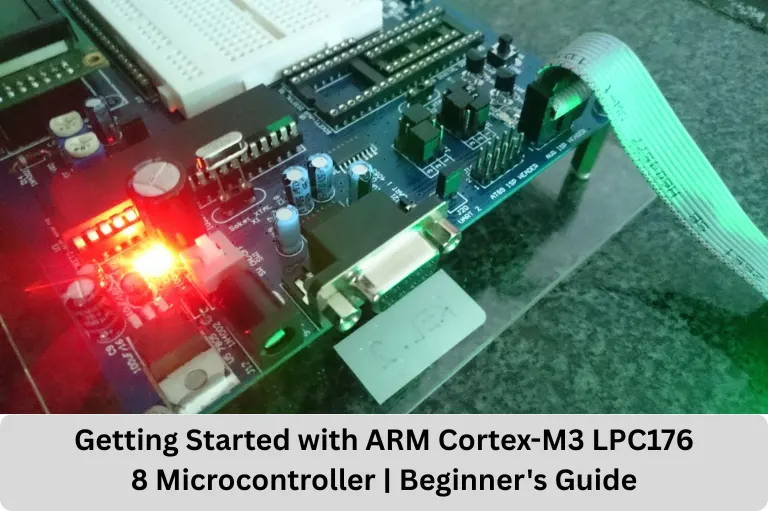
Learn ARM Cortex-M3 LPC1768 microcontroller fundamentals, architecture, features, programming, applications, and career opportunities. Explore practical embedded systems training with ETDA.
- Getting Started with ARM Cortex-M3 LPC1768 Microcontroller | Beginner's Guide
-
Getting Started with ARM Cortex-M3 LPC1768 Microcontroller
- What is ARM Cortex-M3 LPC1768?
- Why Learn LPC1768?
- ARM Cortex-M3 Architecture Overview
- Features of LPC1768 Microcontroller
- Communication Interfaces in LPC1768
- Development Tools for LPC1768
- Basic Steps to Program LPC1768
- Real-World Applications of LPC1768
- Why Engineering Students Should Learn LPC1768
- Career Opportunities After Learning ARM LPC1768
- How ETDA Helps Students Master ARM Cortex-M3 LPC1768
- Frequently Asked Questions (FAQs)
- Conclusion
Getting Started with ARM Cortex-M3 LPC1768 Microcontroller
The world of embedded systems revolves around microcontrollers that power smart devices, industrial automation systems, automotive electronics, medical equipment, and IoT applications. Among the most popular microcontrollers used by engineering students and embedded developers is the ARM Cortex-M3 LPC1768 Microcontroller.
The LPC1768, developed by NXP Semiconductors, is based on the ARM Cortex-M3 core and is widely used for learning embedded systems, developing real-time applications, and building advanced electronics projects. Its powerful processing capabilities, rich peripheral set, and industry relevance make it an excellent choice for beginners and professionals alike.
For engineering students looking to build a career in Embedded Systems, learning LPC1768 can provide a strong foundation in microcontroller programming, Embedded C, communication protocols, RTOS, and IoT development.
Embedded Tech Development Academy (ETDA) provides hands-on training in ARM Cortex-M microcontrollers, Embedded C, STM32, LPC1768, RTOS, IoT, and Automotive Embedded Systems with assured placement support. Through real-time projects and industry-focused learning, ETDA helps students become job-ready embedded engineers.
In this comprehensive guide, we will explore the ARM Cortex-M3 LPC1768 microcontroller, its architecture, features, applications, programming concepts, and career opportunities.
What is ARM Cortex-M3 LPC1768?
The LPC1768 is a 32-bit microcontroller based on the ARM Cortex-M3 processor architecture.
It is designed for:
- Embedded Systems Development
- Industrial Automation
- Consumer Electronics
- Medical Devices
- IoT Applications
- Automotive Electronics
The microcontroller combines high performance with low power consumption, making it ideal for modern embedded applications.
Why Learn LPC1768?
The LPC1768 is widely used in educational institutions and industry because it offers a practical platform for learning advanced embedded concepts.
Industry-Relevant Architecture
ARM Cortex-M processors dominate the embedded systems market.
Learning LPC1768 helps students understand industry-standard embedded architectures.
Rich Peripheral Support
The microcontroller includes numerous built-in peripherals that allow developers to create complex applications without additional hardware.
Excellent Learning Platform
Students can practice:
- Embedded C Programming
- Peripheral Interfacing
- Communication Protocols
- RTOS Concepts
- IoT Applications
These skills are highly valued by employers.
ARM Cortex-M3 Architecture Overview
The ARM Cortex-M3 is specifically designed for embedded applications requiring efficient performance and low power consumption.
Key Characteristics
32-Bit RISC Architecture
Provides efficient instruction execution, enabling faster processing and improved overall system performance.
High Performance
Capable of handling complex embedded tasks, ensuring reliable performance and efficient operation in advanced applications.
Low Power Consumption
Suitable for battery-powered applications, offering low power consumption and extended operational life for embedded devices.
Real-Time Capability
Supports deterministic operation for real-time systems, ensuring predictable response times and reliable performance in time-critical applications.
Harvard Architecture
The Cortex-M3 uses a modified Harvard architecture.
This means:
- Separate instruction and data buses
- Faster data access
- Improved performance
This architecture enhances execution speed compared to traditional microcontrollers.
Features of LPC1768 Microcontroller
The LPC1768 offers numerous features that make it popular among embedded developers.
Processor Core
ARM Cortex-M3 Core
Provides high-speed processing, enabling rapid data execution and efficient performance in demanding embedded applications.
Clock Speed
Supports operation up to 100 MHz, delivering fast processing performance for complex embedded and real-time applications.
Memory Resources
Flash Memory
Includes 512 KB of Flash memory for program storage, allowing larger applications and efficient code management.
SRAM
64 KB SRAM for data storage.
Large memory capacity allows development of complex applications.
GPIO Pins
General Purpose Input Output pins enable:
- LED Control
- Switch Interfacing
- Sensor Integration
- Device Communication
Timers and Counters
The LPC1768 includes multiple timers for:
- Delay Generation
- Event Counting
- Frequency Measurement
- PWM Applications
ADC and DAC
ADC (Analog-to-Digital Converter)
Converts analog sensor signals into digital values, enabling accurate data acquisition and processing by the microcontroller.
DAC (Digital-to-Analog Converter)
Generates analog output signals.
These modules are essential for embedded control systems.
Communication Interfaces in LPC1768
Communication protocols are fundamental to embedded systems development.
The LPC1768 supports multiple interfaces.
UART
Universal Asynchronous Receiver Transmitter.
Used for:
- Serial Communication
- PC Interfacing
- Debugging
SPI
Serial Peripheral Interface.
Applications include:
- Display Modules
- Sensors
- Memory Devices
I2C
Inter-Integrated Circuit communication.
Commonly used with:
- EEPROMs
- RTC Modules
- Sensors
CAN
Controller Area Network.
Widely used in:
- Automotive Electronics
- Industrial Automation
Ethernet
LPC1768 includes Ethernet support for networking applications.
This feature makes it suitable for IoT and industrial projects.
Development Tools for LPC1768
To start programming LPC1768, developers need a suitable development environment.
Keil uVision IDE
One of the most popular IDEs for ARM development.
Features include:
- Code Editing
- Compilation
- Debugging
- Simulation
Embedded C Programming
Most LPC1768 applications are developed using Embedded C.
Students learn:
- Variables
- Functions
- Interrupts
- Peripheral Programming
Flash Programming Tools
Used to download programs into the microcontroller.
These tools simplify firmware deployment.
Basic Steps to Program LPC1768
Understanding the workflow helps beginners get started quickly.
Create a Project
Set up the development environment.
Write Embedded C Code
Develop the required functionality.
Example applications include:
- LED Blinking
- Switch Interfacing
- LCD Display Control
Compile the Program
Converts source code into machine code, enabling the microcontroller to execute programs efficiently and accurately.
Upload to LPC1768
Transfers the firmware to the microcontroller, enabling the programmed application to run on the target hardware.
Test and Debug
Verify functionality and fix issues.
Debugging is an essential skill in embedded development.
Real-World Applications of LPC1768
The LPC1768 is widely used in practical embedded projects.
Industrial Automation
Applications include:
- Process Monitoring
- Machine Control
- Data Acquisition
IoT Systems
LPC1768 can be integrated with networking modules for:
- Smart Home Systems
- Remote Monitoring
- Connected Devices
Medical Equipment
Used in:
- Patient Monitoring Devices
- Portable Medical Instruments
- Diagnostic Equipment
Automotive Systems
Applications include:
- Vehicle Monitoring
- CAN-Based Communication
- Automotive Controllers
Robotics
The LPC1768 is commonly used for:
- Motor Control
- Sensor Processing
- Autonomous Systems
Why Engineering Students Should Learn LPC1768
The LPC1768 provides an excellent foundation for embedded systems careers.
Learn Industry-Standard ARM Architecture
ARM processors dominate the embedded industry.
Learning LPC1768 builds valuable skills.
Understand Real Hardware
Students gain practical experience with:
- Sensors
- Displays
- Communication Modules
- Control Systems
Develop Embedded Programming Skills
Students learn:
- Embedded C
- Interrupt Programming
- Peripheral Interfacing
- Real-Time Systems
These skills are essential for embedded engineering roles.
Career Opportunities After Learning ARM LPC1768
Knowledge of ARM Cortex-M microcontrollers opens numerous career paths.
Embedded Software Engineer
Develops firmware for embedded devices, ensuring reliable functionality and efficient hardware-software integration.
Firmware Engineer
Creates low-level software solutions, enabling direct hardware control and optimized system performance.
IoT Developer
Builds connected smart devices, enabling seamless communication, automation, and data exchange across networks.
Automotive Embedded Engineer
Works on vehicle electronics and control systems, ensuring reliable performance, safety, and efficient operation of automotive applications
Embedded Test Engineer
Validates embedded products and applications.
The demand for ARM-based embedded developers continues to increase globally.
How ETDA Helps Students Master ARM Cortex-M3 LPC1768
Learning microcontrollers requires practical experience.
Embedded Tech Development Academy (ETDA) offers comprehensive training designed to prepare students for industry requirements.
Industry-Focused Curriculum
Students learn:
C Programming
Strong programming fundamentals, enabling efficient software development, problem-solving, and embedded system implementation.
Embedded C
Hardware-oriented software development, enabling seamless interaction between software applications and embedded hardware components.
ARM Cortex-M Microcontrollers
Industry-standard architecture training, providing practical knowledge and skills aligned with current embedded systems industry requirements.
LPC1768 Programming
Hands-on microcontroller development, providing practical experience in programming, interfacing, and debugging embedded systems.
RTOS
Real-time application design, enabling the development of responsive and time-critical embedded systems with reliable performance.
IoT Integration
Building connected embedded systems, enabling seamless communication, data exchange, and intelligent device connectivity.
Real-Time Projects
Students work on projects such as:
- Home Automation Systems
- Industrial Monitoring Solutions
- Smart Device Applications
- IoT-Based Systems
These projects improve practical skills and employability.
Assured Placement Support
ETDA provides:
- Resume Building
- Technical Interview Preparation
- Mock Interviews
- Career Guidance
- Placement Assistance
This helps students confidently enter the embedded industry and EDTA provide Assured Placement Support.
Frequently Asked Questions (FAQs)
What is LPC1768?
LPC1768 is a 32-bit ARM Cortex-M3 microcontroller developed by NXP Semiconductors for embedded applications.
Why is LPC1768 popular among beginners?
It offers powerful features, rich peripherals, ARM architecture, and extensive learning resources.
Which programming language is used for LPC1768?
Embedded C is the most commonly used programming language for LPC1768 development.
What are the applications of LPC1768?
Industrial automation, IoT, robotics, automotive systems, medical devices, and consumer electronics.
Is LPC1768 good for learning ARM programming?
Yes. LPC1768 is one of the best microcontrollers for understanding ARM Cortex-M architecture and embedded development.
What communication protocols does LPC1768 support?
UART, SPI, I2C, CAN, USB, and Ethernet.
Does ETDA provide ARM LPC1768 training?
Yes. ETDA offers practical training in LPC1768, ARM Cortex-M, Embedded C, RTOS, IoT, and Automotive Embedded Systems with assured placement support.
Conclusion
The ARM Cortex-M3 LPC1768 Microcontroller is an excellent platform for learning embedded systems and developing real-world applications. Its powerful ARM architecture, extensive peripheral support, networking capabilities, and industry relevance make it one of the most valuable microcontrollers for engineering students and embedded developers.
By learning LPC1768, students gain hands-on experience in Embedded C programming, hardware interfacing, communication protocols, RTOS, and IoT development. These skills are highly sought after across industries such as automotive, healthcare, industrial automation, consumer electronics, and robotics.
Embedded Tech Development Academy (ETDA) helps aspiring engineers master ARM Cortex-M3 LPC1768 through practical training, real-time projects, expert mentorship, and assured placement support. With industry-oriented learning and hands-on experience, ETDA provides the ideal pathway to building a successful career in embedded systems and modern electronics.
Author: ETDA Trainers
Experience: 10+ Years of Industry Experience in Embedded Systems, IoT, and Embedded C Programming