
Hands-on Embedded Development Using LPC1768 | Complete Beginner's Guide
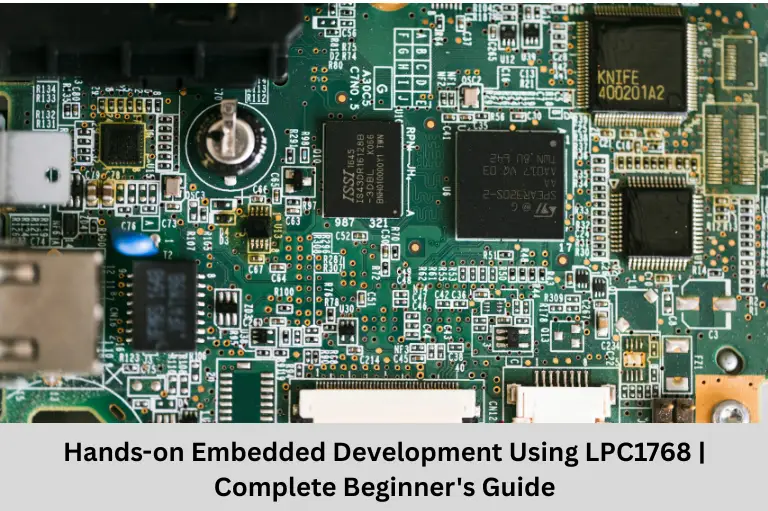
Learn hands-on embedded development using LPC1768 microcontroller. Explore LPC1768 architecture, programming, projects, applications, career opportunities, and ETDA’s embedded systems training with assured placements.
- Hands-on Embedded Development Using LPC1768 | Complete Beginner's Guide
-
Hands-on Embedded Development Using LPC1768
- What is LPC1768?
- Key Features of LPC1768
- Why Learn LPC1768 for Embedded Development?
- Software Required for LPC1768 Development
- Hands-on Embedded Projects Using LPC1768
- Essential Skills for LPC1768 Developers
- Applications of LPC1768
- Career Opportunities After Learning LPC1768
- Why Choose ETDA for LPC1768 Training?
- Frequently Asked Questions (FAQs)
- Conclusion
Hands-on Embedded Development Using LPC1768
Embedded systems are the driving force behind today’s smart devices, from industrial automation and automotive electronics to medical equipment and IoT applications. As industries continue to embrace automation and intelligent technologies, the demand for skilled embedded engineers is increasing rapidly. One of the best ways for engineering students to gain practical knowledge in this field is by learning embedded development using the LPC1768 microcontroller.
The LPC1768, developed by NXP Semiconductors, is a powerful 32-bit ARM Cortex-M3 microcontroller that is widely used in academic institutions, research laboratories, and embedded product development. Its rich peripheral support, high processing capability, and compatibility with modern development tools make it an excellent platform for learning real-world embedded programming.
Unlike learning only theoretical concepts, hands-on development with LPC1768 helps students understand how software interacts with hardware. Programming peripherals, interfacing sensors, controlling motors, and implementing communication protocols provide valuable practical experience that employers seek.
Embedded Tech Development Academy (ETDA) offers industry-oriented training in LPC1768, Embedded C, ARM Cortex-M, STM32, RTOS, Internet of Things(IoT), CAN Protocol, and Automotive Embedded Systems, along with assured placement support. Through practical lab sessions and real-time projects, ETDA helps engineering students develop industry-ready skills for successful careers in embedded technology.
In this guide, we’ll explore the LPC1768 microcontroller, its features, programming workflow, hands-on projects, applications, career opportunities, and how ETDA helps students become embedded professionals.
What is LPC1768?
The LPC1768 is a high-performance 32-bit ARM Cortex-M3 microcontroller designed for embedded applications requiring speed, reliability, and flexibility.
It combines a powerful processor with multiple built-in peripherals, allowing developers to create sophisticated embedded systems without requiring additional hardware.
The LPC1768 is widely used in:
- Embedded Systems Education
- Industrial Automation
- Robotics
- Medical Devices
- Consumer Electronics
- IoT Applications
- Automotive Electronics
Because of its balanced performance and ease of programming, it remains one of the most recommended microcontrollers for engineering students.
Key Features of LPC1768
The popularity of LPC1768 comes from its impressive hardware capabilities.
ARM Cortex-M3 Processor
Industries actively hiring embedded engineers include:
- Automotive
- IoT
- Consumer Electronics
- Healthcare
- Industrial Automation
- Robotics
- Aerospace
- Telecommunications
- Semiconductor Companies
As technology becomes smarter and more connected, companies require skilled engineers to develop embedded products.
Rich Peripheral Support
The microcontroller includes numerous built-in peripherals.
Common Peripherals
- GPIO
- ADC
- DAC
- Timers
- PWM
- UART
- SPI
- I2C
- CAN
- USB
- Ethernet
- RTC
These peripherals allow developers to build complete embedded systems with minimal external components.
Large Memory Capacity
LPC1768 offers sufficient Flash memory and SRAM to develop medium and large embedded applications.
This enables implementation of:
- Communication Protocols
- RTOS Applications
- IoT Solutions
- Data Logging Systems
Low Power Modes
Multiple power-saving modes improve battery efficiency in portable embedded devices.
Why Learn LPC1768 for Embedded Development?
Learning LPC1768 offers several advantages for engineering students.
Industry-Relevant Skills
The ARM Cortex-M architecture is widely used in embedded products across industries.
Understanding LPC1768 builds a strong foundation for learning other ARM-based controllers such as STM32.
Practical Hardware Experience
Students gain practical exposure to:
- Register Programming
- Peripheral Configuration
- Sensor Interfacing
- Hardware Debugging
- Embedded Firmware Development
Hands-on experience improves technical confidence.
Excellent Learning Platform
LPC1768 is beginner-friendly while still being powerful enough for advanced applications.
Students can gradually progress from simple LED programs to complex IoT projects.
Software Required for LPC1768 Development
Before starting embedded development, students should become familiar with commonly used development tools.
Embedded C Programming
Most LPC1768 applications are developed using Embedded C, enabling direct interaction with hardware registers and peripherals.
IDEs
Popular Integrated Development Environments include:
- Keil uVision
- MCUXpresso IDE
These tools support coding, compiling, debugging, and flashing firmware.
Debugging Tools
Developers use hardware debuggers to test and troubleshoot applications efficiently.
Common debugging methods include:
- Breakpoints
- Step Execution
- Variable Monitoring
- Register Inspection
Hands-on Embedded Projects Using LPC1768
Practical projects help students understand embedded concepts more effectively.
Beginner-Level Projects
Begin with simple applications to understand the basics, build foundational knowledge, gain practical experience, improve problem-solving skills, and gradually progress to more advanced projects.
LED Blinking
Learn GPIO programming and timing concepts to understand microcontroller operations, control input/output devices, manage delays, and build a strong embedded systems foundation.
Push Button Interface
Understand digital input handling to read sensor signals, detect switch states, process user inputs, and develop reliable embedded system applications effectively.
LCD Display
Display messages and sensor values on output devices to monitor system status, visualize data, improve debugging, and enhance user interaction effectively.
Buzzer Control
Intermediate Projects
After learning the basics, move to more advanced applications.
Temperature Monitoring System
DC Motor Speed Control
Use PWM signals for motor control to regulate speed, adjust performance, improve efficiency, and gain practical experience in embedded system design.
Digital Voltmeter
Measure analog voltage using ADC to convert real-world signals into digital data, monitor sensor outputs, and develop accurate embedded applications.
Home Automation
Advanced Projects
Develop projects that reflect industry requirements, enhance practical skills, solve real-world problems, strengthen technical expertise, and improve career opportunities.
IoT-Based Smart Home
Monitor and control devices remotely using connected systems, access real-time data, automate operations, improve efficiency, and gain hands-on IoT experience.
Industrial Automation System
Automate industrial processes using sensors and actuators to improve efficiency, enhance accuracy, reduce manual intervention, and develop reliable control systems.
CAN-Based Vehicle Communication
Implement Controller Area Network (CAN) communication between embedded devices to enable reliable data exchange, support real-time applications, and develop automotive-grade systems.
Smart Agriculture System
Monitor soil moisture, temperature, and irrigation.
These projects build practical experience and strengthen technical portfolios.
Essential Skills for LPC1768 Developers
Students should master multiple technical skills alongside LPC1768 programming.
C Programming
Strong programming fundamentals are essential for embedded development, enabling efficient coding, problem-solving, debugging, hardware interaction, and reliable system design.
Embedded C
ARM Cortex-M Architecture
Understand processor organization, interrupts, memory, and registers to build a strong foundation in embedded systems and develop efficient low-level applications.
Communication Protocols
Important Protocols
- UART
- SPI
- I2C
- CAN
- USB
These protocols are widely used in embedded products.
RTOS
Real-Time Operating Systems help manage multitasking applications.
Popular RTOS platforms include:
- FreeRTOS
- CMSIS-RTOS
Debugging Skills
Developers must identify hardware and software issues quickly.
Practical debugging is an essential industry skill.
Applications of LPC1768
LPC1768 is used across multiple industries.
Industrial Automation
Machine control, monitoring, and process automation enable efficient operations, improve productivity, enhance reliability, and support the development of intelligent industrial systems.
Robotics
Motor control, autonomous robots, and robotic arms help develop intelligent systems, automate tasks, improve precision, and enhance practical robotics skills.
Automotive Electronics
Dashboard systems, CAN communication, and vehicle electronics provide hands-on experience in automotive technology, real-time networking, and embedded system development.
Medical Devices
Portable monitoring systems and diagnostic equipment enable real-time data analysis, improve system reliability, support healthcare and industrial applications, and enhance embedded design skills.
Consumer Electronics
Smart appliances, home automation, and digital devices enhance convenience, improve energy efficiency, enable remote control, and provide practical experience in embedded systems.
Internet of Things (IoT)
Career Opportunities After Learning LPC1768
Practical experience with LPC1768 opens multiple career paths.
Embedded Software Engineer
Develop firmware for embedded devices to control hardware, optimize performance, manage peripherals, and build reliable real-time embedded applications.
Firmware Engineer
Create low-level software for ARM-based systems to manage hardware resources, optimize performance, and develop efficient embedded applications.
IoT Developer
Automotive Embedded Engineer
Work on Electronic Control Units (ECUs), CAN communication, and automotive firmware to develop reliable vehicle systems and gain expertise in automotive embedded technologies.
Embedded Test Engineer
Test and validate embedded hardware and software to ensure reliability, identify defects, improve performance, and deliver high-quality embedded system solutions.
Why Choose ETDA for LPC1768 Training?
Learning LPC1768 through structured, hands-on training accelerates career growth.
Embedded Tech Development Academy (ETDA) is one of Bangalore’s leading Embedded Systems training institutes, providing practical learning and industry exposure.
Industry-Focused Curriculum
Students receive hands-on training in:
C Programming
Embedded C
ARM Cortex-M & LPC1768
Gain practical experience with ARM-based microcontrollers to develop embedded applications, understand hardware interfaces, and build industry-relevant technical skills.
STM32
RTOS
Develop multitasking real-time applications to manage concurrent tasks efficiently, improve system responsiveness, and gain expertise in real-time embedded systems.
IoT
CAN Protocol, ECU Concepts & Automotive Software Fundamentals
Gain hands-on knowledge of Controller Area Network (CAN) Protocol, one of the most widely used communication protocols in modern vehicles. Learn how Electronic Control Units (ECUs) communicate to control functions such as engine management, braking systems, airbags, and infotainment. Students also understand the fundamentals of automotive embedded software, diagnostic communication, and industry practices used in automotive electronics.
Real-Time Project Experience
Students work on projects such as:
- Smart Home Automation
- Industrial Monitoring
- Smart Energy Meter
- Vehicle Tracking
- IoT Weather Station
- CAN Communication System
- Robotics Controller
These projects enhance practical skills and improve placement opportunities.
Expert Mentorship
Experienced trainers guide students through coding, debugging, hardware interfacing, and project implementation.
Assured Placement Support
ETDA helps students launch successful careers through:
- Resume Building
- Technical Interview Preparation
- Aptitude Training
- Mock Interviews
- HR Interview Guidance
- Assured Placement Assistance
This comprehensive support helps students confidently enter the embedded industry.
Frequently Asked Questions (FAQs)
What is LPC1768?
LPC1768 is a 32-bit ARM Cortex-M3 microcontroller developed by NXP Semiconductors, widely used for embedded systems development, education, industrial automation, and IoT applications.
Is LPC1768 good for beginners?
Yes. LPC1768 offers a balance of simplicity and advanced features, making it an excellent platform for students learning embedded programming.
Which programming language is used with LPC1768?
Most LPC1768 applications are developed using C Programming and Embedded C.
What projects can I build using LPC1768?
You can build LED controllers, LCD interfaces, home automation systems, IoT devices, motor controllers, industrial monitoring systems, CAN communication applications, and robotics projects.
Which industries use LPC1768?
LPC1768 is used in industrial automation, automotive electronics, robotics, IoT, medical devices, and consumer electronics.
Is learning LPC1768 useful for getting a job?
Yes. Learning LPC1768 strengthens your understanding of ARM Cortex-M architecture and embedded programming, improving your chances of securing roles in embedded systems, IoT, and automotive engineering.
Does ETDA provide practical LPC1768 training?
Yes. Embedded Tech Development Academy (ETDA) offers hands-on training in LPC1768, Embedded C, ARM Cortex-M, STM32, RTOS, IoT, and Automotive Embedded Systems with assured placement support, helping students become industry-ready.
Conclusion
Hands-on experience with the LPC1768 microcontroller is one of the best ways to develop practical embedded systems skills. By learning Embedded C, ARM Cortex-M architecture, communication protocols, peripheral interfacing, debugging, and real-time project development, engineering students gain the technical expertise required by leading embedded technology companies.
While theoretical knowledge provides the foundation, real-world projects and hardware programming build the confidence needed to solve industry challenges and perform well in technical interviews.
Embedded Tech Development Academy (ETDA) helps students transform classroom learning into practical expertise through industry-oriented training, modern lab facilities, live embedded projects, expert mentorship, and assured placement support. Whether your goal is to become an Embedded Software Engineer, Firmware Developer, IoT Engineer, or Automotive Embedded Engineer, ETDA provides the knowledge, practical exposure, and career guidance needed to build a successful future in the rapidly growing field of Embedded Systems.
Author: ETDA Trainers
Experience: 10+ Years of Industry Experience in Embedded Systems, IoT, and Embedded C Programming