
How C Programming Helps ECE Students Get Core Jobs | Complete Career Guide
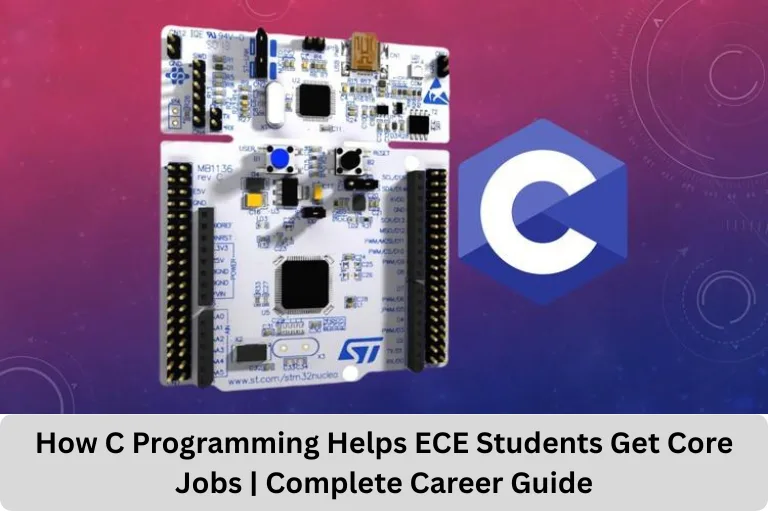
Discover how C programming helps ECE students secure core jobs in Embedded Systems, VLSI, IoT, and Automotive industries. Learn career benefits, applications, and training opportunities at ETDA.
- How C Programming Helps ECE Students Get Core Jobs | Complete Career Guide
-
How C Programming Helps ECE Students Get Core Jobs
- Why C Programming is Important for ECE Students
- Core Industries That Require C Programming Skills
- How C Programming Improves Job Opportunities
- Important C Programming Concepts Every ECE Student Should Learn
- Role of C Programming in Embedded Systems
- Why Companies Ask C Programming Questions in Interviews
- How ETDA Helps ECE Students Master C Programming
- Career Opportunities for ECE Students with C Programming Skills
- Tips for ECE Students to Learn C Programming Effectively
-
Frequently Asked Questions (FAQs)
- Is C programming important for ECE students?
- Can I get a core job with C programming knowledge?
- Why is C preferred in embedded systems?
- Which industries hire ECE students with C programming skills?
- Does ETDA teach C programming for beginners?
- What is the difference between C and Embedded C?
- How long does it take to learn C programming?
- Conclusion
How C Programming Helps ECE Students Get Core Jobs
For Electronics and Communication Engineering (ECE) students, securing a core job after graduation is one of the biggest career goals. However, with increasing competition in the job market, having only academic knowledge is often not enough. Companies today look for candidates who possess practical technical skills that can be applied directly in real-world projects.
One of the most valuable skills that can significantly improve an ECE student’s employability is C Programming. Whether you aspire to work in Embedded Systems, IoT, Automotive Electronics, Consumer Electronics, Robotics, or Semiconductor industries, C programming serves as the foundation for many core engineering roles.
Embedded Tech Development Academy (ETDA) helps ECE students build strong programming skills through industry-oriented training in C Programming, Embedded C, ARM Cortex-M, STM32, RTOS, Embedded Linux, and IoT technologies. By combining theory with hands-on practical experience, ETDA prepares students for successful careers in core electronics industries.
In this guide, we’ll explore why C programming is important for ECE students, how it helps in securing core jobs, and how learning C can open doors to exciting career opportunities.
Why C Programming is Important for ECE Students
C programming is often called the “mother of programming languages” because many modern programming languages have evolved from it.
For ECE students, C is particularly important because it allows direct interaction with hardware and memory, making it ideal for embedded systems and electronics applications.
Industry Standard for Embedded Systems
Most embedded devices are programmed using C because it offers:
- High performance
- Fast execution
- Low memory usage
- Direct hardware access
- Portability across platforms
This makes C the preferred language for embedded software development.
Foundation for Advanced Technologies
Learning C helps students understand advanced concepts such as:
- Embedded Systems
- Embedded C Programming
- RTOS
- Device Drivers
- Microcontroller Programming
- IoT Development
- Automotive Software
Without a solid understanding of C, learning these technologies becomes significantly more challenging.
Core Industries That Require C Programming Skills
Many core engineering industries actively recruit candidates with strong C programming knowledge.
Embedded Systems Industry
Embedded systems are used in:
- Smart Devices
- Medical Equipment
- Consumer Electronics
- Industrial Automation
Most firmware and embedded software are developed using C.
Automotive Industry
Modern vehicles contain multiple Electronic Control Units (ECUs).
Applications in Automotive Electronics
- Engine Control Systems
- ABS Systems
- Airbag Controllers
- Infotainment Systems
- Electric Vehicle Controllers
Automotive companies frequently hire engineers skilled in C programming.
Internet of Things (IoT)
IoT devices combine hardware and software to collect and transmit data.
Examples include:
- Smart Homes
- Smart Meters
- Wearable Devices
- Industrial IoT Systems
Most IoT firmware development relies heavily on C programming.
Robotics
Robotic systems require efficient and reliable software.
C programming helps engineers develop:
- Motor Control Systems
- Sensor Interfaces
- Navigation Algorithms
- Real-Time Controllers
Semiconductor Industry
Many semiconductor companies hire ECE graduates for:
- Firmware Development
- Driver Development
- Validation Engineering
- Hardware Testing
Strong programming skills significantly improve hiring prospects.
How C Programming Improves Job Opportunities
Learning C programming provides several advantages during the job search process.
Builds Problem-Solving Skills
Programming teaches students how to:
- Analyze Problems
- Develop Logical Solutions
- Optimize Performance
- Debug Applications
Employers value candidates with strong analytical thinking abilities.
Strengthens Technical Fundamentals
C programming improves understanding of:
Memory Management
Students learn:
- Stack Memory
- Heap Memory
- Dynamic Allocation
Data Structures
Important concepts include:
- Arrays
- Linked Lists
- Stacks
- Queues
Pointers
Pointers are widely used in embedded programming and firmware development.
Makes Students Industry Ready
Companies prefer candidates who can:
- Write Efficient Code
- Understand Hardware Interaction
- Work on Embedded Platforms
- Solve Technical Problems
C programming helps develop these essential skills.
Important C Programming Concepts Every ECE Student Should Learn
To become job-ready, students should master both basic and advanced C concepts.
Basic Concepts
Variables and Data Types
Understanding data storage and manipulation helps in efficiently storing, organizing, and processing digital information.
It plays a key role in computer systems, embedded technology, automation, and IoT applications.
Operators
Performing arithmetic and logical operations is essential for processing data and making decisions in computer and embedded systems.
These operations help systems perform calculations, comparisons, and control functions efficiently in various applications.
Conditional Statements
Decision-making using:
- if
- else
- switch
Loops
Repetitive execution using:
- for
- while
- do-while
Advanced Concepts
Functions
Modular programming divides code into smaller reusable parts for easier development. Code reuse saves time and improves efficiency by using existing modules repeatedly.
Pointers
Direct memory access enables faster data transfer between hardware and memory. Efficient programming improves system performance and optimizes resource usage.
Structures
Organizing complex data efficiently helps improve data management and processing. It makes programs easier to understand, access, and maintain.
Dynamic Memory Allocation
Using:
- malloc()
- calloc()
- realloc()
- free()
File Handling
Reading and writing data to files. These concepts are frequently tested during technical interviews.
Role of C Programming in Embedded Systems
Embedded systems form one of the largest career domains for ECE students.
What is Embedded Programming?
Embedded programming involves developing software that runs on hardware devices such as:
- Microcontrollers
- Sensors
- Communication Modules
- Embedded Processors
C is the primary language used in embedded software development.
Why Embedded Engineers Use C
Hardware Access
C allows direct interaction with hardware registers for low-level programming. It helps control hardware devices efficiently in embedded systems.
Efficient Memory Usage
Embedded devices often have limited memory and processing resources. Efficient programming helps optimize performance and resource usage.
High Performance
C programs execute quickly, making them ideal for real-time applications. They provide fast performance and efficient hardware control.
Why Companies Ask C Programming Questions in Interviews
Most core companies evaluate C programming skills during recruitment.
Common Interview Topics
Interviewers frequently ask questions related to:
- Pointers
- Structures
- Arrays
- Functions
- Memory Allocation
- Data Structures
- Bit Manipulation
Students with strong C fundamentals typically perform better during technical interviews.
How ETDA Helps ECE Students Master C Programming
At Embedded Tech Development Academy (ETDA), C programming is taught from an industry perspective rather than just an academic perspective.
Structured Learning Path
Students progress through:
C Programming Fundamentals
Building a strong foundation in programming concepts helps improve problem-solving skills. It makes learning advanced topics easier and more effective.
Advanced C Programming
Learning pointers, structures, memory management, and optimization techniques builds strong programming skills. It helps in writing efficient and low-level system programs.
Embedded C Programming
Applying C concepts to microcontroller-based systems enables direct hardware control. It is essential for developing embedded applications and devices.
ARM Cortex-M Programming
Hands-on development using ARM processors builds practical embedded system skills.
It helps understand real-world hardware and software interaction.
STM32 Projects
Real-world embedded application development involves building practical hardware-software systems. It prepares developers for industry-level embedded engineering work.
Hands-On Project Experience
Students work on practical projects involving:
- Sensor Interfacing
- Device Control
- Communication Protocols
- IoT Applications
- Automation Systems
This practical approach helps students understand how programming is used in real products.
Placement-Oriented Training
ETDA provides:
- Technical Interview Preparation
- Resume Building
- Mock Interviews
- Career Guidance
These activities improve employability and confidence.
Career Opportunities for ECE Students with C Programming Skills
Strong C programming knowledge can lead to various career paths.
Embedded Software Engineer
Develops software for embedded devices by writing efficient low-level code. It ensures proper hardware control and system performance.
Firmware Engineer
Creates low-level software that directly interacts with hardware components. It enables precise control of embedded system operations.
IoT Developer
Builds connected smart systems by integrating hardware with communication technologies. It enables IoT and modern embedded applications.
Automotive Embedded Engineer
Develops software for vehicle electronics such as control and monitoring systems. It improves safety, performance, and automation in automotive systems.
Device Driver Developer
Software Test Engineer
Tests and validates embedded applications. These roles offer excellent career growth and competitive salaries.
Tips for ECE Students to Learn C Programming Effectively
Practice Daily
Consistency is the key to programming success and skill improvement. Regular practice helps build strong coding and problem-solving abilities.
Build Mini Projects
Apply concepts through practical implementation to gain real-world experience. Hands-on practice improves understanding and technical skills
Learn Data Structures
Data structures improve coding efficiency and enhance problem-solving abilities. They play an important role in technical interviews and software development.
Solve Programming Problems
Practice enhances logical thinking and improves debugging skills. Regular coding helps build confidence and programming expertise.
Learn Embedded Applications
Connect programming concepts with hardware systems for better embedded development understanding. It helps in designing efficient real-time applications.
Frequently Asked Questions (FAQs)
Is C programming important for ECE students?
Yes. C programming is one of the most important skills for ECE students pursuing careers in Embedded Systems, IoT, Automotive Electronics, and Firmware Development.
Can I get a core job with C programming knowledge?
Strong C programming skills significantly improve your chances of securing core engineering jobs, especially when combined with embedded systems knowledge.
Why is C preferred in embedded systems?
C offers direct hardware access, efficient memory usage, and high performance, making it ideal for embedded applications.
Which industries hire ECE students with C programming skills?
Automotive, Embedded Systems, IoT, Robotics, Consumer Electronics, Industrial Automation, and Semiconductor industries.
Does ETDA teach C programming for beginners?
Yes. ETDA provides beginner-friendly C programming training and gradually progresses to Embedded C, ARM, STM32, RTOS, and IoT development.
What is the difference between C and Embedded C?
C is a general-purpose programming language, while Embedded C is used specifically for programming embedded systems and microcontrollers.
How long does it take to learn C programming?
With regular practice and proper guidance, students can learn core C programming concepts within a few weeks and develop advanced skills over a few months.
Conclusion
C programming is one of the most valuable skills an ECE student can learn. It serves as the foundation for Embedded Systems, IoT, Automotive Electronics, Robotics, and many other core engineering domains. Students who master C programming gain stronger problem-solving abilities, better technical understanding, and significantly improved job opportunities.
Embedded Tech Development Academy (ETDA) helps ECE students transform their academic knowledge into industry-ready skills through practical training in C Programming, Embedded C, ARM Cortex-M, STM32, RTOS, Embedded Linux, and IoT technologies. With hands-on projects, expert mentorship, and placement-focused learning, ETDA equips students with the skills required to secure core engineering jobs and build successful careers in the rapidly growing embedded systems industry.
If you are an ECE student looking to enter the core electronics industry, learning C programming is one of the smartest investments you can make for your future.
Author: ETDA Trainers
Experience: 10+ Years of Industry Experience in Embedded Systems, IoT, and Embedded C Programming