
Role of Microcontrollers in Embedded Systems | Complete Beginner's Guide
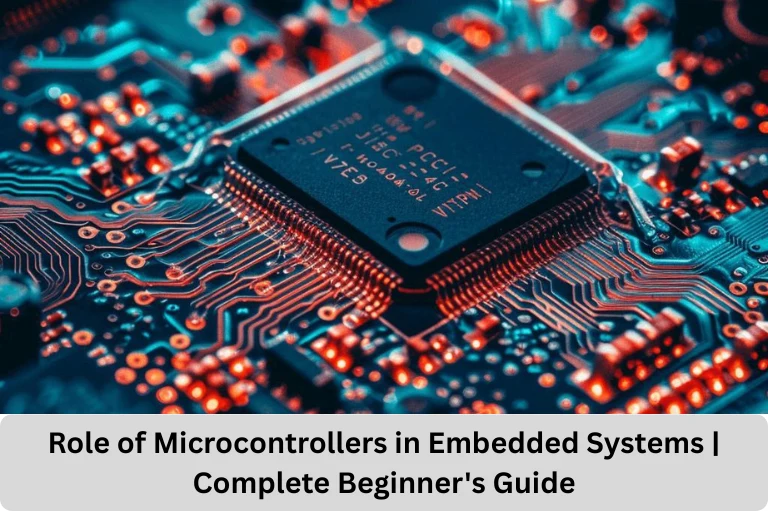
Learn the role of microcontrollers in embedded systems, their architecture, functions, applications, advantages, and career opportunities. A complete guide for beginners and engineering students.
- Role of Microcontrollers in Embedded Systems | Complete Beginner's Guide
-
Role of Microcontrollers in Embedded Systems
- What is a Microcontroller?
- What is an Embedded System?
- Why Microcontrollers are Important in Embedded Systems
- Core Role of Microcontrollers in Embedded Systems
- Architecture of a Microcontroller
- Popular Microcontrollers Used in Embedded Systems
- Applications of Microcontrollers in Embedded Systems
- Advantages of Microcontrollers in Embedded Systems
- How ETDA Helps Students Learn Microcontroller Programming
- Career Opportunities After Learning Microcontrollers
-
Frequently Asked Questions (FAQs)
- What is the role of a microcontroller in an embedded system?
- Is a microcontroller the brain of an embedded system?
- What is the difference between a microcontroller and a microprocessor?
- Which microcontroller is best for beginners?
- Why are microcontrollers important in IoT?
- Does ETDA teach microcontroller programming?
- Can learning microcontrollers help me get a core job?
- Conclusion
Role of Microcontrollers in Embedded Systems
Embedded systems are everywhere today. From smartwatches and washing machines to automobiles, medical devices, industrial automation systems, and IoT products, embedded systems power the technology we use every day. At the heart of most embedded systems lies a critical component known as the microcontroller.
A microcontroller acts as the brain of an embedded system, controlling its operations, processing inputs, making decisions, and managing outputs. Without microcontrollers, modern electronic devices would not be able to perform automated tasks efficiently.
For engineering students and aspiring embedded engineers, understanding the role of microcontrollers is essential because they form the foundation of embedded systems development. Learning microcontroller programming opens the door to exciting career opportunities in Embedded Systems, Internet of Things(IoT), Automotive Electronics, Robotics, and Industrial Automation.
At Embedded Tech Development Academy (ETDA), students gain practical experience working with industry-standard microcontrollers such as ARM Cortex-M and STM32 through hands-on projects and real-time applications. This practical approach helps learners understand how microcontrollers power modern embedded devices.
In this guide, we will explore the role of microcontrollers in embedded systems, their architecture, applications, benefits, and why they are so important in today’s technology-driven world.
What is a Microcontroller?
A microcontroller is a compact integrated circuit designed to perform specific control-oriented tasks within an embedded system.
Unlike a microprocessor, which requires external memory and peripherals, a microcontroller contains multiple components integrated into a single chip.
These typically include:
- Central Processing Unit (CPU)
- Memory (RAM, ROM, Flash)
- Input/Output Ports (GPIO)
- Timers and Counters
- Communication Interfaces
- Analog-to-Digital Converters (ADC)
This integration makes microcontrollers cost-effective, efficient, and ideal for embedded applications.
What is an Embedded System?
An embedded system is a specialized computing system designed to perform a dedicated function within a larger device.
Examples include:
- Smart TVs
- Microwave Ovens
- Air Conditioners
- Medical Monitors
- Security Systems
- Industrial Controllers
- Automotive ECUs
Every embedded system requires a processing unit to execute instructions and manage hardware components. This is where the microcontroller plays a crucial role.
Why Microcontrollers are Important in Embedded Systems
Microcontrollers serve as the decision-making unit of an embedded system. They continuously monitor inputs, process information, and control outputs according to programmed instructions. Without microcontrollers, automation and intelligent control would not be possible.
Core Role of Microcontrollers in Embedded Systems
Processing Data
One of the primary functions of a microcontroller is data processing.
Microcontrollers receive information from:
- Sensors
- Switches
- Communication Modules
- External Devices
The CPU processes this information and determines the appropriate response.
Example
In a smart thermostat:
- Temperature sensor measures room temperature.
- Microcontroller processes the data.
- Air conditioning system is controlled accordingly.
Controlling Input and Output Devices
Embedded systems interact with the physical world through inputs and outputs.
Input Devices
- Sensors
- Buttons
- Keypads
- Touch Panels
Output Devices
- LEDs
- Displays
- Motors
- Relays
- Buzzers
Microcontrollers manage these devices efficiently.
Decision Making
Microcontrollers execute programmed logic to make decisions.
Example
In an automatic street lighting system:
- Light sensor detects darkness.
- Microcontroller evaluates the sensor data.
- Street lights turn ON automatically.
This intelligent behavior is achieved through embedded programming.
Communication Between Devices
Modern embedded systems often communicate with multiple devices.
Microcontrollers support communication protocols such as:
UART
Serial communication allows electronic devices to exchange data efficiently. It is commonly used in embedded systems to connect microcontrollers and peripherals.
SPI
A fast and reliable protocol used for data transfer between devices. It enables efficient communication in embedded and electronic systems.
I2C
Supports communication between multiple devices using a single shared bus. It enables efficient and organized data transfer in embedded systems.
CAN
Widely used in automotive systems. These protocols enable seamless data exchange.
Real-Time Control
Many applications require immediate responses to changing conditions. Microcontrollers support real-time control functions.
Examples
- Airbag Deployment Systems
- Anti-Lock Braking Systems (ABS)
- Industrial Safety Systems
- Medical Monitoring Devices
Fast response times are critical in these applications.
Architecture of a Microcontroller
Understanding the internal structure of a microcontroller helps engineers design efficient embedded systems.
Central Processing Unit (CPU)
The CPU executes instructions and performs calculations.
Functions include:
- Arithmetic Operations
- Logical Operations
- Control Functions
The CPU acts as the brain of the microcontroller.
Memory
Microcontrollers contain different types of memory for storing data and programs. These memories help in executing instructions and managing system operations efficiently.
Flash Memory
Stores the program code permanently inside the microcontroller. It retains data even when the power is turned off.
RAM
Stores temporary data while the program is running. This memory is used during execution for processing and calculations.
EEPROM
Stores important configuration data even when power is turned off. It helps retain settings and system information permanently.
GPIO Ports
General Purpose Input Output pins allow interaction with external hardware.
GPIO pins can be configured as:
- Inputs
- Outputs
They are commonly used for sensors and LEDs.
Timers and Counters
Timers help manage:
- Delays
- Scheduling
- Pulse Generation
- Frequency Measurement
They are widely used in embedded applications.
Communication Interfaces
Microcontrollers include built-in communication peripherals such as:
- UART
- SPI
- I2C
- CAN
- USB
These interfaces simplify device connectivity.
Popular Microcontrollers Used in Embedded Systems
Several microcontroller families are commonly used in the industry.
ARM Cortex-M
One of the most widely used architectures in embedded systems.
Applications include:
- Industrial Automation
- Medical Electronics
- IoT Devices
STM32
STM32 microcontrollers are built on ARM Cortex-M architecture and are widely used in industrial applications. They provide high performance, low power consumption, and advanced peripheral support.
AVR Microcontrollers
Commonly used in educational, learning, and hobby electronics projects. They are popular for building simple embedded systems and IoT applications.
PIC Microcontrollers
Known for their reliability, simplicity, and efficient performance. They are widely used in embedded systems and electronic applications.
At ETDA, students gain practical exposure to ARM Cortex-M and STM32 platforms that are widely used in industry.
Applications of Microcontrollers in Embedded Systems
Microcontrollers are found in nearly every industry.
Consumer Electronics
Examples include:
- Washing Machines
- Microwave Ovens
- Smart TVs
- Digital Cameras
Automotive Systems
Applications include:
- Engine Control Units
- Airbag Systems
- ABS Controllers
- Electric Vehicles
Medical Equipment
Examples include:
- ECG Machines
- Patient Monitoring Systems
- Infusion Pumps
Industrial Automation
Used in:
- PLC Systems
- Robotics
- Process Control Equipment
Internet of Things (IoT)
IoT devices depend heavily on microcontrollers.
Examples include:
- Smart Meters
- Smart Homes
- Wearable Devices
- Environmental Monitoring Systems
Advantages of Microcontrollers in Embedded Systems
Compact Design
Multiple functions and components are integrated into a single chip. This improves performance, reduces size, and increases system efficiency.
Low Power Consumption
Microcontrollers are designed for energy-efficient and low-power operation. They help reduce power consumption in embedded and portable devices.
Cost Effectiveness
Integration of multiple components into a single chip reduces overall system cost. It minimizes external hardware requirements and improves efficiency.
Reliability
Microcontrollers deliver stable, reliable, and predictable system performance. They ensure efficient operation in embedded and real-time applications.
Real-Time Performance
Suitable for applications that require fast and real-time responses. They ensure quick processing and efficient system performance.
How ETDA Helps Students Learn Microcontroller Programming
Understanding theory is important, but practical implementation is what industries truly demand.
Embedded Tech Development Academy (ETDA) provides industry-oriented training focused on hands-on learning, real-world applications, and practical skill development.
Ignoring Communication Protocols
Communication protocols are critical in real-world projects, as they enable reliable data exchange between microcontrollers, sensors, peripherals, and other connected devices.
Technologies Covered
C Programming
Acts as the foundation for embedded systems development and programming. It helps in controlling hardware and building efficient electronic applications.
Embedded C
Programming microcontrollers efficiently for embedded system applications. It enables proper control, processing, and communication between hardware components.
ARM Cortex-M Architecture
STM32 Development
Hands-on programming of microcontrollers for real-world embedded applications. It helps students develop practical skills in hardware and firmware development.
Communication Protocols
UART, SPI, I2C, and CAN are widely used communication protocols in embedded systems. They enable reliable data transfer between microcontrollers, sensors, and electronic devices.
RTOS
Development of applications that respond instantly to real-time events and inputs. It is widely used in embedded systems, automation, robotics, and industrial applications.
IoT Integration
Designing embedded systems that can communicate and share data with other devices. These systems are widely used in IoT, automation, and smart technology applications.
Real-Time Projects
Students work on projects involving:
- Sensor Interfacing
- Automation Systems
- IoT Applications
- Smart Device Development
These projects improve practical skills and industry readiness.
Placement Assistance
ETDA supports students through:
- Resume Preparation
- Mock Interviews
- Technical Training
- Career Guidance
- Placement Support
This helps students confidently enter the embedded industry.
Career Opportunities After Learning Microcontrollers
Microcontroller expertise opens doors to numerous technical careers.
Embedded Software Engineer
Develops firmware that controls and manages the operation of embedded devices. Firmware enables communication between hardware components and software applications.
Firmware Engineer
Creates low-level software that directly controls and interacts with hardware components. It enables efficient communication between the hardware and the operating system.
IoT Developer
Builds smart and connected systems that communicate and operate efficiently. These systems are widely used in IoT, automation, healthcare, and industrial applications.
Automotive Embedded Engineer
Develops software for vehicle electronics and automotive control systems. It helps manage functions such as engine control, safety systems, and smart vehicle features.
Industrial Automation Engineer
Works on intelligent control systems. The demand for skilled embedded professionals continues to grow globally.
Frequently Asked Questions (FAQs)
What is the role of a microcontroller in an embedded system?
A microcontroller processes inputs, executes programmed instructions, controls outputs, and manages communication between hardware components.
Is a microcontroller the brain of an embedded system?
Yes. The microcontroller acts as the central processing unit responsible for controlling the entire system.
What is the difference between a microcontroller and a microprocessor?
A microcontroller includes CPU, memory, and peripherals on a single chip, while a microprocessor typically requires external components.
Which microcontroller is best for beginners?
STM32 and ARM Cortex-M-based microcontrollers are excellent choices because of their widespread industry adoption.
Why are microcontrollers important in IoT?
Microcontrollers collect sensor data, process information, and enable communication with cloud platforms and connected devices.
Does ETDA teach microcontroller programming?
Yes. ETDA provides practical training in ARM Cortex-M, STM32, Embedded C, RTOS, IoT, and embedded systems development.
Can learning microcontrollers help me get a core job?
Absolutely. Microcontroller programming is one of the most valuable skills for careers in Embedded Systems, Automotive Electronics, IoT, and Industrial Automation.
Conclusion
Microcontrollers are the heart of embedded systems, enabling intelligent control, automation, real-time processing, and communication across countless electronic devices. From consumer electronics and automotive systems to medical equipment and IoT applications, microcontrollers make modern technology possible.
For students and professionals aspiring to build a career in Embedded Systems, mastering microcontroller programming is a critical step. Understanding architectures such as ARM Cortex-M and platforms like STM32 provides the practical skills required by today’s industries.
Embedded Tech Development Academy (ETDA) empowers learners with hands-on training in microcontrollers, Embedded C, ARM Cortex-M, STM32, RTOS, and IoT technologies. Through real-time projects, expert mentorship, and placement-focused training, ETDA helps students transform theoretical knowledge into industry-ready expertise and successful careers in the embedded systems domain.
Author: ETDA Trainers
Experience: 10+ Years of Industry Experience in Embedded Systems, IoT, and Embedded C Programming