
Top Reasons to Learn STM32 for Embedded Systems Development
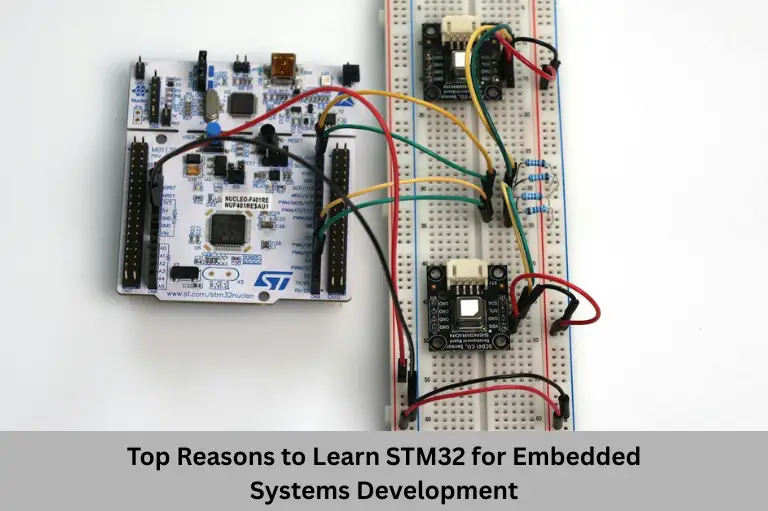
Discover why learning STM32 is essential for embedded systems careers. Explore benefits, applications, job opportunities, and placement-focused STM32 training.
- Top Reasons to Learn STM32 for Embedded Systems Development
-
Top Reasons to Learn STM32 for Embedded Systems Development
- What is STM32?
- Why is STM32 So Popular in Embedded Systems?
- Top Reasons to Learn STM32 for Embedded Systems Development
- High Demand for STM32 Developers
- Large Developer Community
- Skills You Will Learn While Working with STM32
- Why Practical STM32 Training Matters
- Why Choose Embedded Tech Development Academy (ETDA)?
- Who Should Learn STM32?
- Future Scope of STM32
-
Frequently Asked Questions (FAQs)
- Why should I learn STM32 instead of other microcontrollers?
- Is STM32 suitable for beginners?
- What job opportunities are available after learning STM32?
- Does ETDA provide practical STM32 training?
- Does ETDA provide placement assistance after the STM32 course?
- How long does it take to learn STM32?
- Is C programming required to learn STM32?
- What projects can I build using STM32?
- Which software is used for STM32 programming?
- Is STM32 used in the automotive industry?
- Conclusion
Top Reasons to Learn STM32 for Embedded Systems Development
Embedded systems are transforming industries by powering smart devices, industrial automation, automotive electronics, medical equipment, and IoT applications. As companies continue adopting advanced microcontroller-based solutions, professionals with STM32 programming skills are becoming increasingly valuable.
Among the many microcontroller families available today, STM32 has emerged as one of the most preferred platforms for embedded systems development. Designed by STMicroelectronics, STM32 microcontrollers combine high performance, low power consumption, extensive peripheral support, and excellent scalability, making them the industry standard for modern embedded applications.
Whether you are a student, fresher, electronics engineer, or software developer looking to enter embedded systems, learning STM32 can significantly improve your technical expertise and career opportunities.
If you’re searching for the Top Embedded Training Institute in Bangalore, choosing a training program that offers practical STM32 development, live projects, and assured placement support can help you launch a successful career in embedded systems.
What is STM32?
STM32 is a family of 32-bit microcontrollers developed by STMicroelectronics based on the ARM Cortex-M processor architecture.
These microcontrollers are widely used because they offer:
- High processing performance
- Low power operation
- Rich peripheral interfaces
- Excellent real-time capabilities
- Affordable development boards
- Strong software ecosystem
STM32 devices are used in thousands of commercial products worldwide, making them one of the most important technologies for embedded engineers.
Why is STM32 So Popular in Embedded Systems?
STM32 provides the perfect balance between hardware capability and software flexibility.
Unlike basic 8-bit controllers, STM32 allows developers to build complex embedded applications while maintaining low power consumption and high reliability.
Its popularity comes from:
- ARM Cortex-M architecture
- Multiple performance variants
- Extensive documentation
- Free development tools
- Strong developer community
- Industrial-grade reliability
- Wide adoption across industries
These advantages make STM32 the first choice for many embedded product companies.
Top Reasons to Learn STM32 for Embedded Systems Development
Industry-Wide Adoption
One of the biggest reasons to learn STM32 is its extensive use across industries.
Companies developing embedded products rely heavily on STM32 because it supports both simple and complex applications.
Industries Using STM32
Automotive Electronics
- Digital dashboards
- Engine control units
- Battery management
- Vehicle monitoring
Consumer Electronics
- Smart TVs
- Washing machines
- Air conditioners
- Smart speakers
Industrial Automation
- PLC systems
- Motor controllers
- Robotics
- Factory automation
Medical Equipment
- Patient monitoring systems
- Diagnostic devices
- Portable healthcare products
IoT Products
- Smart home devices
- Smart agriculture
- Environmental monitoring
- Connected sensors
Because STM32 is widely used, learning it increases your employability across multiple industries.
High Demand for STM32 Developers
The embedded industry continues to grow rapidly, creating demand for engineers skilled in:
- Embedded C
- ARM programming
- RTOS
- Device drivers
- Firmware development
- Hardware interfacing
- STM32 development
Recruiters actively seek candidates with practical STM32 experience because these skills reduce training time and improve productivity.
Learning STM32 gives you an advantage during campus placements and job interviews.
Excellent Performance
STM32 microcontrollers offer impressive computing capabilities.
Key Performance Features
- ARM Cortex-M0, M3, M4, M7, M33 cores
- High clock frequencies
- Floating Point Unit (FPU)
- DSP instructions
- Real-time processing
- Large Flash memory
- High RAM capacity
This enables developers to build sophisticated embedded applications without compromising efficiency.
Easy Hardware Interfacing
One of the major strengths of STM32 is its rich collection of communication peripherals.
Common Interfaces
- GPIO
- UART
- SPI
- I2C
- CAN
- USB
- Ethernet
- ADC
- DAC
- PWM
- Timers
These interfaces allow engineers to connect sensors, displays, communication modules, actuators, and industrial equipment with ease.
Hands-on experience with these peripherals prepares students for real-world embedded projects.
Strong Support for IoT Development
Modern embedded systems increasingly connect to the internet.
STM32 supports numerous wireless communication technologies including:
IoT Technologies
- Wi-Fi
- Bluetooth
- Zigbee
- LoRa
- NB-IoT
- GSM
- MQTT communication
Developers can easily build IoT solutions using STM32 alongside cloud platforms and mobile applications.
This opens opportunities in one of the fastest-growing technology sectors.
Free Development Tools
Learning STM32 is affordable because most software tools are freely available.
Popular STM32 Development Tools
- STM32CubeIDE
- STM32CubeMX
- STM32 HAL Libraries
- CMSIS
- Keil MDK (evaluation version)
These tools simplify project creation, peripheral configuration, debugging, and firmware development.
Students can practice professional workflows without investing in expensive software.
Large Developer Community
STM32 has one of the largest embedded developer communities.
Thousands of developers contribute through:
- Online forums
- GitHub repositories
- Technical blogs
- Video tutorials
- Open-source libraries
This makes troubleshooting easier and accelerates the learning process.
Better Career Opportunities
STM32 skills are valuable for various embedded engineering roles.
Popular Job Roles
Embedded Software Engineer
Develop firmware for embedded products by writing efficient, reliable, and optimized code to control hardware and enable seamless device functionality.
Firmware Developer
IoT Engineer
Design connected embedded devices by integrating sensors, communication modules, and controllers to build reliable, smart, and efficient IoT-based applications.
Device Driver Engineer
Develop hardware abstraction layers and drivers to enable efficient hardware communication, portability, reliable device control, and seamless embedded software development.
Automotive Embedded Engineer
Work on vehicle electronics and ECU software by developing, testing, and optimizing reliable embedded solutions for modern automotive systems and applications.
Robotics Engineer
Build intelligent robotic systems using STM32 controllers.
Having STM32 expertise significantly improves your chances of securing interviews with product-based companies.
Skills You Will Learn While Working with STM32
A structured STM32 course helps you master essential embedded development skills.
Programming Skills
- Embedded C
- ARM Cortex programming
- Interrupt programming
- Memory management
- Bit manipulation
Peripheral Programming
- GPIO
- Timers
- UART
- SPI
- I2C
- PWM
- ADC
- DAC
Advanced Embedded Concepts
- Bootloaders
- DMA
- RTOS
- Low-power modes
- Communication protocols
- Debugging techniques
These skills align closely with industry expectations and prepare learners for real-world development.
Why Practical STM32 Training Matters
Reading theory alone is not enough to become an embedded engineer.
Employers expect candidates to demonstrate practical experience with hardware and firmware development.
Hands-On Learning Makes the Difference
An effective training program should include:
- Live hardware programming
- Sensor interfacing
- LCD and display projects
- Motor control
- IoT applications
- Communication protocol implementation
- Real-time debugging
- Mini projects
- Capstone projects
Working on practical projects builds confidence and strengthens problem-solving abilities.
Why Choose Embedded Tech Development Academy (ETDA)?
Selecting the right training institute plays a major role in your career success.
For students looking for the Top Embedded Training Institute in Bangalore, Embedded Tech Development Academy (ETDA) provides industry-oriented embedded systems training designed to meet current market demands.
What Makes ETDA Different?
Comprehensive STM32 Curriculum
Learn from embedded fundamentals to advanced STM32 firmware development.
Practical Hardware Labs
Gain hands-on experience with real STM32 development boards and embedded hardware through practical projects, programming, debugging, and hardware interfacing.
Industry Expert Trainers
Learn directly from experienced embedded professionals with real project exposure, industry best practices, practical knowledge, and hands-on development experience.
Live Projects
Build practical embedded applications that strengthen your technical portfolio, enhance problem-solving skills, and improve confidence for technical interviews and careers.
Interview Preparation
Receive guidance on technical interviews, aptitude, coding assessments, resume building, mock interviews, and placement preparation to boost career opportunities.
Assured Placement Support
ETDA provides assured placement support, helping students connect with hiring companies through placement assistance, interview opportunities, career mentoring, and industry networking.
Whether you are a beginner or an experienced professional looking to upgrade your skills, ETDA offers the right environment to build a successful embedded systems career.
Who Should Learn STM32?
STM32 is suitable for learners from various educational and professional backgrounds.
Ideal Learners
- Electronics students
- Electrical engineering graduates
- ECE students
- Diploma holders
- Embedded beginners
- IoT enthusiasts
- Working professionals
- Firmware developers
- Robotics enthusiasts
No matter your starting point, learning STM32 equips you with practical skills that are highly valued in the embedded industry.
Future Scope of STM32
The demand for STM32 developers is expected to rise as embedded technology continues to expand into every sector.
Emerging areas include:
- Artificial Intelligence at the Edge
- Smart Manufacturing
- Industry 4.0
- Electric Vehicles (EVs)
- Smart Cities
- Wearable Technology
- Industrial IoT
- Medical Electronics
- Autonomous Robotics
- Smart Energy Management
As these industries continue to grow, professionals with STM32 expertise will remain in high demand.
Frequently Asked Questions (FAQs)
Why should I learn STM32 instead of other microcontrollers?
STM32 offers better performance, ARM Cortex architecture, advanced peripherals, excellent scalability, and is widely used in the embedded industry, making it a valuable skill for career growth.
Is STM32 suitable for beginners?
Yes. Beginners with basic knowledge of C programming and electronics can learn STM32 through structured training that combines theory with hands-on practical sessions.
What job opportunities are available after learning STM32?
STM32 skills can help you pursue roles such as Embedded Software Engineer, Firmware Developer, IoT Engineer, Device Driver Engineer, Automotive Embedded Engineer, and Robotics Engineer.
Does ETDA provide practical STM32 training?
Yes. Embedded Tech Development Academy (ETDA) emphasizes hands-on learning through real hardware labs, live projects, communication protocol implementation, debugging exercises, and industry-relevant assignments.
Does ETDA provide placement assistance after the STM32 course?
Yes. ETDA offers assured placement support, including resume preparation, mock interviews, technical interview coaching, career guidance, and placement assistance to help students secure opportunities in embedded systems and IoT companies.
How long does it take to learn STM32?
The learning duration depends on your background and the course structure. With consistent practice and hands-on projects, most beginners can gain a solid understanding of STM32 programming within 2–4 months.
Is C programming required to learn STM32?
Yes. A basic understanding of C programming is highly recommended because STM32 firmware development primarily uses Embedded C. However, many training programs cover C fundamentals before introducing STM32 concepts.
What projects can I build using STM32?
You can build a variety of real-world projects, including smart home automation systems, weather monitoring devices, robotic vehicles, motor control systems, IoT-based sensor networks, digital clocks, security systems, and industrial automation applications.
Which software is used for STM32 programming?
The most commonly used tools for STM32 development include STM32CubeIDE, STM32CubeMX, Keil MDK, STM32 HAL Libraries, and debugging tools such as ST-Link.
Is STM32 used in the automotive industry?
Yes. STM32 microcontrollers are widely used in automotive electronics for applications such as engine control units (ECUs), battery management systems, infotainment systems, digital instrument clusters, lighting control, and Advanced Driver Assistance Systems (ADAS).
Conclusion
STM32 has become one of the most powerful and widely adopted microcontroller platforms in the embedded systems industry. Its combination of high performance, low power consumption, extensive peripheral support, and strong software ecosystem makes it an essential skill for aspiring embedded engineers.
Learning STM32 not only enhances your technical capabilities but also improves your career prospects in industries such as automotive, IoT, consumer electronics, healthcare, robotics, and industrial automation.
If you’re looking for the Top Embedded Training Institute in Bangalore, Embedded Tech Development Academy (ETDA) offers comprehensive STM32 training with real-time projects, experienced mentors, practical lab sessions, interview preparation, and assured placement support to help you transition confidently into the embedded systems industry.
Author: ETDA Trainers
Experience: 10+ Years of Industry Experience in Embedded Systems, IoT, and Embedded C Programming