
Why Embedded Systems is the Backbone of Modern Technology | Complete Guide
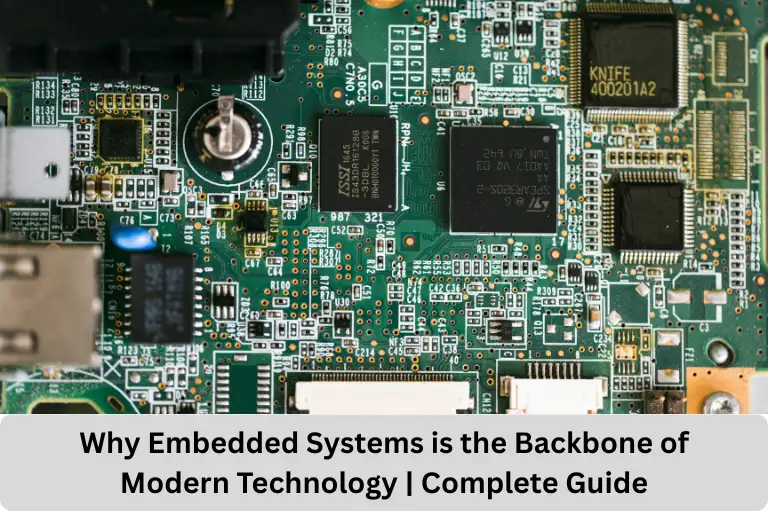
Discover why embedded systems are the backbone of modern technology. Learn their role in IoT, automotive, healthcare, automation, and how ETDA helps students build successful embedded careers.
- Why Embedded Systems is the Backbone of Modern Technology | Complete Guide
-
Why Embedded Systems is the Backbone of Modern Technology
- What are Embedded Systems?
- Why Embedded Systems are Called the Backbone of Modern Technology
- How Embedded Systems Power Everyday Technology
- The Role of Embedded Systems in the Internet of Things (IoT)
- Embedded Systems in Automotive Technology
- Embedded Systems in Healthcare
- Embedded Systems in Industrial Automation
- Technologies Driving Embedded Systems Growth
- Essential Skills Required for Embedded Systems Careers
- Why Engineering Students Should Learn Embedded Systems
- How ETDA Helps Students Build Embedded Systems Careers
-
Frequently Asked Questions (FAQs)
- Why are embedded systems important?
- Which industries use embedded systems?
- Is embedded systems a good career choice?
- What programming language is most important for embedded systems?
- How are embedded systems related to IoT?
- Does ETDA provide embedded systems training?
- Can fresh engineering graduates start a career in embedded systems?
- Conclusion
Why Embedded Systems is the Backbone of Modern Technology
Take a moment and look around you. The smartphone in your hand, the smart TV in your living room, the washing machine in your home, the vehicle you drive, and even the smartwatch on your wrist all have one thing in common—they rely on Embedded Systems.
While most people interact with these devices daily, very few realize that embedded systems are the invisible technology powering modern innovation. Embedded systems are responsible for controlling, monitoring, processing, and automating countless devices that make our lives easier, safer, and more connected.
As technology continues to evolve, embedded systems have become the foundation of industries such as Automotive Electronics, Internet of Things (IoT), Robotics, Healthcare, Consumer Electronics, Aerospace, and Industrial Automation. Without embedded systems, many of the smart technologies we use today simply would not exist.
For engineering students and professionals, understanding embedded systems is more important than ever. Companies across the globe are actively seeking skilled embedded engineers who can develop the next generation of intelligent products.
Embedded Tech Development Academy (ETDA) is helping students prepare for these opportunities through industry-focused training in Embedded Systems, ARM, STM32, Embedded C, RTOS, IoT, and real-time project development. By combining practical learning with placement-oriented training, ETDA helps students become industry-ready professionals.
In this article, we will explore why embedded systems are considered the backbone of modern technology and why learning embedded systems can open doors to exciting career opportunities.
What are Embedded Systems?
An embedded system is a specialized computer system designed to perform a specific function within a larger electronic device.
Unlike desktop computers or laptops that perform multiple tasks, embedded systems are built for dedicated applications.
Examples include:
- Smart Watches
- Microwave Ovens
- Air Conditioners
- Medical Devices
- Security Systems
- Smart Home Products
- Industrial Controllers
- Automotive Electronics
These systems combine hardware and software to perform tasks efficiently and reliably.
Why Embedded Systems are Called the Backbone of Modern Technology
Modern technology depends heavily on automation, connectivity, and intelligent decision-making. Embedded systems make all of this possible.
They serve as the control centers of electronic devices by:
- Processing Data
- Monitoring Inputs
- Controlling Outputs
- Managing Communication
- Executing Real-Time Operations
Without embedded systems, smart technology would not function effectively.
How Embedded Systems Power Everyday Technology
Most people use embedded systems daily without even realizing it.
Smartphones
Modern smartphones contain multiple embedded processors responsible for:
Touchscreen Control
Managing touch inputs and gestures to ensure smooth and responsive user interaction. It involves detecting touch events and interpreting gestures like swipe, tap, and pinch for better control and usability.
Camera Operations
Image processing and autofocus control to enhance camera performance and image clarity. It involves analyzing captured images and automatically adjusting focus for sharp, high-quality results.
Connectivity
Managing Wi-Fi, Bluetooth, GPS, and cellular communication to enable seamless device connectivity. Embedded systems ensure smooth and reliable operation of all these communication features for efficient data transfer and location services.
Home Appliances
Smart appliances rely heavily on embedded controllers.
Examples include:
- Washing Machines
- Refrigerators
- Microwave Ovens
- Air Conditioners
These systems automate tasks and improve energy efficiency.
Smart Home Devices
Embedded systems enable devices such as:
- Smart Lights
- Smart Door Locks
- Smart Speakers
- Home Security Systems
These devices form the foundation of modern smart homes.
The Role of Embedded Systems in the Internet of Things (IoT)
The Internet of Things is transforming how devices communicate and interact.
IoT refers to a network of connected devices that exchange data through the internet.
However, every IoT device requires an embedded system to function.
Data Collection
Embedded systems collect information from sensors.
Examples include:
- Temperature Sensors
- Motion Sensors
- Humidity Sensors
- Pressure Sensors
Data Processing
Collected data is analyzed and processed locally.
This enables devices to make intelligent decisions.
Communication
Embedded systems support communication through:
Wi-Fi
Wireless internet connectivity.
Bluetooth
Short-range communication.
Zigbee
Low-power IoT communication.
LoRa
Long-range communication for IoT networks.
These technologies make connected ecosystems possible.
Embedded Systems in Automotive Technology
The automotive industry has become one of the largest consumers of embedded systems.
Modern vehicles contain dozens of embedded controllers.
Engine Control Units (ECUs)
ECUs manage engine performance and fuel efficiency.
Advanced Driver Assistance Systems (ADAS)
Embedded systems support features such as:
- Lane Assistance
- Collision Detection
- Adaptive Cruise Control
Electric Vehicles (EVs)
EVs rely on embedded technology for:
- Battery Management
- Motor Control
- Charging Systems
- Vehicle Diagnostics
As electric vehicles become more popular, demand for embedded engineers continues to rise.
Embedded Systems in Healthcare
Healthcare technology has advanced significantly through embedded systems.
Examples include:
Patient Monitoring Systems
It involves measuring parameters like heart rate, blood pressure, and oxygen levels using embedded sensors for accurate health monitoring.
Medical Imaging Equipment
Supporting diagnostic procedures to help in accurate detection and analysis of medical conditions.
It involves processing medical data and sensor inputs to assist doctors in making faster and more reliable diagnoses.
Wearable Health Devices
Examples include:
- Fitness Trackers
- Smartwatches
- Heart Rate Monitors
These devices help improve patient care and health monitoring.
Embedded Systems in Industrial Automation
Manufacturing industries are increasingly adopting automation technologies.
Embedded systems play a crucial role in:
Robotics
Industrial robots perform repetitive tasks with high precision to improve productivity and consistency in manufacturing. They are controlled by embedded systems that ensure accurate movement, speed control, and reliable operation in industrial environments.
Process Control
Monitoring and controlling industrial operations to ensure smooth, safe, and efficient production processes. It involves using embedded systems to supervise machines, manage parameters, and maintain optimal performance in real time.
Predictive Maintenance
Detecting equipment issues before failures occur through continuous monitoring and early fault detection. It uses embedded sensors and predictive analysis to identify abnormalities and prevent unexpected breakdowns.
Quality Assurance
Ensuring consistent product quality. Industry 4.0 initiatives are further increasing the importance of embedded technologies.
Technologies Driving Embedded Systems Growth
Several emerging technologies are accelerating the adoption of embedded systems.
Artificial Intelligence (AI)
Embedded AI enables devices to perform intelligent operations.
Examples include:
- Facial Recognition
- Voice Recognition
- Smart Surveillance
Edge Computing
Edge computing processes data closer to the source.
Benefits include:
Faster Responses
Reduced latency.
Improved Security
Sensitive data remains local.
Reduced Network Load
Less dependence on cloud infrastructure.
5G Connectivity
5G enables:
- Faster Communication
- Lower Latency
- Greater Device Connectivity
This supports large-scale IoT deployments.
Essential Skills Required for Embedded Systems Careers
Students interested in embedded systems should focus on developing key technical skills.
Programming Skills
C Programming
The foundation of embedded software development for creating efficient and reliable embedded applications. It enables hardware to perform specific tasks through well-designed software programs.
Embedded C
Used for hardware-level programming to directly interact with microcontrollers and embedded devices. It provides efficient control over system resources and hardware operations.
Microcontroller Programming
Popular platforms include:
- ARM Cortex-M
- STM32
- AVR
- PIC
Communication Protocols
Essential protocols include:
- UART
- SPI
- I2C
- CAN
Real-Time Operating Systems (RTOS)
Understanding connected devices and cloud communication is increasingly important.
Why Engineering Students Should Learn Embedded Systems
Embedded systems offer excellent career opportunities because they combine hardware and software expertise.
Benefits include:
High Industry Demand
Companies actively hire embedded professionals to develop and maintain smart electronic systems. The growing demand for embedded technology creates excellent career opportunities across industries.
Diverse Career Opportunities
Industries include:
- Automotive
- Aerospace
- Healthcare
- Consumer Electronics
- Telecommunications
Future-Proof Career
The growth of IoT, AI, Robotics, and Automation is driving the demand for embedded systems professionals. These technologies ensure strong long-term career opportunities and industry relevance.
How ETDA Helps Students Build Embedded Systems Careers
Embedded Tech Development Academy (ETDA) provides industry-oriented training designed to bridge the gap between academic learning and industry expectations.
Comprehensive Training Programs
Students gain expertise in:
C Programming
Building strong programming foundations for developing efficient and reliable embedded applications. It helps students understand core coding concepts and problem-solving techniques.
Embedded C
Developing firmware for embedded devices to control hardware functionality and system operations. It enables devices to perform specific tasks efficiently and reliably.
ARM Cortex-M
Industry-standard processor architecture widely used in embedded systems and modern electronic devices. It offers high performance, low power consumption, and scalability for diverse applications.
STM32 Development
Practical microcontroller programming for developing and testing real-time embedded applications. It helps learners gain hands-on experience in controlling hardware and peripherals.
RTOS
Real-time application development for systems that require immediate response and reliable performance. It enables embedded devices to process data and execute tasks within strict timing constraints.
IoT Technologies
Building connected embedded solutions for seamless communication between devices and networks. It enables smart systems to exchange data and operate efficiently in real-time environments.
Hands-On Project Experience
Students work on:
- Home Automation Systems
- Smart Monitoring Projects
- Industrial Automation Applications
- IoT-Based Solutions
These projects help students gain practical skills valued by employers.
Placement-Focused Learning
ETDA supports students with:
- Resume Preparation
- Mock Interviews
- Technical Assessments
- Career Guidance
- Placement Assistance
This helps students confidently enter the embedded industry.
Frequently Asked Questions (FAQs)
Why are embedded systems important?
Embedded systems enable automation, real-time processing, and intelligent control in modern electronic devices.
Which industries use embedded systems?
Automotive, healthcare, consumer electronics, aerospace, industrial automation, telecommunications, and IoT industries extensively use embedded systems.
Is embedded systems a good career choice?
Yes. Embedded systems continue to offer excellent career opportunities due to growing demand across multiple industries.
What programming language is most important for embedded systems?
Embedded C is the most widely used programming language for embedded development.
How are embedded systems related to IoT?
Embedded systems act as the processing and control units inside IoT devices.
Does ETDA provide embedded systems training?
Yes. ETDA offers practical training in Embedded Systems, ARM, STM32, Embedded C, RTOS, IoT, and placement-oriented learning.
Can fresh engineering graduates start a career in embedded systems?
Absolutely. With proper training, project experience, and technical skills, fresh graduates can successfully enter the embedded systems industry.
Conclusion
Embedded systems have become the backbone of modern technology because they power the devices, machines, and intelligent systems that shape our daily lives. From smartphones and smart homes to electric vehicles, industrial automation, healthcare devices, and IoT solutions, embedded systems are driving innovation across every major industry.
As technologies such as Artificial Intelligence, IoT, Edge Computing, Robotics, and 5G continue to expand, the demand for skilled embedded engineers will only increase. For engineering students seeking a future-proof and rewarding career, embedded systems offer immense opportunities for growth and specialization.
Embedded Tech Development Academy (ETDA) provides the ideal platform to build these skills through hands-on training, real-time projects, industry-relevant technologies, and placement-focused learning. By mastering Embedded C, ARM Cortex-M, STM32, RTOS, and IoT technologies at ETDA, students can confidently prepare for successful careers in one of the most exciting and rapidly growing fields in technology.
Author: ETDA Trainers
Experience: 10+ Years of Industry Experience in Embedded Systems, IoT, and Embedded C Programming