
Basic Electronics for Beginners: A Complete Introduction | Beginner's Guide
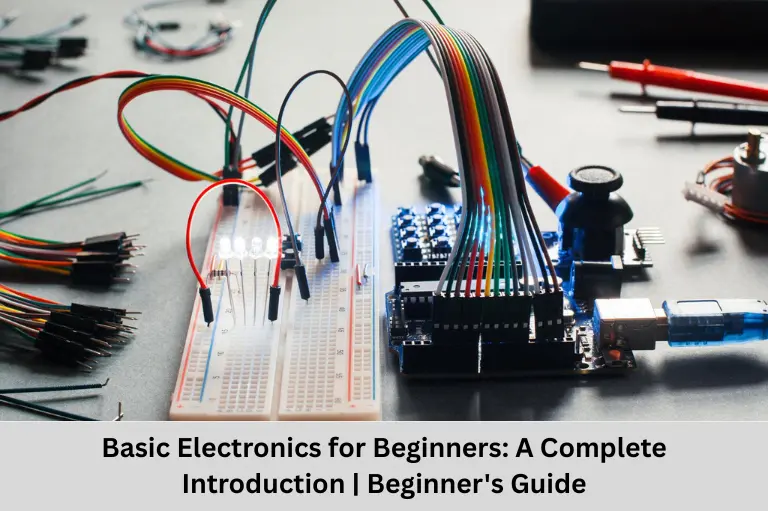
Learn basic electronics for beginners with this complete guide. Understand electronic components, circuits, voltage, current, resistance, applications, and career opportunities in electronics.
- Basic Electronics for Beginners: A Complete Introduction | Beginner's Guide
-
Basic Electronics for Beginners: A Complete Introduction
- What is Electronics?
- Why Learn Basic Electronics?
- Basic Concepts in Electronics
- What Makes a Good Embedded Systems Training Institute?
- Understanding Basic Electronic Components
- What is an Electronic Circuit?
- Types of Electronic Circuits
- Introduction to Sensors
- Electronics and Embedded Systems
- Basic Electronics Tools for Beginners
- Applications of Electronics
- How ETDA Helps Students Learn Electronics and Embedded Systems
- Career Opportunities After Learning Electronics
-
Frequently Asked Questions (FAQs)
- What is basic electronics?
- Is electronics difficult for beginners?
- Why is electronics important for embedded systems?
- What are the main components in electronics?
- What tools do beginners need for learning electronics?
- Can I learn embedded systems without electronics knowledge?
- Does ETDA teach electronics as part of embedded systems training?
- Conclusion
Basic Electronics for Beginners: A Complete Introduction
Electronics is one of the most important branches of engineering and technology. From smartphones and laptops to smart home devices, automobiles, and industrial machines, electronics plays a crucial role in our daily lives. If you are planning to build a career in Embedded Systems, Internet of Things, Robotics, Automation, or Electronics Engineering, understanding the fundamentals of electronics is the first step.
For beginners, electronics may seem complex due to the various components, circuits, and technical terms involved. However, once you understand the basic concepts, learning advanced topics becomes much easier.
At Embedded Tech Development Academy (ETDA), students begin their embedded systems journey by developing a strong foundation in electronics before moving on to microcontrollers, Embedded C, ARM programming, IoT, and real-time systems. This practical approach helps learners understand how electronic devices actually work.
In this complete beginner’s guide, we’ll explore the fundamentals of electronics, essential components, circuit concepts, applications, and career opportunities.
What is Electronics?
Electronics is the branch of science and engineering that deals with the flow and control of electrons in electrical circuits and devices.
Unlike electrical engineering, which focuses on large-scale power generation and distribution, electronics deals with low-power circuits used for information processing, communication, sensing, and control.
Electronics enables devices to:
- Process information
- Control machines
- Communicate wirelessly
- Monitor environmental conditions
- Automate tasks
Without electronics, modern technology would not exist.
Why Learn Basic Electronics?
Understanding electronics provides a strong foundation for many technical fields.
Benefits of Learning Electronics
Foundation for Embedded Systems
Every embedded system contains essential electronic components such as sensors, microcontrollers, resistors, capacitors, and other devices that work together to perform specific functions efficiently.
Better Understanding of Hardware
Electronics knowledge helps you understand how hardware and software interact, enabling the development, troubleshooting, and optimization of embedded systems and electronic devices.
Improved Troubleshooting Skills
You can diagnose and solve hardware-related problems more effectively, improving system performance, reliability, and overall troubleshooting efficiency.
Career Opportunities
Electronics skills are valuable in:
- Embedded Systems
- IoT
- Robotics
- Automation
- Telecommunications
- Consumer Electronics
Basic Concepts in Electronics
Before learning components and circuits, it’s important to understand some fundamental concepts.
What Makes a Good Embedded Systems Training Institute?
Before enrolling in any course, students should evaluate the quality of training being offered.
Voltage
Voltage is the electrical force, also known as potential difference, that pushes electrons through a circuit and enables the flow of electric current from one point to another.
Unit of Voltage
Voltage is measured in:
- Volts (V)
Example:
A 5V power supply provides five volts of electrical potential.
Current
Current is the flow of electric charge through a conductor, typically carried by moving electrons, and is measured in amperes (A).
Unit of Current
Current is measured in:
- Amperes (A)
Example:
A mobile charger supplies current to charge a smartphone battery.
Resistance
Resistance is the property of a material that opposes the flow of electric current, limiting the movement of electrons through a circuit, and is measured in ohms (Ω).
Unit of Resistance
Resistance is measured in:
- Ohms (Ω)
Resistors are commonly used to control current in electronic circuits.
Power
Power represents the rate at which electrical energy is consumed or transferred in a circuit and is measured in watts (W).
Unit of Power
Power is measured in:
- Watts (W)
Example:
An LED consumes significantly less power than a traditional light bulb.
Understanding Basic Electronic Components
Electronic circuits are built using different components, each serving a specific purpose.
Resistor
A resistor is an electronic component that limits the flow of current in a circuit, helping to control voltage levels and protect other components from excessive current.
Applications of Resistors
- Current limiting
- Voltage division
- Signal conditioning
Resistors are among the most commonly used electronic components.
Capacitor
A capacitor is an electronic component that temporarily stores electrical energy in an electric field and releases it when needed in a circuit.
Applications of Capacitors
- Energy storage
- Filtering
- Noise reduction
- Timing circuits
Capacitors are widely used in power supply and signal processing circuits.
Inductor
An inductor is an electronic component that stores energy in a magnetic field when electric current flows through it and releases the energy when the current changes.
Applications of Inductors
- Power supplies
- Filters
- RF circuits
Diode
A diode is a semiconductor device that allows current to flow in only one direction while blocking it in the opposite direction.
Common Uses
- Rectification
- Reverse polarity protection
- Signal processing
LED (Light Emitting Diode)
An LED (Light Emitting Diode) is a semiconductor device that emits light when electric current passes through it, making it widely used in indicators, displays, and lighting applications.
Applications
- Indicators
- Displays
- Lighting systems
LEDs are widely used because of their efficiency and long lifespan.
Transistor
A transistor is a semiconductor device that acts as an electronic switch or amplifier, controlling the flow of current and enabling signal amplification in electronic circuits.
Applications
- Amplifiers
- Switching circuits
- Microprocessors
- Digital electronics
Modern electronics relies heavily on transistors.
What is an Electronic Circuit?
An electronic circuit is a closed path through which current flows.
A typical circuit contains:
- Power Source
- Conductors
- Electronic Components
- Load
Circuits allow electronic components to work together to perform specific tasks.
Types of Electronic Circuits
Analog Circuits
Analog circuits process continuous signals.
Examples
- Audio Amplifiers
- Radio Receivers
- Temperature Sensors
Digital Circuits
Digital circuits process binary signals.
Examples
- Computers
- Smartphones
- Microcontrollers
Digital electronics forms the basis of modern embedded systems.
Introduction to Sensors
Sensors are devices that detect changes in the environment.
Common Sensor Types
Temperature Sensors
Temperature sensors measure temperature changes and convert them into electrical signals that can be monitored, processed, and used for control in electronic systems.
Motion Sensors
Motion sensors detect movement and convert it into electrical signals, enabling systems to respond to motion in applications such as security, automation, and smart devices.
Light Sensors
Light sensors measure light intensity and convert it into electrical signals, allowing electronic systems to monitor and respond to changes in ambient light levels.
Pressure Sensors
Measure pressure levels. Sensors are critical components in IoT and embedded systems applications.
Electronics and Embedded Systems
Electronics and embedded systems are closely related.
An embedded system combines:
- Electronics Hardware
- Microcontrollers
- Sensors
- Embedded Software
Examples include:
- Smart Washing Machines
- Smart Home Devices
- Medical Equipment
- Automotive Control Units
Understanding electronics helps students learn embedded systems more effectively.
Basic Electronics Tools for Beginners
Students learning electronics should become familiar with common tools.
Multimeter
Used to measure:
- Voltage
- Current
- Resistance
Breadboard
A breadboard allows circuit prototyping without soldering, making it easy to build, test, and modify electronic circuits during the development process.
Power Supply
A power supply provides electrical energy to circuits, ensuring that electronic components receive the required voltage and current for proper operation.
Soldering Iron
Used to permanently connect electronic components. Learning to use these tools is essential for practical electronics development.
Applications of Electronics
Electronics is used in almost every industry.
Consumer Electronics
- Smartphones
- Televisions
- Wearables
Automotive Electronics
- Engine Control Units
- Airbag Systems
- Electric Vehicles
Medical Devices
- ECG Machines
- Patient Monitoring Systems
Industrial Automation
- PLC Systems
- Robotics
Internet of Things (IoT)
- Smart Sensors
- Connected Devices
The demand for electronics professionals continues to grow across industries.
How ETDA Helps Students Learn Electronics and Embedded Systems
At Embedded Tech Development Academy (ETDA), students receive practical training that bridges the gap between theory and industry requirements.
Hands-On Learning
Students work directly with:
- Electronic Components
- Sensors
- Microcontrollers
- Development Boards
Industry-Oriented Curriculum
Training covers:
- Basic Electronics
- Embedded C Programming
- ARM Cortex-M
- STM32
- RTOS
- IoT Development
Real-Time Projects
Students gain practical experience through project-based learning.
Placement Assistance
ETDA helps students prepare for technical interviews and career opportunities in embedded systems and electronics.
Career Opportunities After Learning Electronics
Electronics knowledge opens doors to multiple career paths.
Electronics Engineer
Electronics engineers design and develop electronic systems, circuits, and devices used in consumer products, industrial equipment, communication systems, and embedded applications.
Embedded Engineer
Embedded systems engineers work on hardware-software integrated systems, developing applications that enable electronic devices to perform specific functions efficiently and reliably.
IoT Developer
IoT developers build connected smart devices that communicate over networks, enabling data collection, monitoring, automation, and remote control in various applications.
Automation Engineer
Automation engineers develop industrial control systems that improve efficiency, accuracy, and productivity by automating processes in manufacturing and industrial environments.
Hardware Design Engineer
Designs electronic circuits and PCB layouts. With the rise of smart technologies, demand for skilled electronics professionals continues to increase.
Frequently Asked Questions (FAQs)
What is basic electronics?
Basic electronics involves understanding electronic components, circuits, voltage, current, resistance, and how electronic devices function.
Is electronics difficult for beginners?
No. By learning step-by-step and practicing with simple circuits, beginners can easily understand electronics concepts.
Why is electronics important for embedded systems?
Embedded systems rely on electronic components, sensors, microcontrollers, and circuits to perform specific functions.
What are the main components in electronics?
Common components include resistors, capacitors, inductors, diodes, LEDs, transistors, and sensors.
What tools do beginners need for learning electronics?
A multimeter, breadboard, power supply, and soldering iron are commonly used tools.
Can I learn embedded systems without electronics knowledge?
Basic electronics knowledge is highly recommended because it helps you understand hardware behavior and circuit design.
Does ETDA teach electronics as part of embedded systems training?
Yes. ETDA provides foundational electronics training along with Embedded C, ARM, STM32, RTOS, and IoT technologies.
Conclusion
Basic electronics is the foundation of modern technology and an essential skill for anyone interested in Embedded Systems, IoT, Robotics, Automation, and Electronics Engineering. Understanding concepts such as voltage, current, resistance, circuits, sensors, and electronic components provides the knowledge needed to work with advanced technologies.
For students and professionals looking to build a strong technical foundation, Embedded Tech Development Academy (ETDA) offers industry-oriented training that combines electronics fundamentals with practical embedded systems development. Through hands-on projects, expert mentorship, and placement-focused learning, ETDA helps learners develop the skills needed to succeed in today’s rapidly evolving technology industry.
Author: ETDA Trainers
Experience: 10+ Years of Industry Experience in Embedded Systems, IoT, and Embedded C Programming