
Best Embedded Systems Course Online for Students
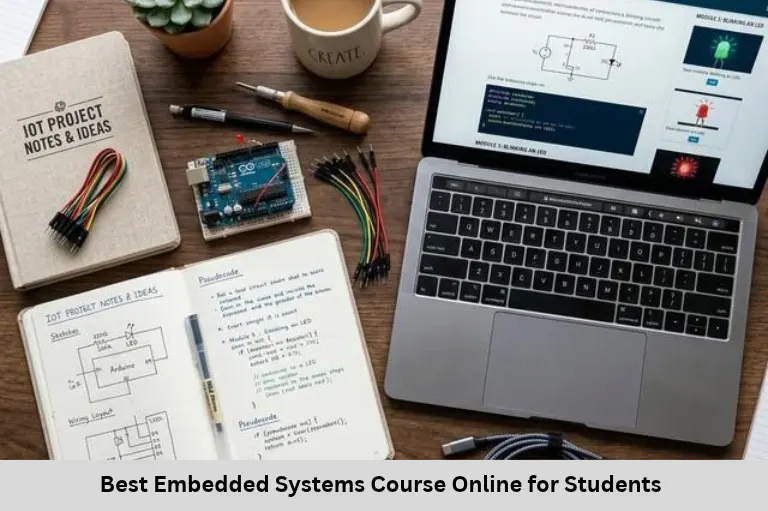
Find the best embedded systems course online. Learn Embedded C, microcontrollers, RTOS, Internet of Things (IoT) and hands-on projects with Embedded Tech Development Academy (ETDA) training.
- Best Embedded Systems Course Online for Students
-
Best Embedded Systems Course Online: A Complete Guide for Engineering Students
- Introduction
- What Is an Embedded Systems Course?
- Important Topics to Learn in an Online Embedded Systems Course
- How to Choose the Best Embedded Systems Course Online
- Online Learning vs Practical Embedded Training
- Career Opportunities After Embedded Systems Training
- Learn Industry-Oriented Embedded Systems at ETDA
-
Frequently Asked Questions
- Which topics should an embedded systems course cover?
- Can beginners learn embedded systems online?
- Is Embedded C necessary for embedded software jobs?
- Which microcontroller is best for learning embedded systems?
- Are practical projects important in embedded training?
- Does ETDA provide placement support?
- Conclusion
Best Embedded Systems Course Online: A Complete Guide for Engineering Students
Introduction
Embedded systems are an essential part of modern technology, powering automotive electronics, industrial machines, smart devices, medical equipment and Internet of Things (IoT) applications. As industries increasingly depend on intelligent electronic products, the demand for engineers with practical embedded development skills continues to grow. Choosing the best embedded systems course online can help engineering students understand microcontrollers, firmware development, hardware interfacing and real-time programming.
However, learning embedded technology requires more than watching recorded lessons. Students need structured explanations, practical programming exercises, hardware demonstrations and real-time project experience. Those searching for the Top Embedded Training Institute in Bangalore should consider the quality of technical training, lab exposure and career guidance. Embedded Tech Development Academy (ETDA) focuses on industry-oriented embedded training with practical learning and assured placement support.
What Is an Embedded Systems Course?
An embedded systems course teaches students how to design, program and test dedicated computing systems that perform specific functions inside electronic products. Unlike general-purpose computers, embedded devices are designed around particular applications and hardware requirements.
A complete course introduces microcontroller architecture, Embedded C programming, digital electronics, peripheral interfacing and communication protocols. Students also learn how firmware interacts with hardware components such as sensors, displays, motors and communication modules.
A good learning programme connects theoretical concepts with practical implementation. This helps students understand how embedded systems are developed and tested in real engineering environments.
Important Topics to Learn in an Online Embedded Systems Course
Embedded C Programming
Embedded C is a fundamental skill for firmware development. Students should learn variables, operators, loops, functions, arrays, pointers, structures, bitwise operations and memory handling.
They should also understand how to manipulate hardware registers, configure peripheral modules and write efficient code for memory-constrained microcontrollers. Practical exercises involving GPIO control and timer configuration help strengthen programming knowledge.
Microcontroller Architecture
A course should explain microcontroller architecture, including the CPU, registers, memory organisation, clock system and peripheral interfaces. Students can practise with platforms such as 8051, ARM Cortex-M, STM32 and LPC1768.
Understanding architecture helps developers select appropriate controllers and configure hardware resources. It also makes debugging and firmware optimisation easier.
Communication Protocols
Embedded devices exchange information with sensors, controllers and other electronic modules through communication protocols. Students should understand UART, SPI, I2C and CAN, including their working principles and practical applications.
For example, UART is commonly used for serial debugging, I2C connects multiple low-speed peripherals, SPI supports faster communication, and CAN is widely used in automotive networks. Implementing these interfaces gives learners valuable practical experience.
<AsyncImageGroup query={[“STM32 microcontroller development board UART SPI I2C electronics project”,”CAN bus automotive embedded systems development hardware”,”microcontroller sensor interfacing breadboard electronics lab”]} aspectRatio=”5:4″ layout=”carousel”/>
Real-Time Operating Systems
Real-Time Operating Systems (RTOS) are used when applications must manage multiple tasks with predictable timing. Students should learn task creation, scheduling, priorities, queues, semaphores and mutexes.
FreeRTOS is a useful platform for understanding these concepts. A practical project involving sensor monitoring and UART communication can demonstrate how multiple tasks operate together.
Embedded Linux and Device Drivers
Advanced embedded courses may introduce Embedded Linux, kernel architecture, bootloaders and device driver development. Students can learn how Linux communicates with hardware through drivers and how applications access device interfaces.
These topics are useful for learners interested in Linux-based products, gateways, networking equipment and advanced industrial applications.
How to Choose the Best Embedded Systems Course Online
Not every online course provides the same depth of technical learning. Before enrolling, students should examine the syllabus, teaching approach and practical opportunities.
Check the Technical Curriculum
Choose a course that covers Embedded C, microcontroller programming, electronics fundamentals, communication protocols, RTOS and project development. A syllabus that includes only basic programming may not provide enough preparation for embedded software roles.
Look for Practical Training
Practical implementation is essential because embedded developers work directly with hardware. Students should have opportunities to write firmware, interface sensors, configure peripherals and troubleshoot communication problems.
Evaluate Project and Debugging Experience
A strong programme should include complete projects rather than isolated coding exercises. Students should practise using serial terminals, debugging tools, datasheets and logic analysers where available.
Online Learning vs Practical Embedded Training
Online learning offers flexibility, allowing students to study programming concepts and technical theory at their own pace. It is useful for understanding architecture, reviewing code examples and preparing for technical assessments.
However, embedded development also requires hardware experience. Connecting sensors, checking voltage levels, configuring microcontroller pins and identifying circuit faults are difficult to master through theory alone.
A blended learning approach that combines online resources with guided practical sessions can be more effective. Students should select training that provides access to hardware, project mentoring and opportunities to discuss technical problems with experienced trainers.
Career Opportunities After Embedded Systems Training
After completing practical embedded training, engineering graduates can explore different entry-level career paths. The specific role depends on their programming ability, project experience and understanding of hardware.
Common opportunities include:
Embedded Software Developer: Develops firmware using Embedded C and microcontroller peripherals.
Firmware Engineer: Writes and maintains low-level software for electronic products.
Embedded Linux Developer: Works with Linux-based systems, kernel components and device drivers.
Automotive Embedded Engineer: Develops software for ECUs and vehicle communication networks.
Internet of Things (IoT) Developer: Builds connected devices using sensors, microcontrollers and wireless communication.
Students should create a project portfolio that demonstrates their ability to develop, test and explain working embedded applications.
Learn Industry-Oriented Embedded Systems at ETDA
Engineering students looking for practical embedded training should consider Embedded Tech Development Academy (ETDA) in Bangalore. The academy focuses on helping learners build technical knowledge through industry-oriented subjects and hands-on project learning.
Training areas include Embedded C, microcontroller programming, communication protocols, RTOS and embedded application development. Working with these concepts helps students understand how firmware is designed, implemented and debugged.
For students comparing the Top Embedded Training Institute in Bangalore, important factors include trainer guidance, practical lab sessions, project exposure and career preparation. Embedded Tech Development Academy (ETDA) also offers assured placement support, helping learners prepare for relevant employment opportunities.
An online course can provide a convenient starting point, but students should ensure that their learning path includes practical implementation and technical mentoring. Combining strong fundamentals with project experience can improve confidence during interviews and technical assessments.
Frequently Asked Questions
Which topics should an embedded systems course cover?
A comprehensive course should include Embedded C, microcontroller architecture, digital electronics, UART, SPI, I2C, CAN, RTOS and practical project development.
Can beginners learn embedded systems online?
Yes. Engineering students and beginners can start with C programming and electronics fundamentals before progressing to microcontrollers, peripheral programming and advanced firmware development.
Is Embedded C necessary for embedded software jobs?
Embedded C is widely used in firmware development because it provides low-level hardware access and efficient control over memory and processor resources.
Which microcontroller is best for learning embedded systems?
8051 is useful for understanding fundamentals, while STM32, ARM Cortex-M and LPC1768 provide opportunities to explore advanced peripherals and real-world applications.
Are practical projects important in embedded training?
Yes. Projects help students apply programming concepts, interface hardware, debug errors and demonstrate their technical abilities during interviews.
Does ETDA provide placement support?
Embedded Tech Development Academy (ETDA) provides assured placement support along with industry-oriented training to help students prepare for embedded technology career opportunities.
Conclusion
Choosing the best embedded systems course online requires careful evaluation of the syllabus, practical training, project opportunities and career guidance. Students should focus on Embedded C, microcontroller architecture, communication protocols, RTOS and debugging to develop skills relevant to modern embedded industries.
For learners seeking the Top Embedded Training Institute in Bangalore, Embedded Tech Development Academy (ETDA) offers industry-oriented embedded training, practical project exposure and assured placement support. With consistent practice and guidance from Embedded Tech Development Academy, engineering students can build a stronger foundation for careers in firmware development, automotive electronics, Internet of Things (IoT) and embedded software engineering.
Author: ETDA Trainers
Experience: 10+ Years of Industry Experience in Embedded Systems, IoT, and Embedded C Programming