
How Basic Electronics Builds a Strong Engineering Foundation | ETDA
Learn how Basic Electronics builds a strong engineering foundation for Embedded Systems, IoT, Robotics, and core electronics careers. Join ETDA, the Top Embedded Training Institute in Bangalore.
- How Basic Electronics Builds a Strong Engineering Foundation | ETDA
-
How Basic Electronics Builds a Strong Engineering Foundation
- What is Basic Electronics?
- Why Basic Electronics is the Foundation of Engineering
- Essential Basic Electronics Concepts Every Student Should Learn
- Why Basic Electronics is Important in Embedded Systems
- Applications of Basic Electronics
- How ETDA Helps Students Build Strong Electronics Fundamentals
- Career Opportunities After Learning Basic Electronics
-
Frequently Asked Questions (FAQs)
- Why is Basic Electronics important for engineering students?
- Can I learn Embedded Systems without Basic Electronics?
- Which subjects should I learn after Basic Electronics?
- Does ETDA provide practical electronics training?
- Why is ETDA considered a Top Embedded Training Institute in Bangalore?
- Who can join ETDA's Embedded Systems course?
- Conclusion
How Basic Electronics Builds a Strong Engineering Foundation
Engineering is all about solving real-world problems using technology. Whether you’re designing a smart home device, programming a robot, developing an automotive control system, or building an IoT product, every innovation starts with a strong understanding of Basic Electronics.
Many engineering students focus only on programming languages like C or Python, believing software alone is enough to build a successful career. However, the reality is quite different. Every embedded system combines hardware and software, and without understanding electronic circuits, components, and electrical principles, it becomes difficult to develop efficient and reliable embedded applications.
Basic Electronics is the first step toward becoming a successful Embedded Systems Engineer, Internet of Things(IoT) Developer, Robotics Engineer, or Automotive Embedded Engineer. It helps students understand how electronic components interact, how signals are processed, and how microcontrollers communicate with sensors and actuators.
If you’re looking to build a career in Embedded Systems, choosing the Top Embedded Training Institute in Bangalore can make a significant difference. Embedded Tech Development Academy (ETDA) provides industry-oriented training that begins with Basic Electronics and progresses to advanced technologies such as C Programming, Embedded C, ARM Cortex-M, STM32, LPC1768, RTOS, IoT, CAN Protocol, ECU Concepts, and Automotive Embedded Systems. With hands-on laboratory sessions, real-time projects, and assured placement support, ETDA prepares students for successful careers in the embedded industry.
In this guide, you’ll learn why Basic Electronics is essential, the core concepts every engineer should master, and how ETDA helps students transform these fundamentals into industry-ready skills.
What is Basic Electronics?
Basic Electronics is the study of electrical and electronic components, circuits, and devices that control the flow of electricity in electronic systems.
It forms the backbone of almost every engineering discipline, including:
- Embedded Systems
- Internet of Things (IoT)
- Robotics
- Automotive Electronics
- Industrial Automation
- Consumer Electronics
- Medical Devices
- Communication Systems
Understanding Basic Electronics enables engineers to design, analyze, troubleshoot, and improve electronic systems efficiently.
Why Basic Electronics is the Foundation of Engineering
Before writing firmware or programming a microcontroller, engineers must understand how hardware works.
Hardware and Software Work Together
Embedded Systems combine electronic hardware with software.
For example:
- Sensors collect real-world data.
- Electronic circuits process signals.
- Microcontrollers execute programmed instructions.
- Actuators perform physical actions.
Without knowledge of electronics, understanding this interaction becomes difficult.
Improves Problem-Solving Skills
Basic Electronics teaches engineers how to:
- Analyze circuits
- Identify hardware faults
- Measure voltage and current
- Read circuit diagrams
- Troubleshoot electronic devices
These practical skills are invaluable during product development.
Supports Multiple Engineering Domains
A strong electronics foundation benefits engineers working in:
- Embedded Systems
- Robotics
- Electric Vehicles
- IoT
- Industrial Automation
- Medical Electronics
- Aerospace
Essential Basic Electronics Concepts Every Student Should Learn
Learning LPC1768 offers several advantages for engineering students.
Voltage, Current, and Resistance
These are the building blocks of every electronic circuit.
Students should understand:
- Voltage (Potential Difference)
- Current Flow
- Resistance
- Power
- Ohm’s Law
These concepts help engineers design safe and efficient electronic systems.
Electronic Components
Engineers must know how common components function.
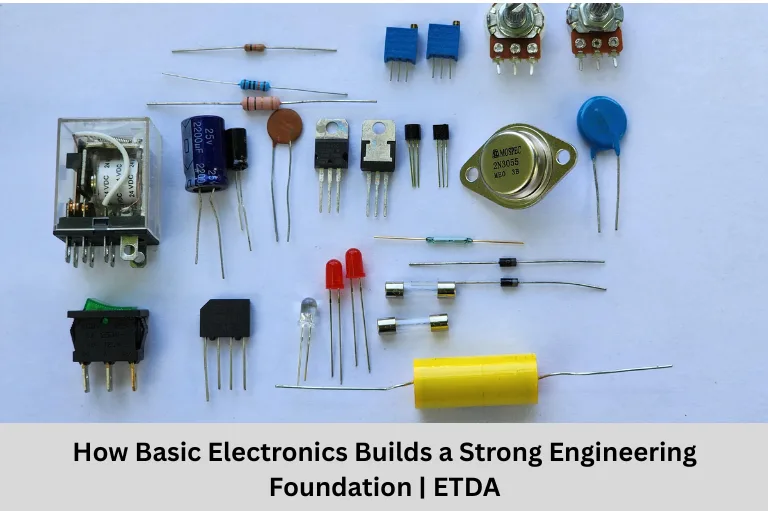
Important components include:
- Resistors
- Capacitors
- Inductors
- Diodes
- LEDs
- Transistors
- Relays
- Switches
Each component plays a unique role in electronic circuit design.
Analog and Digital Electronics
Modern embedded systems combine analog and digital circuits.
Students learn:
- Analog Signals
- Digital Signals
- ADC (Analog-to-Digital Conversion)
- DAC (Digital-to-Analog Conversion)
- Signal Conditioning
These concepts are essential when interfacing sensors with microcontrollers.
Power Supply Circuits
Electronic devices require stable power sources.
Students understand:
- AC and DC
- Voltage Regulators
- Batteries
- Power Management
- Protection Circuits
Reliable power design improves system performance and longevity.
Printed Circuit Boards (PCBs)
PCBs connect all electronic components.
Students learn:
- PCB Layout Basics
- Component Placement
- Routing
- Grounding
- Power Distribution
PCB knowledge is valuable for hardware design engineers.
Why Basic Electronics is Important in Embedded Systems
Embedded Systems rely on electronics at every stage.
Sensor Interfacing
Sensors measure physical quantities like:
- Temperature
- Humidity
- Pressure
- Distance
- Light
- Motion
Understanding electronics helps engineers correctly interface sensors with microcontrollers.
Microcontroller Programming
Programming alone isn’t enough.
Engineers must know:
- GPIO Connections
- Voltage Levels
- Pull-up/Pull-down Resistors
- Clock Circuits
- Reset Circuits
This knowledge ensures reliable hardware operation.
Communication Protocols
Embedded devices communicate using electronic interfaces.
Students learn:
- UART
- SPI
- I2C
- CAN
- USB
Understanding signal transmission improves system reliability.
Applications of Basic Electronics
Basic Electronics powers countless modern technologies.
Consumer Electronics
Examples include:
- Smartphones
- Smart TVs
- Washing Machines
- Air Conditioners
- Smart Watches
Automotive Electronics
Applications include:
- Engine Control Units (ECUs)
- ABS Systems
- Airbags
- Electric Vehicles
- Infotainment Systems
Industrial Automation
Basic Electronics supports:
- PLC Systems
- Robotics
- Factory Automation
- Motor Controllers
Medical Equipment
Electronic systems are used in:
- ECG Machines
- Patient Monitors
- Infusion Pumps
- Portable Medical Devices
How ETDA Helps Students Build Strong Electronics Fundamentals
Choosing the Top Embedded Training Institute in Bangalore is one of the most important decisions for aspiring embedded engineers.
Embedded Tech Development Academy (ETDA) focuses on building strong technical foundations before introducing advanced embedded concepts.
Comprehensive Learning Path
Students begin with:
- Basic Electronics
- Circuit Fundamentals
- C Programming
- Embedded C
Once students understand the basics, they move to advanced technologies like ARM Cortex-M, STM32, LPC1768, RTOS, IoT, and Automotive Embedded Systems.
Practical Laboratory Sessions
ETDA emphasizes hands-on learning.
Students work with:
- Breadboards
- Electronic Components
- Development Boards
- Oscilloscopes
- Multimeters
- Sensors
- Communication Modules
This practical approach improves technical confidence.
Real-Time Embedded Projects
Students apply electronics concepts while developing practical projects.
Projects include:
- Home Automation
- Smart Agriculture
- Temperature Monitoring
- IoT Devices
- Motor Control
- Smart Energy Meter
- CAN-Based Automotive Applications
These projects help students gain real-world engineering experience.
Industry-Oriented Curriculum
ETDA provides training in:
- C Programming
- Embedded C
- ARM Cortex-M
- STM32
- LPC1768
- RTOS
- IoT
- UART
- SPI
- I2C
- CAN Protocol
- ECU Concepts
- Automotive Embedded Systems
The curriculum is designed to match industry hiring requirements.
Assured Placement Support
ETDA not only teaches technical skills but also prepares students for successful careers.
Placement support includes:
- Resume Building
- Technical Interview Preparation
- Mock Interviews
- Aptitude Training
- HR Interview Guidance
- Career Counseling
- Assured Placement Support
This holistic approach helps students transition confidently into the embedded industry.
Career Opportunities After Learning Basic Electronics
Students with strong electronics fundamentals can pursue roles such as:
Popular Career Options
- Embedded Software Engineer
- Hardware Design Engineer
- Firmware Engineer
- IoT Developer
- Robotics Engineer
- Automotive Embedded Engineer
- Electronics Design Engineer
- PCB Design Engineer
- Industrial Automation Engineer
- Test and Validation Engineer
These roles are available in semiconductor companies, automotive firms, consumer electronics manufacturers, healthcare technology companies, and IoT startups.
Frequently Asked Questions (FAQs)
Why is Basic Electronics important for engineering students?
Basic Electronics helps students understand electronic components, circuits, sensors, and hardware, forming the foundation for Embedded Systems, IoT, Robotics, and other core engineering fields.
Can I learn Embedded Systems without Basic Electronics?
While it’s possible to start programming, understanding Basic Electronics is essential for designing, debugging, and developing reliable embedded applications.
Which subjects should I learn after Basic Electronics?
After mastering Basic Electronics, students should learn C Programming, Embedded C, ARM Cortex-M, STM32, LPC1768, RTOS, IoT, and communication protocols like UART, SPI, I2C, and CAN.
Does ETDA provide practical electronics training?
Yes. ETDA offers hands-on laboratory sessions where students work with electronic components, development boards, sensors, and embedded hardware.
Why is ETDA considered a Top Embedded Training Institute in Bangalore?
ETDA combines industry-oriented training, modern embedded laboratories, experienced trainers, real-time projects, and assured placement support, helping students become job-ready embedded engineers.
Who can join ETDA's Embedded Systems course?
Engineering students, diploma holders, fresh graduates, and working professionals interested in Embedded Systems and Electronics can enroll.
Conclusion
Basic Electronics is much more than an introductory subject—it’s the cornerstone of every successful engineering career. A strong understanding of electronic components, circuits, power systems, and signal processing enables engineers to design reliable embedded solutions, troubleshoot hardware issues, and develop innovative products across industries such as IoT, robotics, automotive electronics, healthcare, and industrial automation.
To build a rewarding career in this field, students need practical exposure alongside theoretical knowledge. That’s where Embedded Tech Development Academy (ETDA) stands out. Recognized as a Top Embedded Training Institute in Bangalore, ETDA offers a structured learning journey that begins with Basic Electronics and progresses through C Programming, Embedded C, ARM Cortex-M, STM32, LPC1768, RTOS, IoT, CAN Protocol, ECU Concepts, and Automotive Embedded Systems. Through hands-on labs, real-time projects, expert mentorship, and assured placement support, ETDA equips students with the confidence and technical expertise required by leading technology companies.
If you’re serious about building a strong engineering foundation and launching a successful career in Embedded Systems, Embedded Tech Development Academy (ETDA) provides the ideal platform to learn, innovate, and grow into an industry-ready professional.
Author: ETDA Trainers
Experience: 10+ Years of Industry Experience in Embedded Systems, IoT, and Embedded C Programming