
How Practical Workshops Bridge the Gap Between Academia & Industry
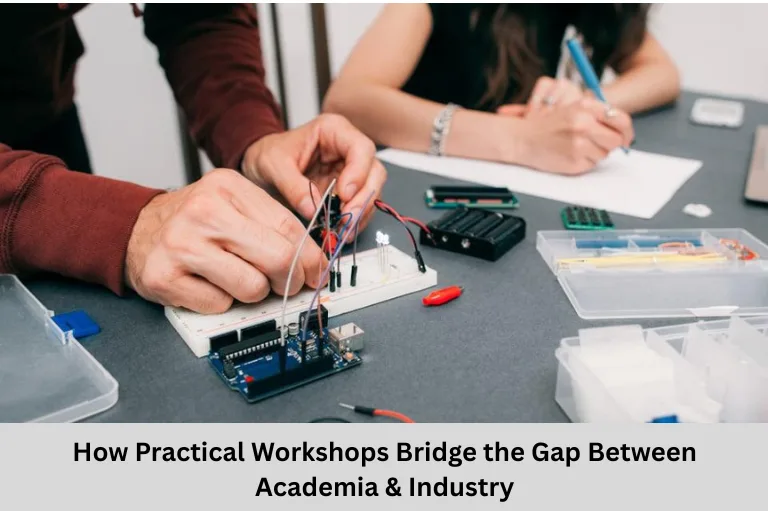
Discover how practical workshops bridge the gap between academia and industry, improve employability, and prepare students with real-world skills through ETDA.
-
How Practical Workshops Bridge the Gap Between Academia & Industry
- How Practical Workshops Bridge the Gap Between Academia and Industry
- Why There's a Gap Between Academia and Industry
- What Are Practical Workshops?
- Why Hands-On Learning Is More Effective Than Theory Alone
- How Practical Workshops Bridge the Academia-Industry Gap
- Benefits of Practical Workshops for Engineering Students
- Why Industries Prefer Candidates with Practical Experience
- Practical Workshops in Embedded Systems
- Why Choose Embedded Tech Development Academy (ETDA)?
- How ETDA Helps Students Become Industry Ready
- Tips for Students to Maximize Practical Workshop Benefits
-
Frequently Asked Questions (FAQs)
- Why are practical workshops important for engineering students?
- How do practical workshops improve employability?
- What skills can students learn in embedded systems workshops?
- Why do companies prefer candidates with practical experience?
- Why choose ETDA for embedded systems training?
- Who should attend practical embedded systems workshops?
- Conclusion
How Practical Workshops Bridge the Gap Between Academia and Industry
The gap between academic education and industry expectations has become one of the biggest challenges faced by engineering graduates today. Every year, thousands of students complete their degrees with good academic scores but struggle to secure jobs because employers look beyond theoretical knowledge. Companies want candidates who can solve real-world problems, work on live projects, understand industry tools, and contribute from day one.
This is where practical workshops play a transformative role. Unlike traditional classroom learning, practical workshops provide hands-on experience that helps students understand how concepts are implemented in real engineering environments.
Whether it’s embedded systems, Internet of Things(IoT), robotics, VLSI, or software development, practical exposure equips students with technical confidence and industry-ready skills.
If you’re searching for the Top Embedded Training Institute in Bangalore, Embedded Tech Development Academy (ETDA) offers industry-focused practical training that prepares students for successful careers in embedded systems and related technologies.
Why There's a Gap Between Academia and Industry
Engineering colleges build strong theoretical foundations, but industries expect much more than textbook knowledge.
Some of the common reasons behind this gap include:
- Limited practical exposure
- Lack of live industry projects
- Outdated laboratory experiments
- Minimal interaction with industry professionals
- Little experience with modern development tools
- Insufficient focus on problem-solving skills
- Poor understanding of product development cycles
Students often learn what a technology is but rarely understand how it is applied in real products.
Practical workshops solve this challenge by creating an environment where students apply classroom concepts to real engineering problems.
What Are Practical Workshops?
Practical workshops are structured learning sessions where students actively work on real hardware, software, development boards, sensors, communication protocols, and industry-standard tools instead of only attending lectures.
These workshops emphasize:
- Learning by doing
- Building projects
- Debugging hardware and software
- Team collaboration
- Real-world engineering challenges
- Industry workflows
Unlike conventional lab sessions, workshops simulate actual workplace environments where students are expected to design, test, troubleshoot, and optimize solutions.
Why Hands-On Learning Is More Effective Than Theory Alone
Educational research consistently shows that people retain knowledge better when they actively practice concepts rather than simply reading or listening.
Practical workshops help students:
- Understand complex technical concepts faster
- Improve analytical thinking
- Develop troubleshooting skills
- Build confidence
- Learn industry-standard tools
- Gain project experience
Instead of memorizing programming syntax, students write actual programs for microcontrollers.
Instead of reading about communication protocols, they implement UART, SPI, CAN, or I2C on development boards.
This experiential learning creates long-term understanding.
How Practical Workshops Bridge the Academia-Industry Gap
1. Exposure to Real Industry Projects
One of the biggest advantages of practical workshops is exposure to projects inspired by real industrial applications.
Students learn to build systems such as:
- Smart home automation
- Industrial monitoring systems
- IoT devices
- Automotive controllers
- Sensor-based applications
- Embedded Linux projects
Working on these projects helps students understand complete product development rather than isolated programming exercises.
2. Familiarity with Industry Tools
Industries use professional development environments that students often don’t encounter during college.
Practical workshops introduce tools like:
- Keil IDE
- STM32CubeIDE
- MPLAB
- Embedded Linux
- Git
- Debuggers
- Oscilloscopes
- Logic analyzers
Learning these tools significantly improves workplace readiness.
3. Better Understanding of Embedded Hardware
Many engineering graduates know programming but lack confidence in hardware interaction.
Hands-on workshops teach students:
- GPIO programming
- Interrupt handling
- ADC and DAC
- Timers
- PWM
- Sensors
- Actuators
- PCB basics
- Microcontroller interfacing
This practical exposure makes students more valuable to employers.
4. Development of Problem-Solving Skills
Real engineering rarely works perfectly the first time.
During workshops, students encounter:
- Circuit failures
- Programming errors
- Communication issues
- Timing problems
- Hardware faults
Learning how to diagnose and fix these issues develops critical thinking that employers highly appreciate.
Improved Team Collaboration
Industry projects involve multiple engineers working together.
Practical workshops encourage:
- Team projects
- Task allocation
- Documentation
- Communication
- Presentation skills
These soft skills are just as important as technical expertise.
Benefits of Practical Workshops for Engineering Students
Builds Industry Confidence
Students become comfortable working with real hardware and software tools, reducing fear during interviews and jobs.
Improves Resume Strength
Employers value practical project experience.
Students can showcase:
- Embedded projects
- IoT prototypes
- Automation systems
- PCB designs
- Robotics applications
These projects make resumes stand out.
Better Interview Performance
Technical interviews often include practical questions.
Students with workshop experience can confidently explain:
- Project architecture
- Hardware selection
- Debugging process
- Programming logic
- System optimization
This creates a positive impression on recruiters.
Faster Career Growth
Employees who already understand practical engineering require less training.
Companies prefer candidates who can contribute quickly, leading to better career opportunities.
Why Industries Prefer Candidates with Practical Experience
Recruiters frequently mention that practical skills reduce onboarding time.
Candidates with workshop experience demonstrate:
- Real engineering exposure
- Technical confidence
- Independent learning ability
- Project execution skills
- Strong debugging capability
- Better communication
These qualities directly influence hiring decisions.
Practical Workshops in Embedded Systems
Embedded systems combine hardware and software, making practical learning absolutely essential.
Students gain experience in:
Microcontroller Programming
Programming ARM Cortex, AVR, PIC, and STM32 controllers through hands-on practical sessions to build strong embedded systems development skills.
Sensor Interfacing
Working with temperature, pressure, motion, and environmental sensors for hands-on embedded systems applications and real-time monitoring solutions.
Communication Protocols
Implementing UART, SPI, I2C, CAN, USB, and Ethernet protocols for reliable embedded communication and real-time system integration.
Embedded Linux
Building Linux-based embedded applications for real-world device control, automation, and high-performance embedded systems development.
IoT Integration
Real-Time Operating Systems (RTOS)
Learning task scheduling, synchronization, and multitasking.
These skills closely match industry requirements.
Why Choose Embedded Tech Development Academy (ETDA)?
When it comes to practical embedded systems training, choosing the right institute makes a significant difference.
Embedded Tech Development Academy (ETDA) focuses on industry-oriented learning rather than theory alone.
Students receive:
Industry-Oriented Curriculum
Courses are designed based on current hiring requirements, ensuring students gain industry-relevant skills and improve career opportunities.
Hands-On Laboratory Sessions
Every concept is reinforced through practical implementation, enabling students to build confidence, solve real-world problems, and master embedded systems skills.
Live Projects
Students work on real-world embedded applications, gaining practical experience in designing, programming, testing, and debugging intelligent electronic systems.
Experienced Industry Mentors
Training is delivered by professionals with industry experience, providing practical insights, real-world knowledge, and career-focused technical guidance.
Placement Assistance
Career guidance, interview preparation, resume building, and placement support help students transition into the workforce with confidence.
If you’re looking for the Top Embedded Training Institute in Bangalore, ETDA provides comprehensive practical learning that equips students with the skills employers expect.
How ETDA Helps Students Become Industry Ready
Unlike traditional training methods, ETDA emphasizes complete skill development.
Students learn to:
- Design embedded applications
- Write optimized Embedded C programs
- Interface hardware components
- Debug real systems
- Work with development kits
- Build IoT applications
- Understand product development workflows
- Prepare for technical interviews
This practical approach bridges the gap between academic education and professional engineering careers.
Tips for Students to Maximize Practical Workshop Benefits
To get the most out of practical workshops:
- Participate actively in every session.
- Ask questions whenever concepts are unclear.
- Build additional mini-projects independently.
- Document your work for your portfolio.
- Practice debugging instead of relying on others.
- Collaborate with peers to improve teamwork.
- Stay updated with industry trends and emerging technologies.
Consistent hands-on practice helps reinforce theoretical knowledge and develops confidence that employers value.
Frequently Asked Questions (FAQs)
Why are practical workshops important for engineering students?
Practical workshops help students apply theoretical concepts, gain hands-on experience, improve problem-solving skills, and become industry-ready.
How do practical workshops improve employability?
They provide experience with real projects, industry tools, debugging techniques, teamwork, and technical skills that employers actively seek.
What skills can students learn in embedded systems workshops?
Students learn Embedded C programming, microcontroller interfacing, IoT, RTOS, Embedded Linux, communication protocols, debugging, and hardware integration.
Why do companies prefer candidates with practical experience?
Candidates with practical experience require less onboarding, solve real-world problems more effectively, and can contribute to projects more quickly.
Why choose ETDA for embedded systems training?
Embedded Tech Development Academy (ETDA) offers industry-oriented curriculum, live projects, expert mentors, hands-on laboratories, and placement assistance, making it a strong choice for students seeking practical embedded systems training.
Who should attend practical embedded systems workshops?
Engineering students, fresh graduates, diploma holders, electronics enthusiasts, and professionals looking to upskill in embedded systems and IoT can all benefit from practical workshops.
Conclusion
The transition from classroom learning to industry can be challenging without practical exposure. Engineering graduates today need more than theoretical knowledge—they need real-world experience, problem-solving abilities, and confidence in using industry tools.
Practical workshops effectively bridge this gap by allowing students to apply what they learn, work on live projects, collaborate with teams, and gain hands-on experience with modern technologies. These experiences not only improve technical competence but also enhance employability and career growth.
For aspiring embedded engineers, choosing a training institute that prioritizes experiential learning can make all the difference. If you are searching for the Top Embedded Training Institute in Bangalore, Embedded Tech Development Academy (ETDA) offers industry-focused workshops, expert mentorship, live projects, and placement support to help students become job-ready professionals.
Investing in practical learning today can be the first step toward a successful engineering career tomorrow.
Author: ETDA Trainers
Experience: 10+ Years of Industry Experience in Embedded Systems, IoT, and Embedded C Programming