
Getting Started with STM32 Microcontroller Programming: A Beginner's Guide
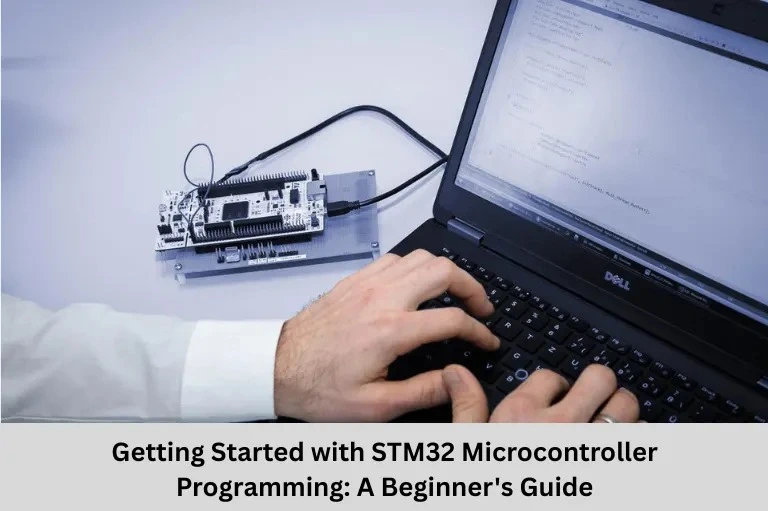
Learn STM32 microcontroller programming from basics, tools, GPIO, peripherals, and projects. Build embedded skills with practical training at Embedded Tech Development Academy (ETDA) Bangalore.
- Getting Started with STM32 Microcontroller Programming: A Beginner's Guide
-
Introduction: Why Learn STM32 Microcontroller Programming?
- What Is an STM32 Microcontroller?
- Why Is STM32 Popular in Embedded Systems?
- Prerequisites for Learning STM32 Programming
- Choosing Your First STM32 Development Board
- Essential STM32 Development Tools
- Your First STM32 Programming Project: Blinking an LED
- Important STM32 Peripherals You Should Learn
- Common Mistakes Beginners Make in STM32 Programming
- How Practical Training Helps You Learn STM32 Faster
- STM32 Programming Career Opportunities
-
Frequently Asked Questions (FAQs)
- Is STM32 good for beginners?
- What programming language is used for STM32?
- How long does it take to learn STM32 programming?
- Is STM32 used in the embedded industry?
- Can I get an embedded job after learning STM32?
- Where can I learn STM32 microcontroller programming in Bangalore?
- Do I need hardware to learn STM32 programming?
- Is STM32 better than Arduino for learning embedded systems?
- Conclusion
Introduction: Why Learn STM32 Microcontroller Programming?
Microcontrollers are the heart of many modern electronic devices, from smart appliances and automotive systems to industrial machines and IoT products. Among the many microcontroller families available today, STM32 has become a popular choice for developers and embedded engineers.
If you are planning to learn embedded systems, starting with STM32 microcontroller programming can be a smart career move. STM32 devices are based on ARM Cortex-M cores and offer powerful performance, multiple peripherals, low-power features, and excellent development support.
However, beginners often feel confused about where to start. Which STM32 board should you choose? What software is required? Should you learn C programming first?
This guide explains how to get started with STM32 microcontroller programming, the skills you need, the tools used, and how practical embedded training can help you build a successful career.
What Is an STM32 Microcontroller?
STM32 is a family of 32-bit microcontrollers developed by STMicroelectronics. These microcontrollers are based on ARM Cortex-M processor cores and are widely used in embedded systems.
STM32 microcontrollers are available in different series, including STM32F, STM32G, STM32H, STM32L, and others. Each family is designed for specific performance, power, and application requirements.
Why Is STM32 Popular in Embedded Systems?
STM32 microcontrollers are popular because they offer:
- High processing performance
- 32-bit ARM architecture
- Multiple GPIO pins
- Timers and PWM support
- UART, SPI, and I2C communication
- ADC and DAC peripherals
- Low-power operating modes
- Strong development ecosystem
- Wide industry adoption
For students and freshers, STM32 provides an excellent platform to understand embedded systems programming and real-time hardware control.
Prerequisites for Learning STM32 Programming
You do not need to be an expert to begin STM32 programming. However, having a basic understanding of certain concepts can make your learning journey easier.
1. Learn C Programming
C is one of the most important languages in embedded development. You should understand variables, loops, functions, arrays, pointers, structures, and bitwise operations.
Why Is C Important for STM32?
Embedded C allows developers to directly control hardware resources. Concepts such as registers, memory addresses, and bit manipulation are regularly used in STM32 development.
2. Understand Basic Electronics
You should know basic concepts such as voltage, current, resistors, LEDs, switches, and digital signals. You do not need advanced electronics knowledge to start.
3. Learn Microcontroller Fundamentals
Understanding GPIO, timers, interrupts, and communication protocols will help you understand STM32 programming more effectively.
Choosing Your First STM32 Development Board
The development board you choose can affect your learning experience. Beginners should select a board that has good documentation and easy access to programming tools.
STM32 Nucleo Boards
STM32 Nucleo boards are a popular choice for beginners. They usually include an integrated ST-LINK programmer and debugger, which makes programming easier.
STM32 Discovery Boards
Discovery boards provide more advanced features and are useful for learning different STM32 peripherals.
STM32 Development Kits
For advanced projects, developers may use specific STM32 development kits based on application requirements.
A Simple Tip for Beginners
Do not focus too much on buying the most powerful STM32 board. Start with a board that allows you to learn GPIO, UART, timers, and interrupts step by step.
Essential STM32 Development Tools
To start programming STM32 microcontrollers, you need the right development environment.
STM32CubeIDE
STM32CubeIDE is a popular integrated development environment used for STM32 programming. It provides code editing, compilation, debugging, and project management features.
STM32CubeMX
STM32CubeMX helps developers configure microcontroller peripherals through a graphical interface. You can configure GPIO, clocks, UART, SPI, I2C, and other peripherals.
The tool can also generate initialization code, making it easier for beginners to create projects.
ST-LINK Debugger
ST-LINK is used to program and debug STM32 microcontrollers. Many STM32 Nucleo boards include an integrated ST-LINK interface.
What You Need to Install
Before beginning your first project, you generally need:
- STM32 development board
- STM32CubeIDE
- STM32CubeMX or Cube configuration tools
- USB cable
- ST-LINK support
- Basic C programming knowledge
Your First STM32 Programming Project: Blinking an LED
The best way to begin STM32 programming is by creating a simple project. An LED blinking project helps you understand the basic development process.
Step 1: Create a New STM32 Project
Open STM32CubeIDE and select your microcontroller or development board. Configure the basic project settings.
Step 2: Configure GPIO
Select the GPIO pin connected to the LED and configure it as a digital output.
Step 3: Configure the Clock
The microcontroller clock controls the speed at which the system operates. Beginners should understand the basic clock configuration process.
Step 4: Generate the Project
After configuring the required settings, generate the project code.
Step 5: Write the LED Control Logic
You can write the logic to turn the LED ON and OFF with a specific delay.
Step 6: Build and Program the Board
Compile the project and download the program to the STM32 board using ST-LINK.
Step 7: Debug the Program
If the LED does not work as expected, use debugging tools to check the program execution.
What Does This Project Teach You?
A simple LED project introduces you to:
- STM32 project creation
- GPIO configuration
- Code compilation
- Microcontroller programming
- Hardware testing
- Debugging
This basic workflow is repeated in more advanced embedded projects.
Important STM32 Peripherals You Should Learn
Once you understand GPIO, you should gradually learn the major STM32 peripherals.
GPIO
GPIO allows the microcontroller to interact with external devices. You can control LEDs, read switches, and interface with digital sensors.
UART
UART is commonly used for serial communication and debugging. It is one of the first communication protocols most STM32 beginners learn.
Timers
Timers are used for delays, event measurement, PWM generation, and periodic operations.
PWM
PWM is used to control motor speed, LED brightness, and other output applications.
ADC
The Analog-to-Digital Converter allows STM32 to read analog signals from sensors.
SPI and I2C
SPI and I2C are widely used to communicate with sensors, displays, memory devices, and other peripherals.
The Best Learning Approach
Do not try to learn every STM32 peripheral in one week. Learn one peripheral, write a small program, test it on hardware, and understand the result.
Common Mistakes Beginners Make in STM32 Programming
Many students face difficulties not because STM32 is too complicated, but because they follow an unstructured learning approach.
Ignoring C Programming
If your C fundamentals are weak, embedded programming can become difficult. Strengthen your programming basics before moving to advanced microcontroller concepts.
Copying Code Without Understanding
Code examples are useful, but simply copying them will not help you become an embedded developer.
Avoiding Debugging
Debugging is an important skill in embedded systems. Learn how to use breakpoints, watch variables, and step through code.
Learning Only Theory
Embedded systems are hardware-based. Practical projects are essential to understand how software interacts with real devices.
How Practical Training Helps You Learn STM32 Faster
Structured training can help beginners learn STM32 microcontroller programming in a systematic way. Instead of randomly watching tutorials, you can follow a step-by-step curriculum covering C programming, microcontrollers, peripherals, debugging, and real-time applications.
At Embedded Tech Development Academy (ETDA), students receive practical exposure to embedded systems and industry-relevant technologies. The learning approach focuses on programming fundamentals, microcontroller concepts, hands-on projects, and real-world problem-solving.
For students looking for the Top Embedded Training Institute in Bangalore, ETDA offers career-focused embedded systems training designed to build practical skills. The institute also provides assured placement support, helping students prepare for interviews, improve technical confidence, and explore career opportunities in the embedded domain.
What Makes Practical Embedded Training Valuable?
- Hands-on microcontroller programming
- Real-time project experience
- Industry-oriented curriculum
- Technical interview preparation
- Guidance from experienced trainers
- Assured placement support
STM32 Programming Career Opportunities
Learning STM32 can open opportunities in several embedded technology areas.
You can explore roles such as:
- Embedded Software Developer
- Firmware Engineer
- Microcontroller Programmer
- Embedded Systems Engineer
- IoT Developer
- Automotive Embedded Engineer
STM32 knowledge is especially valuable when combined with C programming, RTOS concepts, communication protocols, and debugging skills.
Frequently Asked Questions (FAQs)
Is STM32 good for beginners?
Yes. STM32 is suitable for beginners who have basic C programming knowledge. Starting with GPIO and simple projects can help you understand microcontroller programming step by step.
What programming language is used for STM32?
C is the most commonly used programming language for STM32 development. Embedded C is widely used for controlling microcontroller hardware and peripherals.
How long does it take to learn STM32 programming?
The learning time depends on your programming background and practice. With regular hands-on practice, beginners can understand the basics within a few weeks and gradually move toward advanced projects.
Is STM32 used in the embedded industry?
Yes. STM32 microcontrollers are widely used in industrial automation, IoT, consumer electronics, automotive applications, and other embedded systems.
Can I get an embedded job after learning STM32?
Yes, but STM32 should be combined with C programming, debugging, communication protocols, and project experience. Practical training and placement preparation can further improve your career opportunities.
Where can I learn STM32 microcontroller programming in Bangalore?
You can explore practical embedded systems training at Embedded Tech Development Academy (ETDA). The institute focuses on industry-oriented learning and provides assured placement support for aspiring embedded engineers.
Do I need hardware to learn STM32 programming?
Hardware is highly recommended for learning STM32 programming effectively. While you can understand the theory and write code using development tools, working with an STM32 board helps you practice GPIO, sensors, communication protocols, and debugging in real time.
Is STM32 better than Arduino for learning embedded systems?
STM32 is a more advanced platform for learning professional embedded systems development. Arduino is beginner-friendly, while STM32 helps students understand microcontroller peripherals, ARM architecture, registers, and industry-relevant embedded programming in greater depth.
Conclusion
STM32 microcontroller programming is an excellent starting point for anyone interested in embedded systems. From learning GPIO and blinking an LED to working with communication protocols and real-time applications, STM32 helps you build a strong practical foundation.
The most effective way to learn is to combine C programming, microcontroller fundamentals, hands-on practice, and real-world projects. If you are serious about building a career in embedded systems, structured training can help you progress faster.
With practical learning, industry-focused training, and assured placement support, Embedded Tech Development Academy (ETDA) helps aspiring engineers prepare for opportunities in the embedded domain. Choose the right learning path, start with STM32, and take your first step toward a successful embedded systems career.
Author: ETDA Trainers
Experience: 10+ Years of Industry Experience in Embedded Systems, IoT, and Embedded C Programming