
STM32 Microcontroller Training in Bangalore: Complete Guide | ETDA
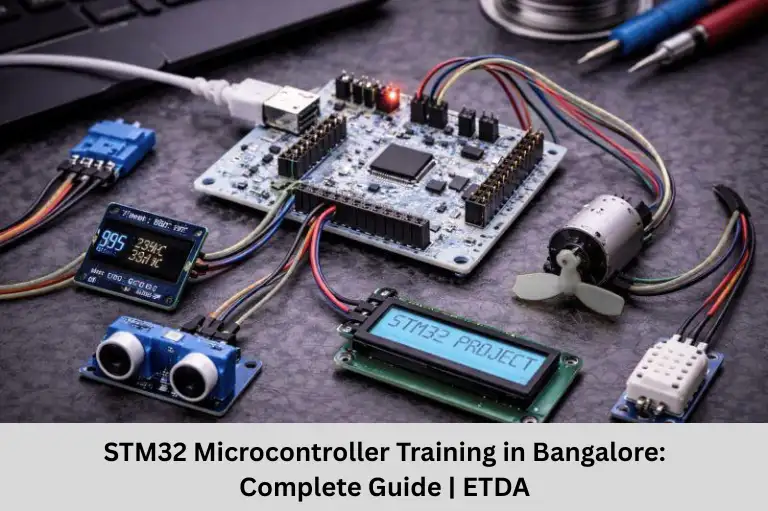
Looking for STM32 Microcontroller Training in Bangalore? Learn STM32 programming, ARM Cortex-M architecture, projects, career opportunities, and placement support with Embedded Tech Development Academy (ETDA).
- STM32 Microcontroller Training in Bangalore: Complete Guide | ETDA
-
STM32 Microcontroller Training in Bangalore: Complete Guide | ETDA
- What is an STM32 Microcontroller?
- Why Learn STM32?
- What Will You Learn in STM32 Microcontroller Training?
- Real-Time Projects Included in STM32 Training
- Why Practical Training Matters
- Career Opportunities After STM32 Training
- Skills Employers Expect in STM32 Developers
- Why Choose ETDA for STM32 Microcontroller Training in Bangalore?
- Who Should Join This Course?
-
Frequently Asked Questions (FAQs)
- Is STM32 better than Arduino for learning embedded systems?
- Do I need to know C programming before learning STM32?
- What jobs can I get after completing STM32 training?
- Does ETDA provide placement assistance after STM32 training?
- How long does it take to learn STM32?
- Why should I choose ETDA for STM32 training in Bangalore?
- What projects are included in STM32 Microcontroller Training?
- Is STM32 used in the embedded systems industry?
- Can freshers learn STM32 Microcontroller programming?
- What skills will I gain after completing STM32 Microcontroller Training?
- Conclusion
STM32 Microcontroller Training in Bangalore: Complete Guide | ETDA
The demand for embedded systems professionals continues to grow as industries rapidly adopt automation, IoT, robotics, automotive electronics, medical devices, and smart consumer products. At the heart of many modern embedded applications lies the STM32 microcontroller, one of the most widely used ARM Cortex-M based microcontrollers in the world.
If you’re planning to build a successful career in embedded systems, learning STM32 is no longer optional—it’s a valuable skill that employers actively seek. Choosing the right STM32 Microcontroller Training in Bangalore can provide you with the practical knowledge, project experience, and placement opportunities needed to launch your career.
Embedded Tech Development Academy (ETDA) offers industry-focused training designed to help students and working professionals master STM32 development through practical learning, real-time projects, and assured placement support. If you’re searching for the Top Embedded Training Institute in Bangalore, ETDA provides comprehensive training aligned with current industry requirements.
What is an STM32 Microcontroller?
STM32 is a family of 32-bit microcontrollers developed by STMicroelectronics and based on the ARM Cortex-M processor architecture. These microcontrollers are known for their:
- High processing speed
- Low power consumption
- Rich peripheral support
- Cost-effectiveness
- Excellent development ecosystem
STM32 controllers are used across thousands of commercial products because they deliver outstanding performance while remaining flexible for developers.
Why is STM32 So Popular?
Several factors make STM32 the preferred choice among engineers and companies.
Powerful ARM Cortex-M Architecture
STM32 controllers use ARM Cortex-M cores, providing excellent computational performance with efficient power usage.
Wide Product Range
STM32 offers multiple series suitable for:
- Entry-level applications
- Industrial automation
- Automotive systems
- Medical devices
- Consumer electronics
- IoT devices
Rich Peripheral Support
STM32 supports numerous communication interfaces including:
- UART
- SPI
- I2C
- CAN
- USB
- Ethernet
- ADC
- DAC
- PWM
- Timers
Strong Industry Adoption
Many leading electronics companies prefer STM32 for its reliability, extensive documentation, and long-term availability in embedded system applications.
Why Learn STM32?
Learning STM32 opens doors to rewarding careers in embedded systems, firmware development, IoT, automotive, robotics, and industrial automation sectors.
Key Benefits
High Industry Demand
Many embedded companies specifically seek candidates with STM32 firmware development experience for roles in automotive, IoT, and industrial applications.
Better Career Opportunities
STM32 knowledge improves your chances of securing roles such as:
- Embedded Software Engineer
- Firmware Developer
- IoT Engineer
- Embedded Design Engineer
- Automotive Embedded Engineer
- Robotics Engineer
Hands-on Development Skills
STM32 training helps students build real hardware projects, demonstrating practical skills beyond theoretical concepts and improving industry readiness significantly.
What Will You Learn in STM32 Microcontroller Training?
A well-designed STM32 course covers theoretical concepts, practical implementation, hands-on projects, debugging techniques, and industry-relevant embedded programming skills.
Fundamentals of Embedded Systems
Students begin with core embedded concepts including:
- Microcontroller architecture
- Memory organization
- Digital electronics
- Embedded C programming
ARM Cortex-M Architecture
Processor Fundamentals
Students understand:
- Registers
- Instruction execution
- Interrupt handling
- Exception processing
Memory Management
Topics include:
- Flash memory
- SRAM
- EEPROM concepts
- Stack operations
STM32 Programming
Practical programming involves:
- GPIO
- LED interfacing
- Push buttons
- Timers
- Interrupts
- PWM generation
- ADC
- DAC
- UART
- SPI
- I2C
Students write firmware using Embedded C and industry-standard development environments.
Peripheral Interfacing
Real embedded products require communication with external devices.
Students work with:
- LCD displays
- Sensors
- EEPROM
- Motors
- Bluetooth modules
- Wi-Fi modules
- GSM modules
Debugging Techniques
Understanding debugging is essential for embedded development.
Training includes:
- Breakpoints
- Watch windows
- Register monitoring
- Logic analysis
- Error diagnosis
Real-Time Projects Included in STM32 Training
Practical projects help students apply classroom concepts.
Examples include:
Smart Home Automation
Build smart systems controlling appliances using sensors, wireless communication, microcontrollers, real-time processing, and efficient embedded software development skills.
Digital Temperature Monitoring
Interface sensors with STM32 to measure, process, and display accurate temperature readings using embedded programming and real-time applications effectively.
Smart Traffic Control
Develop traffic signal systems using timers, interrupts, state machines, and STM32 programming for efficient real-time traffic control applications.
IoT Sensor Monitoring
Motor Speed Control
Implement PWM-based motor control techniques using STM32 for precise speed regulation, efficient performance, robotics, automation, and embedded applications.
Home Security System
Develop alarm systems using motion sensors and embedded firmware.
Working on these projects strengthens both technical skills and confidence during interviews.
Why Practical Training Matters
Many students understand embedded theory but struggle during technical interviews because they lack hands-on experience.
Industry Expects Practical Skills
Recruiters often ask candidates to:
- Write Embedded C programs
- Configure peripherals
- Explain interrupt handling
- Debug firmware
- Interface hardware
Without practical exposure, clearing these rounds becomes difficult.
Project Portfolio Improves Employability
A portfolio of STM32 projects demonstrates:
- Problem-solving ability
- Programming skills
- Hardware understanding
- Real-world application knowledge
Employers value candidates who can showcase working projects rather than just certificates.
Career Opportunities After STM32 Training
STM32 skills are useful across multiple industries.
Automotive Electronics
Modern vehicles contain hundreds of embedded controllers.
Applications include:
- Engine control
- Infotainment
- ADAS
- Battery management
Industrial Automation
Factories rely on embedded controllers for automation systems.
Applications include:
- PLC communication
- Industrial monitoring
- Robotics
- Process control
Internet of Things (IoT)
STM32 powers numerous IoT devices.
Examples include:
- Smart meters
- Home automation
- Environmental monitoring
- Smart agriculture
Consumer Electronics
STM32 is widely used in:
- Washing machines
- Microwave ovens
- Air conditioners
- Wearable devices
Medical Electronics
Medical equipment increasingly uses embedded controllers for:
- Patient monitoring
- Diagnostic equipment
- Portable medical devices
Skills Employers Expect in STM32 Developers
Recruiters typically look for candidates who understand:
Technical Skills
- Embedded C
- ARM Cortex-M architecture
- STM32 programming
- UART, SPI, I2C
- CAN communication
- Interrupt programming
- Timers
- PWM
- ADC/DAC
- RTOS basics
- Debugging techniques
Soft Skills
- Problem solving
- Analytical thinking
- Team collaboration
- Communication
- Documentation
Why Choose ETDA for STM32 Microcontroller Training in Bangalore?
Embedded Tech Development Academy (ETDA) provides industry-oriented training designed to bridge the gap between academic learning and professional expectations.
If you’re searching for the Top Embedded Training Institute in Bangalore, ETDA offers a structured learning experience that emphasizes practical skills and career readiness.
Industry-Focused Curriculum
The syllabus is regularly updated to match current embedded technologies, industry standards, hiring trends, and evolving employer requirements effectively.
Experienced Trainers
Students learn from industry professionals with real-world experience in embedded systems development, firmware programming, and practical project implementation.
Hands-on Lab Sessions
Every concept is reinforced through extensive laboratory practice using STM32 development boards, enhancing practical skills and technical confidence effectively.
Real-Time Projects
Students complete multiple industry-oriented projects, strengthening technical portfolios, practical expertise, problem-solving abilities, and overall employability in embedded systems.
Assured Placement Support
ETDA provides comprehensive placement support that includes:
Resume Building
Create an ATS-friendly resume showcasing embedded systems skills, technical projects, programming expertise, and achievements to improve interview opportunities significantly.
Mock Interviews
Practice technical and HR interview questions regularly to build confidence, improve communication skills, and perform successfully during recruitment processes.
Aptitude Preparation
Enhance problem-solving and quantitative skills essential for recruitment tests, improving analytical thinking, accuracy, speed, and overall placement success rates.
Technical Interview Guidance
Receive mentoring on embedded concepts, firmware development, debugging, coding challenges, and interview preparation commonly expected by employers today.
Job Assistance
Students receive assured placement support through interview opportunities with leading embedded companies, enhancing career prospects and employment opportunities successfully.
Who Should Join This Course?
STM32 Microcontroller Training is ideal for:
- BE/BTech (ECE, EEE, E&I, CSE)
- Diploma students
- MTech graduates
- Freshers
- Working professionals
- Embedded enthusiasts
- IoT developers
- Electronics hobbyists
No prior experience with STM32 is required, although basic C programming knowledge is beneficial.
Frequently Asked Questions (FAQs)
Is STM32 better than Arduino for learning embedded systems?
Yes. Arduino is excellent for beginners, but STM32 provides deeper exposure to professional embedded systems development and is widely used in the industry.
Do I need to know C programming before learning STM32?
Basic C programming knowledge is recommended. Most professional STM32 training programs also cover Embedded C fundamentals.
What jobs can I get after completing STM32 training?
You can apply for roles such as Embedded Software Engineer, Firmware Developer, Embedded Design Engineer, IoT Engineer, Robotics Engineer, and Automotive Embedded Engineer.
Does ETDA provide placement assistance after STM32 training?
Yes. ETDA provides assured placement support, including resume preparation, mock interviews, technical guidance, aptitude training, and job assistance.
How long does it take to learn STM32?
Most students can gain strong practical knowledge within 2–4 months of structured training, depending on the course schedule and practice time.
Why should I choose ETDA for STM32 training in Bangalore?
ETDA offers industry-oriented curriculum, experienced trainers, extensive hands-on lab sessions, real-time projects, and assured placement support, helping students become job-ready for embedded systems careers.
What projects are included in STM32 Microcontroller Training?
Most STM32 training programs include hands-on projects such as smart home automation, temperature monitoring systems, motor control, IoT sensor applications, and industrial automation projects. These projects help students gain practical experience and build a strong portfolio.
Is STM32 used in the embedded systems industry?
Yes. STM32 microcontrollers are widely used across industries such as automotive, consumer electronics, industrial automation, healthcare, robotics, and IoT due to their high performance, low power consumption, and extensive peripheral support.
Can freshers learn STM32 Microcontroller programming?
Absolutely. Freshers with basic knowledge of C programming and electronics can learn STM32 programming. A structured training program with practical sessions and real-time projects makes it easier to understand embedded system concepts.
What skills will I gain after completing STM32 Microcontroller Training?
After completing STM32 Microcontroller Training, you will gain skills in Embedded C programming, ARM Cortex-M architecture, GPIO programming, UART, SPI, I2C, ADC, PWM, timer configuration, debugging, peripheral interfacing, and real-time embedded project development, making you ready for embedded systems job roles.
Conclusion
STM32 has become one of the most important microcontroller platforms in the embedded industry. From IoT devices and robotics to automotive electronics and industrial automation, companies are actively seeking engineers with strong STM32 development skills.
Choosing the right STM32 Microcontroller Training in Bangalore can significantly impact your career by providing practical exposure, real-time project experience, and interview preparation.
Embedded Tech Development Academy (ETDA) equips students with industry-relevant knowledge through hands-on training, expert mentorship, modern laboratory facilities, and assured placement support. For aspiring embedded engineers looking for quality education and career guidance, ETDA stands out as a trusted choice. If you’re searching for the Top Embedded Training Institute in Bangalore, ETDA offers the practical learning environment needed to build a successful career in embedded systems.
Author: ETDA Trainers
Experience: 10+ Years of Industry Experience in Embedded Systems, IoT, and Embedded C Programming