
Why LPC1768 is Popular in Embedded Systems Development | Complete Guide | ETDA
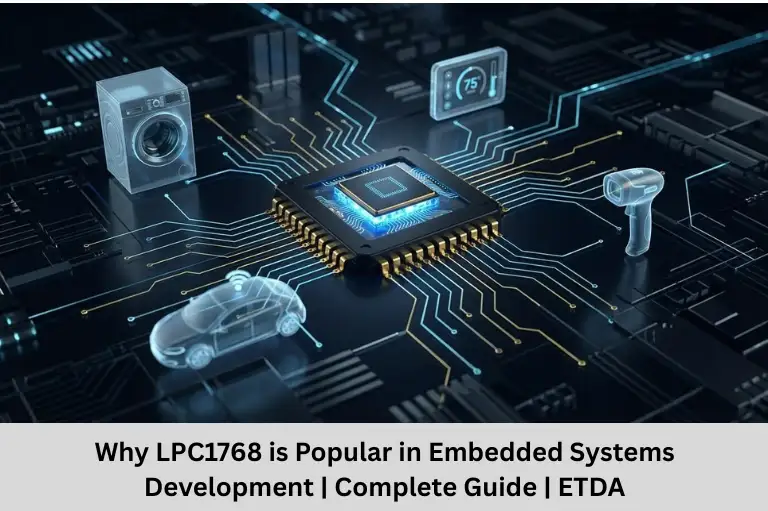
Learn why LPC1768 is popular in Embedded Systems development. Explore its features, architecture, applications, career opportunities, and why ETDA is the Top Embedded Training Institute in Bangalore.
- Why LPC1768 is Popular in Embedded Systems Development | Complete Guide | ETDA
-
Why LPC1768 is Popular in Embedded Systems Development
- What is LPC1768?
- Why is LPC1768 Popular in Embedded Systems Development?
- LPC1768 Architecture Overview
- Key Features of LPC1768
- Applications of LPC1768
- Programming LPC1768
- Why Engineering Students Should Learn LPC1768
- Real-Time Projects Using LPC1768
- Why Learn LPC1768 at Embedded Tech Development Academy (ETDA)?
- Career Opportunities After Learning LPC1768
- Frequently Asked Questions (FAQs)
- Conclusion
Why LPC1768 is Popular in Embedded Systems Development
The Embedded Systems industry is growing rapidly with innovations in IoT, Automotive Electronics, Industrial Automation, Robotics, Medical Devices, and Consumer Electronics. As companies continue developing smarter electronic products, the demand for skilled embedded engineers is higher than ever.
One of the most widely used microcontrollers for learning and developing embedded applications is the LPC1768. Based on the ARM Cortex-M3 architecture, LPC1768 offers an excellent balance of performance, flexibility, peripherals, and ease of programming. Whether you’re a beginner learning Embedded Systems or an engineer working on industrial applications, LPC1768 provides an ideal platform for building practical embedded solutions.
Many engineering colleges introduce students to microcontrollers, but most graduates lack hands-on experience. That’s why enrolling in the Top Embedded Training Institute in Bangalore is one of the smartest decisions for aspiring embedded engineers.
Embedded Tech Development Academy (ETDA) offers comprehensive training in C Programming, Embedded C, ARM Cortex-M, LPC1768, STM32, RTOS, Internet of Things(IoT), CAN Protocol, ECU Concepts, and Automotive Embedded Systems, along with real-time projects and assured placement support.
In this guide, you’ll learn why LPC1768 is so popular, its architecture, features, applications, advantages, career opportunities, and how ETDA prepares students for successful careers in Embedded Systems.
What is LPC1768?
LPC1768 is a 32-bit ARM Cortex-M3 microcontroller developed by NXP Semiconductors. It is designed for high-performance embedded applications requiring low power consumption and efficient processing.
The microcontroller combines high processing speed with multiple built-in peripherals, making it suitable for beginners as well as professional embedded developers.
Because of its powerful architecture and extensive hardware features, LPC1768 is commonly used in:
- Embedded Systems Training
- Industrial Automation
- Robotics
- Medical Electronics
- IoT Devices
- Automotive Electronics
- Smart Consumer Products
Why is LPC1768 Popular in Embedded Systems Development?
LPC1768 has remained one of the preferred development platforms for embedded engineers due to its rich feature set and industry relevance.
ARM Cortex-M3 Processor
The biggest advantage of LPC1768 is its ARM Cortex-M3 core.
Benefits
- High Processing Speed
- Low Power Consumption
- Fast Interrupt Handling
- Efficient Memory Management
- Excellent Performance for Real-Time Applications
The Cortex-M3 architecture is widely adopted across the embedded industry, making LPC1768 an excellent learning platform.
Rich Peripheral Support
Unlike many entry-level microcontrollers, LPC1768 comes with numerous built-in peripherals.
Available Peripherals
- GPIO
- UART
- SPI
- I2C
- CAN
- USB
- Ethernet
- ADC
- DAC
- PWM
- Timers
- RTC
These peripherals allow engineers to build complete embedded applications without requiring external hardware.
High Performance
Running at clock speeds up to 100 MHz, LPC1768 provides sufficient processing power for complex embedded applications while maintaining low power consumption.
Easy Development
LPC1768 is supported by multiple IDEs including:
Popular IDEs
- Keil uVision
- MCUXpresso IDE
- Embedded C Toolchains
This makes software development easier for beginners.
LPC1768 Architecture Overview
Understanding the architecture helps students appreciate why LPC1768 is so versatile.
Core Components
ARM Cortex-M3 CPU
Executes Embedded C programs efficiently, enabling reliable microcontroller operation, faster processing, optimized memory usage, and smooth embedded application development.
Flash Memory
Stores application firmware securely, allowing the microcontroller to retain program code and execute embedded applications reliably after power cycles.
SRAM
Provides fast memory for runtime operations, enabling efficient data processing, quick variable access, and smooth execution of embedded applications.
GPIO
Interfaces with LEDs, switches, sensors, and actuators, enabling seamless communication between the microcontroller and external hardware components.
Communication Interfaces
Supports UART, SPI, I2C, CAN, USB, and Ethernet communication protocols, enabling efficient data exchange with various devices and networks.
Timers and PWM
Used for motor control, timing operations, and signal generation.
This combination makes LPC1768 suitable for a wide variety of embedded applications.
Key Features of LPC1768
32-bit ARM Cortex-M3 Processor
Delivers excellent performance with efficient power consumption.
Multiple Communication Protocols
Supported Interfaces
- UART
- SPI
- I2C
- CAN
- USB
- Ethernet
These protocols allow communication with sensors, displays, and other embedded devices.
Analog and Digital Support
LPC1768 includes:
- ADC
- DAC
- PWM
- GPIO
making it ideal for mixed-signal embedded applications.
Real-Time Performance
The processor supports interrupt-driven programming, making it suitable for industrial automation and robotics.
Applications of LPC1768
LPC1768 is used across multiple industries.
Industrial Automation
Applications include:
- Motor Controllers
- PLC Systems
- Conveyor Automation
- Process Monitoring
IoT Applications
LPC1768 powers:
- Smart Home Systems
- Smart Agriculture
- Environmental Monitoring
- Smart Energy Meters
Robotics
Used for:
- Robot Navigation
- Motor Control
- Sensor Processing
- Autonomous Robots
Medical Devices
Examples include:
- Patient Monitoring
- ECG Systems
- Portable Medical Equipment
Automotive Electronics
LPC1768 supports:
- CAN Communication
- Vehicle Monitoring
- Diagnostic Systems
- Control Modules
Programming LPC1768
Programming LPC1768 generally involves Embedded C.
Development Steps
- Configure GPIO
- Initialize Peripherals
- Write Embedded C Code
- Compile Firmware
- Flash the Board
- Debug the Program
Students also learn interrupt handling, timers, communication protocols, and sensor interfacing.
Why Engineering Students Should Learn LPC1768
LPC1768 provides an ideal transition from theory to practical embedded development.
Students Learn
- Embedded C Programming
- Register-Level Programming
- Peripheral Configuration
- Interrupt Programming
- Communication Protocols
- Real-Time Embedded Applications
These are essential skills expected by embedded companies.
Real-Time Projects Using LPC1768
Practical projects improve technical understanding.
Beginner Projects
- LED Blinking
- Digital Clock
- LCD Interface
- Push Button Control
Intermediate Projects
- Temperature Monitoring
- Home Automation
- Motor Speed Control
- Smart Energy Meter
Advanced Projects
- Smart Agriculture System
- IoT-Based Weather Station
- Vehicle Tracking
- CAN Communication Network
- Industrial Automation
- Healthcare Monitoring System
Working on these projects helps students build confidence and industry-ready portfolios.
Why Learn LPC1768 at Embedded Tech Development Academy (ETDA)?
If you’re looking for the Top Embedded Training Institute in Bangalore, Embedded Tech Development Academy (ETDA) provides one of the most comprehensive embedded training programs available.
Industry-Focused Curriculum
Students receive practical training in:
- C Programming
- Embedded C
- ARM Cortex-M
- LPC1768
- STM32
- RTOS
- IoT
- UART
- SPI
- I2C
- CAN Protocol
- ECU Concepts
- Automotive Embedded Systems
The curriculum is designed to match current industry requirements.
Practical Hardware Training
ETDA emphasizes hands-on learning using LPC1768 development boards, sensors, communication modules, and debugging tools.
Students gain confidence by building real embedded applications instead of only studying theory.
Real-Time Industry Projects
Every student works on multiple embedded projects covering automation, IoT, communication protocols, and microcontroller programming.
These projects significantly improve technical skills and resume quality.
Assured Placement Support
ETDA offers complete career assistance, including:
- Resume Building
- Aptitude Preparation
- Technical Interview Training
- Mock Interviews
- HR Interview Guidance
- Company-Specific Preparation
- Assured Placement Support
This structured placement process helps students confidently enter the embedded industry.
Career Opportunities After Learning LPC1768
Knowledge of LPC1768 opens opportunities across various sectors.
Popular Job Roles
- Embedded Software Engineer
- Firmware Engineer
- IoT Developer
- Automotive Embedded Engineer
- Robotics Engineer
- Industrial Automation Engineer
- Embedded Test Engineer
- Product Development Engineer
Many semiconductor companies, automotive manufacturers, IoT startups, and industrial automation firms actively seek engineers with ARM-based microcontroller experience.
Frequently Asked Questions (FAQs)
What is LPC1768 used for?
LPC1768 is used for developing embedded applications in IoT, robotics, industrial automation, automotive electronics, medical devices, and consumer electronics.
Why is LPC1768 popular among beginners?
It offers an ARM Cortex-M3 processor, numerous built-in peripherals, good documentation, and a straightforward development environment, making it ideal for learning.
Which programming language is used for LPC1768?
LPC1768 is primarily programmed using Embedded C and C Programming.
Is LPC1768 still relevant for learning Embedded Systems?
Yes. Although newer microcontrollers are available, LPC1768 remains an excellent platform for understanding ARM architecture, peripheral programming, and embedded software development.
Why should I learn LPC1768 before STM32?
Learning LPC1768 helps build a strong understanding of ARM Cortex-M3 architecture and peripheral programming, making it easier to transition to STM32 and other advanced microcontrollers.
Why choose ETDA for LPC1768 training?
Embedded Tech Development Academy (ETDA) provides hands-on LPC1768 training with industry-standard hardware, real-time projects, experienced trainers, and assured placement support, making it one of the Top Embedded Training Institutes in Bangalore.
Conclusion
LPC1768 has earned its reputation as one of the most reliable and beginner-friendly microcontrollers for Embedded Systems development. Its powerful ARM Cortex-M3 architecture, rich peripheral support, high processing capability, and extensive real-world applications make it an excellent choice for students and professionals alike. From industrial automation and IoT to robotics, automotive electronics, and medical devices, LPC1768 provides the practical foundation needed to understand modern embedded systems.
For aspiring engineers, mastering LPC1768 is more than learning a microcontroller—it’s about building the skills required for a successful career in embedded technology. The best way to achieve this is through structured training that combines theory with extensive practical experience.
If you’re searching for the Top Embedded Training Institute in Bangalore, Embedded Tech Development Academy (ETDA) offers a comprehensive learning path covering C Programming, Embedded C, ARM Cortex-M, LPC1768, STM32, RTOS, Internet of Things(IoT), CAN Protocol, ECU concepts, and Automotive Embedded Systems. With experienced mentors, modern embedded labs, hands-on project development, interview preparation, and assured placement support, ETDA helps students become confident, industry-ready Embedded Systems Engineers.
Whether you’re an engineering student, recent graduate, or working professional looking to upskill, Embedded Tech Development Academy (ETDA) provides the technical expertise, practical exposure, and career guidance needed to succeed in today’s rapidly growing Embedded Systems industry.
Author: ETDA Trainers
Experience: 10+ Years of Industry Experience in Embedded Systems, IoT, and Embedded C Programming