
Why STM32 is Widely Used in Embedded Systems Projects | Complete Guide
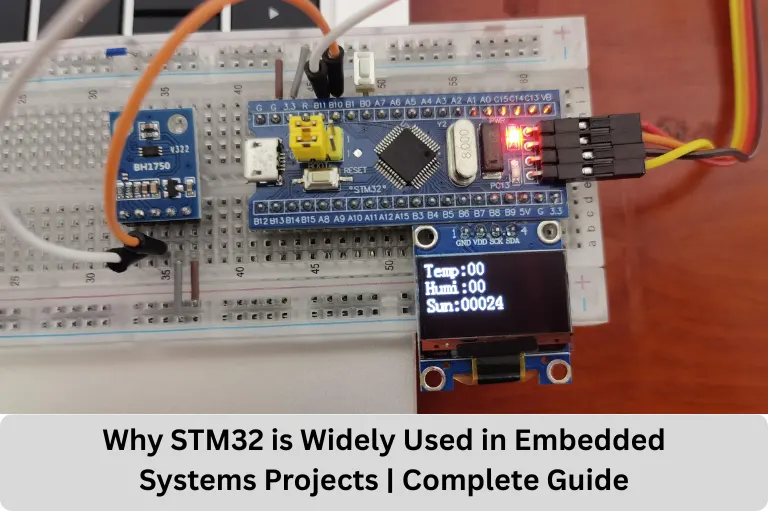
Learn why STM32 microcontrollers are widely used in embedded systems projects. Explore STM32 features, architecture, applications, career opportunities, and ETDA’s practical embedded systems training with assured placements.
- Why STM32 is Widely Used in Embedded Systems Projects | Complete Guide
-
Why STM32 is Widely Used in Embedded Systems Projects
- What is STM32?
- Why STM32 is So Popular in Embedded Systems
- Key Features of STM32 Microcontrollers
- Applications of STM32 in Embedded Systems
- Why Engineering Students Should Learn STM32
- Skills Required to Master STM32
- How ETDA Helps Students Learn STM32
- Career Opportunities After Learning STM32
- Frequently Asked Questions (FAQs)
- Conclusion
Why STM32 is Widely Used in Embedded Systems Projects
The embedded systems industry has evolved rapidly over the last decade, with smarter devices becoming an essential part of our daily lives. From industrial automation and medical devices to automotive electronics and IoT products, embedded systems are powering modern technology. At the heart of many of these innovations is the STM32 microcontroller, one of the most popular development platforms among students, hobbyists, and professional embedded engineers.
Developed by STMicroelectronics, STM32 microcontrollers are based on the ARM Cortex-M architecture and are known for their high performance, low power consumption, extensive peripheral support, and affordability. Whether you’re building a smart home system, an industrial controller, or a wearable device, STM32 provides the flexibility and reliability needed for modern embedded applications.
For engineering students, learning STM32 is more than just understanding a microcontroller—it’s a gateway to building a successful career in Embedded Systems, Internet of Things(IoT), Automotive Electronics, Robotics, and Industrial Automation.
Embedded Tech Development Academy (ETDA) provides industry-oriented training in STM32, Embedded C, ARM Cortex-M, LPC1768, RTOS, IoT, and Automotive Embedded Systems, along with assured placement support. Students gain hands-on experience through real-time projects, preparing them for careers in leading embedded technology companies.
In this comprehensive guide, you’ll learn why STM32 is widely used in embedded systems projects, its architecture, features, applications, advantages, and why mastering STM32 can significantly boost your career.
What is STM32?
STM32 is a family of 32-bit microcontrollers developed by STMicroelectronics based on the ARM Cortex-M processor.
These microcontrollers are designed for applications that require:
- High Processing Speed
- Low Power Consumption
- Rich Peripheral Support
- Real-Time Performance
- Cost-Effective Development
STM32 offers multiple product families, allowing developers to choose the right controller based on project requirements.
Popular STM32 families include:
- STM32F0
- STM32F1
- STM32F3
- STM32F4
- STM32F7
- STM32L Series
- STM32H Series
- STM32G Series
Each family is optimized for different performance and power requirements.
Why STM32 is So Popular in Embedded Systems
STM32 has become one of the preferred microcontroller platforms across industries because it combines powerful hardware with easy-to-use development too
ARM Cortex-M Architecture
STM32 microcontrollers are built on the ARM Cortex-M architecture, which offers:
- High Performance
- Efficient Instruction Set
- Low Power Operation
- Excellent Real-Time Processing
This architecture makes STM32 suitable for both beginner and advanced embedded projects.
High Processing Performance
Compared to traditional 8-bit microcontrollers, STM32 provides significantly higher processing power.
Benefits include:
- Faster Execution
- Better Multitasking
- Efficient Signal Processing
- Improved System Performance
This enables developers to create more advanced embedded applications.
Low Power Consumption
Power efficiency is critical in battery-operated devices.
STM32 includes multiple power-saving modes such as:
- Sleep Mode
- Stop Mode
- Standby Mode
These features extend battery life in portable and IoT applications.
Rich Peripheral Support
One of STM32’s biggest strengths is its extensive built-in peripherals.
Common Peripherals
- GPIO
- ADC
- DAC
- Timers
- UART
- SPI
- I2C
- CAN
- USB
- Ethernet
- PWM
- RTC
Developers can interface sensors, motors, displays, communication modules, and storage devices without requiring additional hardware.
Key Features of STM32 Microcontrollers
STM32 offers numerous features that simplify embedded system development, enabling efficient design, faster prototyping, and reliable application performance.
32-Bit Processing
The ARM Cortex-M core delivers faster, more efficient processing and enhanced performance compared to traditional 8-bit microcontrollers.
High-Speed Clock
Many STM32 devices operate at clock speeds exceeding 100 MHz, enabling high-performance applications.
Large Flash and RAM
STM32 controllers provide ample memory for:
- Complex Programs
- Real-Time Operating Systems
- Data Logging
- Communication Protocols
Flexible Communication Interfaces
STM32 supports industry-standard communication protocols.
Supported Interfaces
- UART
- SPI
- I2C
- CAN
- USB
- Ethernet
These interfaces make STM32 ideal for connected embedded systems.
Excellent Development Ecosystem
STM32 is supported by professional development tools, including:
- STM32CubeIDE
- STM32CubeMX
- ST-LINK Debugger
- HAL Libraries
These tools reduce development time and simplify project creation.
Applications of STM32 in Embedded Systems
STM32 is widely used in various industries.
Internet of Things (IoT)
STM32 powers IoT devices such as:
- Smart Home Systems
- Smart Lighting
- Environmental Monitoring
- Smart Energy Meters
Its low power consumption makes it ideal for IoT applications.
Industrial Automation
Factories use STM32 for:
- PLC Controllers
- Machine Automation
- Process Monitoring
- Motor Control
Its reliability is essential in industrial environments.
Automotive Electronics
STM32 is used in:
- Dashboard Systems
- Lighting Control
- Body Electronics
- Electric Vehicle Controllers
Many automotive applications require real-time performance, which STM32 provides effectively.
Medical Devices
Healthcare applications include:
- Patient Monitoring Systems
- Diagnostic Equipment
- Portable Medical Devices
High reliability makes STM32 suitable for medical technology.
Robotics
STM32 controls:
- Robotic Arms
- Autonomous Robots
- Drone Controllers
- Motion Systems
Its fast processing supports accurate motor control and sensor integration.
Consumer Electronics
Examples include:
- Washing Machines
- Smart TVs
- Air Conditioners
- Home Appliances
Why Engineering Students Should Learn STM32
Learning STM32 provides students with practical skills that are highly valued by employers.
Industry Demand
Many embedded companies use STM32 in commercial products.
Learning STM32 improves job opportunities in:
- Embedded Systems
- IoT
- Automotive
- Robotics
- Consumer Electronics
Easy to Learn
STM32 offers excellent documentation, development tools, and community support, making it suitable for beginners.
Real-Time Project Development
Students can build practical projects such as:
Beginner Projects
- LED Blinking
- LCD Display Interface
- Digital Clock
- Temperature Monitoring
Intermediate Projects
- Home Automation
- Weather Monitoring
- Smart Energy Meter
- Motor Control
Advanced Projects
- IoT-Based Monitoring
- Industrial Automation
- Vehicle Tracking
- Smart Agriculture Systems
Hands-on projects strengthen technical skills and improve placement readiness.
Skills Required to Master STM32
To become proficient in STM32 development, students should learn:
C Programming
Strong programming fundamentals are essential for developing problem-solving abilities, writing efficient code, understanding software concepts, and building a successful engineering career.
Embedded C
Develop firmware for microcontrollers by writing efficient code, interfacing hardware peripherals, and creating reliable embedded system applications.
ARM Cortex-M Architecture
Understand processor structure and operation to learn how instructions are executed, memory is managed, and embedded systems function efficiently.
Communication Protocols
Learn:
- UART
- SPI
- I2C
- CAN
RTOS
Real-time operating systems (RTOS) are commonly used with STM32 microcontrollers in industrial applications to manage multiple tasks efficiently, ensure predictable timing, and improve system reliability.
Debugging
Develop skills using debuggers, breakpoints, and logic analyzers to efficiently identify, troubleshoot, and resolve issues in embedded systems and firmware applications.
How ETDA Helps Students Learn STM32
Learning STM32 effectively requires practical exposure, expert guidance, and real-world projects.
Embedded Tech Development Academy (ETDA) is one of Bangalore’s leading training institutes for Embedded Systems and Automotive Technologies.
Industry-Focused Curriculum
Students receive practical training in:
C Programming
Build a strong programming foundation to develop problem-solving skills, write efficient code, and understand core software and embedded system concepts.
Embedded C
Develop firmware for embedded devices by creating efficient, reliable code that controls hardware and enables seamless system functionality.
ARM Cortex-M & STM32
Master industry-standard microcontrollers to design, program, and develop reliable embedded systems for real-world applications.
LPC1768
RTOS
Learn task scheduling and real-time application development to efficiently manage multiple processes and build responsive embedded systems.
IoT
Build connected embedded systems using sensors and cloud integration to enable real-time monitoring, data exchange, and smart automation.
Real-Time Projects
Students work on projects including:
- Smart Home Automation
- IoT Weather Station
- Industrial Monitoring
- Digital Dashboard
- Smart Agriculture
- Vehicle Monitoring Systems
These projects provide practical experience and strengthen portfolios.
Assured Placement Support
ETDA offers:
- Resume Building
- Technical Interview Preparation
- Mock Interviews
- Aptitude Training
- HR Interview Guidance
- Assured Placement Assistance
This comprehensive support helps students transition smoothly into embedded engineering careers. ETDA Provide Assured Placement Support.
Career Opportunities After Learning STM32
STM32 skills open doors to a wide range of career opportunities.
Embedded Software Engineer
Develop firmware for embedded products to control hardware, optimize performance, and create reliable real-world electronic solutions.
Firmware Engineer
Design and optimize low-level software for microcontrollers to improve performance, efficiency, and reliability in embedded systems applications.
IoT Developer
Create connected smart devices and cloud-enabled systems to enable real-time communication, data monitoring, and intelligent automation.
Automotive Embedded Engineer
Develop software for vehicle electronics and ECUs to support automotive control systems, communication, and intelligent vehicle functions.
Robotics Engineer
Program robotic systems and autonomous devices to enable intelligent control, automation, sensing, and real-time decision-making.
Embedded Test Engineer
Validate and test embedded hardware and firmware to ensure reliability, performance, functionality, and compliance with system requirements.
Frequently Asked Questions (FAQs)
What is STM32?
STM32 is a family of 32-bit ARM Cortex-M microcontrollers developed by STMicroelectronics for embedded systems applications.
Why is STM32 widely used?
STM32 offers high performance, low power consumption, rich peripherals, excellent development tools, and strong community support, making it suitable for a wide range of embedded applications.
Is STM32 good for beginners?
Yes. STM32 provides user-friendly development environments, extensive documentation, and a large developer community, making it an excellent choice for students and beginners.
Which programming language is used for STM32?
STM32 development is primarily done using C and Embedded C.
What industries use STM32?
STM32 is widely used in IoT, automotive, industrial automation, robotics, healthcare, consumer electronics, aerospace, and smart devices.
Do companies hire engineers with STM32 skills?
Yes. Many companies prefer candidates with practical experience in STM32, ARM Cortex-M, Embedded C, RTOS, and communication protocols.
Does ETDA provide STM32 training?
Yes. Embedded Tech Development Academy (ETDA) offers hands-on STM32 training along with Embedded C, ARM Cortex-M, LPC1768, RTOS, IoT, and Automotive Embedded Systems, supported by real-time projects and assured placement assistance.
Conclusion
STM32 has become one of the most widely used microcontroller platforms in embedded systems because of its powerful ARM Cortex-M architecture, rich peripheral support, low power consumption, scalability, and robust development ecosystem. Whether you’re developing IoT devices, industrial controllers, automotive electronics, robotics, or consumer products, STM32 provides the performance and flexibility needed for modern embedded applications.
For engineering students, mastering STM32 is a valuable investment in a future-proof career. Combined with strong knowledge of C Programming, Embedded C, RTOS, communication protocols, and ARM architecture, STM32 expertise significantly enhances employability in the embedded industry.
Embedded Tech Development Academy (ETDA) empowers students through practical, industry-oriented training in STM32 and related embedded technologies. With expert mentorship, hands-on labs, real-time projects, and assured placement support, ETDA equips aspiring engineers with the skills and confidence required to secure rewarding careers in Embedded Systems, IoT, Automotive Electronics, and Industrial Automation. If you’re looking to build a successful career in embedded technology, learning STM32 at ETDA is an excellent place to start.
Author: ETDA Trainers
Experience: 10+ Years of Industry Experience in Embedded Systems, IoT, and Embedded C Programming